Landscape pergolas are distinctive and present a different kind of beauty
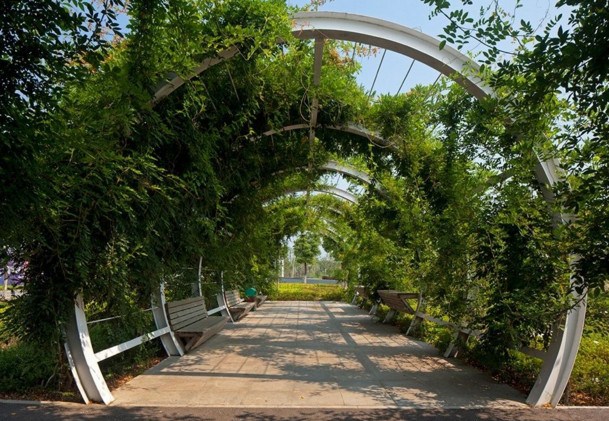
In ancient times, among pavilions, corridors, verandas and waterside houses, the corridor was indispensable in garden design, and pergolas make garden paths wind through secluded spots.
A garden pergola is a structure for visitors to rest in and as a scenic embellishment; pergolas can be combined with pavilions, corridors, waterside houses and so on to form garden building groups of beautiful appearance; in residential green spaces and children's playgrounds, pergolas can provide rest, shade and coolness; using pergolas instead of corridors can connect spaces; using lattice walls for climbing vines can divide scenery; for tea rooms, cold drink stands, restaurants and so on in gardens, pergolas can also be used as shade shelters with seating arranged; pergolas can also be used as garden gates.
Forms of garden pergolas:
1. Corridor-style flower pergola. The most common form, with panels supported on the left and right beams and columns, where visitors can enter and rest.
2. Panel-style flower pergola. Panels are fixed onto single-direction beams and columns, cantilevered on both sides or one side, with a light and lively shape.
3. Freestanding flower pergola. Various materials are used to make openwork, forming shapes such as walls, vases and umbrella pavilions, wrapped with vines to take shape, for ornamental use.
Plants that can match pergolas include: wisteria, grape, rose, star jasmine, ivy, Chinese trumpet creeper, banksia rose and so on.
Pergolas are made mainly from wood, bamboo, stone, metal and reinforced concrete, with other materials added and bonded together; according to regional resource advantages, different forms are used to design pergolas that fit the local "temperament", matched with different plants and cultivated to create different landscape effects.
Modern materials have brought pergolas freedom in height, span and arc, making them more varied. Airy, open, transparent and lively have become the design fashion for pergolas. In terms of structural form, pergolas are mostly elevated; this may be because fewer visitors are in green spaces on rainy and snowy days, and the wind-and-rain sheltering function of pergolas is decreasing. At the same time, the ornamental value of pergolas is increasingly valued, with greater emphasis on the effects of looking up, looking down, and viewing from afar and up close.