Water the Peperomia obtusifolia with a little acidic water and pair it with fertile soil, and it will grow vigorously with thick, deep green leaves.
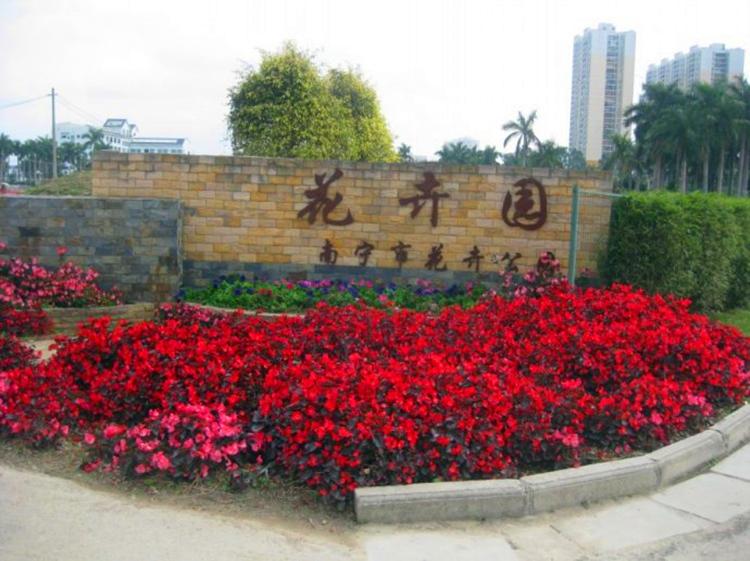
How do you grow Peperomia obtusifolia so it gets big and plump? I clearly remember that when I first started growing plants, my very first green plant was Peperomia obtusifolia. At the beginning, what I found was the Nanning Flower Park in Guangxi, which counts as Guangxi's largest flower park. There were a great many Peperomia obtusifolia in the large pots there, and my experiment started right there.
When I first got to know Peperomia obtusifolia, I thought it was similar to the elephant ear plant. This kind of plant has very green leaves and they are fairly large. For propagation, leaf cuttings can also be used, though of course division is best, with a relatively high chance of success. Like many bases, they basically use one uniform fertilizer for Peperomia obtusifolia. This easily makes Peperomia obtusifolia grow very fast, but the leaves are very thin and don't feel green enough.
In the photo above, the Peperomia obtusifolia leaves show uneven bumps and round spots. At first I thought it was a fungal infection. But I found it didn't spread and didn't get worse. Later I learned this was caused by using chemical fertilizer at too high a concentration, accumulating into spots and causing leaf burn. I used about 3 rounds of fermented nutrient solution on the Peperomia obtusifolia in the greenhouse, but found it never worked as fast as fertilizer. Later, because it didn't meet the growth speed requirement, I paused it.
After that I bought about 10 pots of Peperomia obtusifolia and took them home to experiment again. At that time the National Day holiday was just about to start, so I left the Peperomia obtusifolia at the office for about 7 days. When I came back, I found that the Peperomia obtusifolia given organic fertilizer had no problems at all, while almost all of those given chemical nutrient solution had died.
This struck me deeply. Why, when it's the same Peperomia obtusifolia and only the fertilizing differs, would there be such a difference? Once I accidentally knocked over the soil, and was surprised to find that the reason lay in the roots. I found that the Peperomia obtusifolia given chemical nutrient solution had underdeveloped and rather weak roots. But the Peperomia obtusifolia given organic fertilizer had very well-developed roots and many tillers.
But the experiment still ended in failure. The base took into account that using nutrient solution alone didn't achieve a fast enough growth rate. In fact, this is a common problem for bases growing green plants. Later, when I was experimenting at a Clivia base in Liaoning, I improved the formula. I used a mix of organic nutrient solution (weak acid fertilizer) + chemical fertilizer. Not only did it increase the growth rate of the green plants, but the leaves were also very green and the roots well developed.
Secondly, if you want Peperomia obtusifolia to grow well, soil choice is also key. Many bases choose the same soil as for pothos, in small pots. Basically, by the time it's sold, the nutrients are gone. So after you bring it home, it always needs repotting, otherwise it won't grow well. Choosing fertile soil will lead to better growth.
Also, when Peperomia obtusifolia is dry, the leaves curl, get very thin, and lose their green color. At this point you can appropriately increase water and use good fertilizer, and basically within 24 hours it will recover. This is a bit of what I know about Peperomia obtusifolia. If anything I've said is wrong, please leave me a comment!