Grew roses for 2 years and still a beginner? Where is the problem?
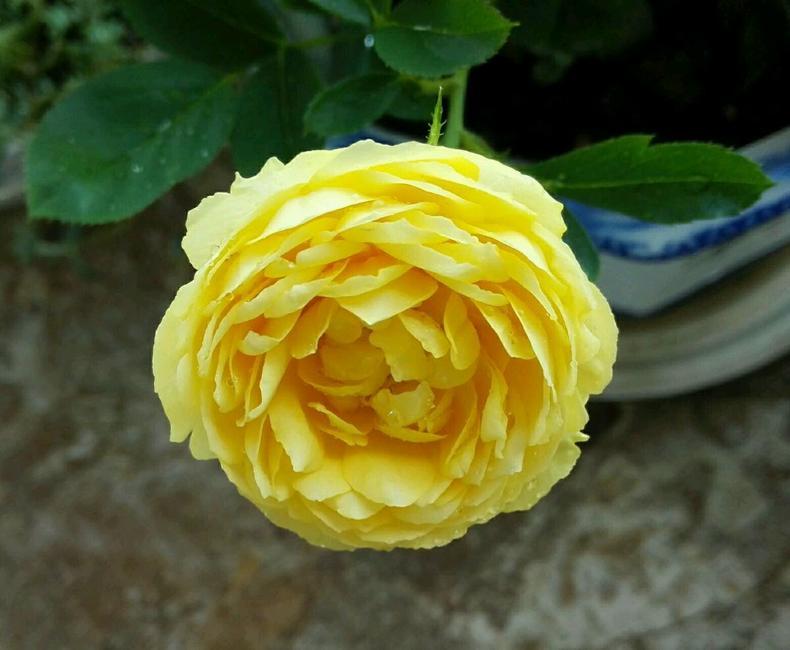
Growing roses comes down to persistence; if you always give up, you will never grow roses well. A few days ago my wife asked me about it, saying that growing flowers depends on persistence. If you do not persist, if you give up as soon as you hit a little problem, then even after growing them for 10 years you still will not understand flower growing, and you will still be a beginner. Suddenly I felt that this may be exactly what flower growers should learn from.
Aunt Li next door, in order to learn how to grow roses, bought books to read even though she was almost retired. Every day she grew them according to what the books said. Although she made progress, she still could not grow them well. Aunt Li was helpless too. Could everything the books say be wrong?
Actually it is not about whether the books are right or wrong, but that the roses described in books and the roses actually grown differ by region and variety, and each person's skill is completely different too. This easily leads to some people being able to grow them well by following one method, while others cannot grow them well by following the same method. So what the books say can be a reference for us, but cannot be copied completely.
So how should we grow roses well? Let us take a look together!
Fertilizing principles
Sick seedlings, weak seedlings, and newly transplanted seedlings must not be fertilized. Roses in full bloom generally do not need fertilizer either, especially foliar fertilizer. Many people spray it, and as a result the ornamental quality of the flowers easily declines. Yet in some cases spraying can improve quality; this depends on the fertilizer chosen and the weather. Generally speaking, use organic fertilizer that is easily absorbed in the early stage, and in the later stage you can properly bury a slow-release fertilizer once. Granular fertilizer must not be used often, otherwise problems will arise. Also, many books introduce granular fertilizer as something to be directly broadcast, but this point is actually wrong. Direct broadcasting is only suitable for traditional agriculture, not for home flower growing.
Watering
Many people think watering just means watering the soil, and watering easily produces 2 extremes.
Mechanical watering: if it says 7 days, then 7 days, no matter the season it is 7 days.
Random watering: with no concept of time, watering whenever you feel like it, watering less in winter and watering every day in summer.
None of the above practices can grow roses well. Watering needs to be decided by looking at the weather and also at the condition of the soil. Some soils do not retain water, so you can water often. But some soils retain water relatively well, so do not just look at the surface being dry; in fact, below 4cm it is still very moist. Secondly, you also need to look at the balcony position where your roses are, as some balconies have short sunlight hours and some have long sunlight hours. These reasons all lead to different watering times.
Misunderstandings about pruning
Some people think roses do not need pruning, and that a bud or branch that finally grows out is rare, so pruning = waste. For those with this way of thinking, I think there is a misunderstanding about pruning. Take the "watermelon" category in agriculture as an example; this problem also exists there. That is, topped watermelons and untopped watermelons differ in quality. I visited some professional growers and found that for topped watermelons, one vine generally keeps 1~2 melons. This kind of watermelon grows very large, while watermelons allowed to develop freely have many melons, but the overall size is small and the price is low.
I use this metaphor only to make it clear that pruning is for the full use of nutrients; only then are rose branches strong, the flowering abundant, and the flower colors beautiful. Listening to hearsay can only harm yourself, and blindly following routine will also harm yourself. Only by turning other people's things into your own and then putting them into practice can you grow roses well. In this way, a beginner can quickly become a qualified veteran gardener!