How to differentiate clematis care in July for a longer fall bloom period
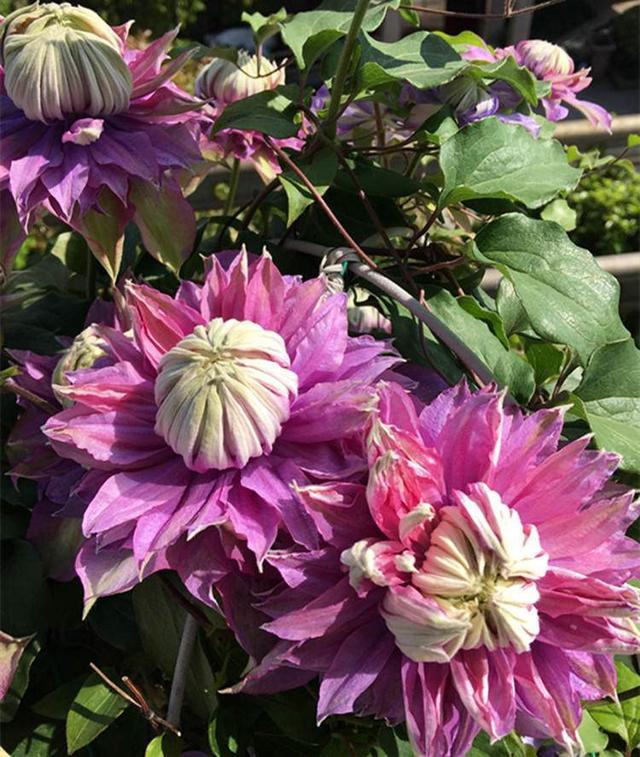
In July, some clematis varieties are dormant while others are still blooming, so how should gardeners care for them properly? It's simple: give clematis "differentiated care," paying attention to different methods for different varieties, and they will bloom in fall with a long flowering period.
So how exactly do you do "differentiated care"? Actually, it just means carrying out July care and management according to the clematis category.
1. Group 1 clematis management
Pot placement: Suitable for a shaded, cool, well-ventilated spot. It is best to place a brick under the pot to avoid direct contact with the scorching ground. You can also use two layers of pots with sand filled in between to lower the temperature.
Watering: Once July arrives, evaporation intensifies and clematis easily becomes short of water, so be sure to replenish water in time. Generally once a day. It is best to water in the cool early morning; if you forget to water in the morning and only notice at noon, then leave tap water in the sun for a while to let it warm up to about room temperature, then water in a shady place.
Training, pruning, and tying in: In July, clematis does not need training, pruning, or tying in. Clematis terniflora, which belongs to Group 1 clematis, is highly heat-tolerant and begins blooming in autumn, so this month its new shoots need appropriate tying in and fastening.
Pests and diseases: In July, red spider mite damage on clematis gradually disappears, but gardeners should not let their guard down, because this month clematis can be affected by thrips; watch for black marks appearing on the leaves, which indicate thrips damage. In addition, just after the rainy season at the beginning of the month, wilt disease is likely to occur; once discovered, immediately cut off the wilted parts and spray chemicals to disinfect.
2. Group 2 clematis management
Pot placement: Suitable for a shaded, cool, well-ventilated spot.
Watering: The weather is hot and water shortage is likely, so be sure to replenish water in time, generally once a day. Be sure to water in the cool early morning or at dusk.
Fertilizing: For Group 2 clematis, after the second bloom, it needs a supplement of diluted liquid fertilizer. Gardeners can use a general-purpose organic liquid fertilizer for flowers, diluted 500 times and poured on the roots, once every 10 days.
Training, pruning, and tying in: After the second bloom, promptly cut off spent flowers and tidy up the messy branches.
Pests and diseases: Thrips occasionally occur; watch for black marks appearing on the leaves, which indicate thrips damage. Thrips are generally active at night, so it is best to spray at dusk after discovering them.
3. Group 3 clematis
Pot placement: Group 3 clematis is relatively heat-tolerant and generally does not need special shading.
Watering: Evaporation intensifies, so replenish water in time. Generally once or twice a day. In particular, large Group 3 clematis plants are heat-tolerant, grow vigorously under high temperatures, and easily become short of water, so water once each in the cool morning and evening.
Fertilizing: After the second bloom, supplement with diluted general-purpose organic liquid fertilizer for flowers, at the same concentration as for Group 2 clematis.
Training, pruning, and tying in: After the second bloom, promptly prune spent flowers and tidy up the messy branches.
Pests and diseases: Watch for thrips damage.
Image from gardener: yetus