What to do about yellow leaves and dry tips on spider plants? 2 tips to keep the leaves glossy green all year round
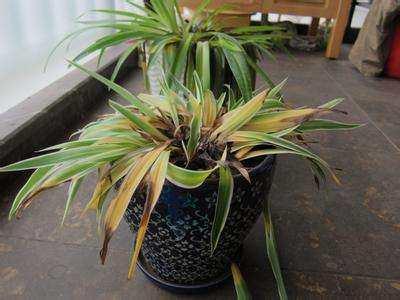
Besides pothos, the spider plant is the most commonly kept plant in the home. It is relatively easy to care for and tolerates rough, casual management. On top of that, its slender, glossy green leaves all year round bring plenty of life and vitality to indoor spaces, so it is very popular with plant lovers. Precisely because it is so easy to grow, some plant lovers do not pay much attention to the day-to-day care of their spider plants, which leads to yellow leaves, dry tips and black tips.
Yellow leaves, dry tips and black tips on spider plants are mainly the result of improper day-to-day care. For example, light that is too strong or too weak, watering too frequently, fertilizing too little or not at all, and so on can all make the leaves of a spider plant dull and then turn yellow. Next, let us briefly share some tips for preventing yellow leaves on spider plants, in the hope that they can help plant lovers.
1. Care for your spider plant according to its growth habits:
In terms of light, a spider plant cannot take direct sunlight, yet it cannot be kept without light either. So it is best to place it one meter away from the balcony, where you can set up a plant stand. Or simply put it in the northeast corner of the balcony, so the light it receives will not be too strong. Diffused light helps the leaves of the spider plant carry out photosynthesis well. In addition, to let the spider plant receive light evenly, it is best to turn the pot every 10 days, so that when the spider plant sends out runners they do not all grow on one side, which would spoil its ornamental value.
In terms of watering, the spider plant likes a humid environment and can be watered once every 2 days; watering in the morning is recommended. To maintain a good humidity environment, you can mist a little water onto the leaves in the evening, which helps it send out runners and grow at night. Note that you should not water too much at a time, to avoid excess water causing the roots of the spider plant to lack oxygen and rot.
2. Regularly spray the spider plant with monopotassium phosphate
Monopotassium phosphate contains phosphorus and potassium, both of which are elements essential for plant photosynthesis. When plant cells lack trace elements, they find it hard to carry out photosynthesis and grow effectively, which directly causes yellow leaves, withered branches and dry tips. Because monopotassium phosphate comes as a powder or solid granules, it must be dissolved first and then diluted with 50 times the amount of water before spraying. Once every half a month, it helps leaf growth and can even turn yellow leaves green again.
Monopotassium phosphate is very practical for growing flowers. Besides spider plants, it can also be used, diluted, to water plants with yellow leaves such as lucky bamboo, money tree and pothos. Moreover, this fertilizer was originally used for fruit trees, and it also helps a great deal with plant roots and stems. So if any plant lovers have potted vegetables at home, they can use it to fertilize them too!
That is all for sharing about spider plant care. Thank you for reading!
Remember to like and share~