Bury crushed eggshells in succulent pots as fertilizer, and the plants will thrive with lush leaves and brilliant flowers
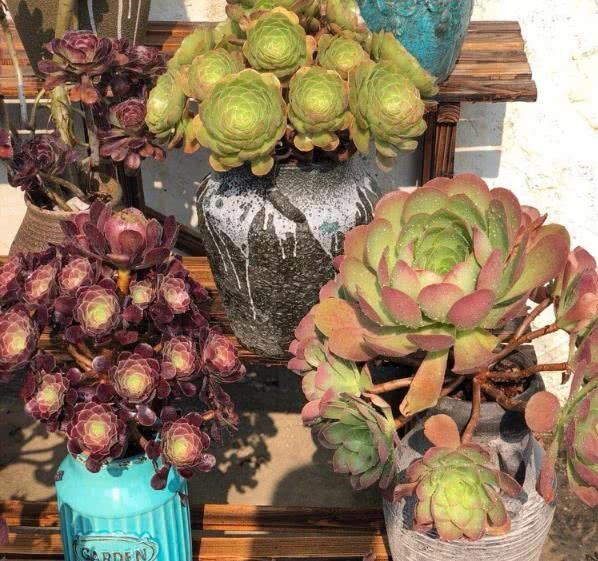
Succulents certainly need fertilizer to grow, just in relatively small amounts. We can make good use of eggshells, crushing them and mixing them into the soil. Using them to care for succulents works quite well; they are excellent fertilizer and can make potted flowers grow luxuriantly with lush leaves and brilliant flowers. Life is all about trying this and that, especially after you start growing succulents. Although it takes time and effort, seeing the results brings a real sense of achievement. "Wasting" time on beautiful things is a kind of happiness too. Some flower lovers use eggshells as containers for growing succulents, which gives a different visual feel. Here we mainly talk about a few key points. When making them, you must clean the egg white out of the eggshell thoroughly, because if it is not cleaned properly it may rot, stink, or even breed maggots, especially in summer. So when using eggshells as containers, be sure to wash them clean.
You can apply a base fertilizer for succulents. Put enough base fertilizer in the pot, and during the growing season give the succulents extra nutrients. With little fuss, these everyday items added to the pot can make succulents plump up several sizes during the growing season, and fill out the pot more easily. Some flowers from the south do not survive or bloom easily when grown in pots in the north, and this is because the potting soil is too alkaline. There are many ways to neutralize alkaline soil. This method involves soaking peeled apple skins and apple cores in cold water, then regularly using this water to water the pots. It can gradually reduce the alkalinity of the potting soil and help certain plants grow.
When small flying insects appear in the flowerpot, you can use three or four cotton swabs (cotton sticks), soak them thoroughly in dichlorvos, just to the point where it does not drip, then insert the handle ends into the potting soil around the plant, and the flying insects can be eliminated. When ants appear in the flowerpot, soak cigarette butts and tobacco shreds in hot water for one or two days. Once the water turns dark brown, sprinkle part of it on the flower stems and leaves, and water the rest, diluted, into the pot, and the ants can be eliminated. During cold spring weather, potted flowers left outdoors can freeze stiff. In this case, quickly wrap the potted flower, pot and all, in three layers of highly absorbent waste newspaper. When wrapping, be careful not to damage the branches and leaves of the potted flower, and avoid direct sunlight. Let it sit like this for one day, so the temperature of the potted flower gradually rises again. After this treatment, the frozen potted flower can recover.
The principle of watering succulents is to give the plant the water it wants. If the soil is clearly wet, do not meddle. But if it feels dry, or almost dry, then you can water, and there is no need to wait until it is completely dry before watering. Controlling water helps control the plant's shape, but it also controls its size. Sometimes a succulent stalls and does not grow, looking sickly, and it is very likely pests or disease are the cause. Carefully check for scale insects and root mealybugs, and whether the leaves have sooty mold. Only by solving these problems can the succulent enter a truly vigorous round of growth. Except in summer, more light will generally bring more beauty to succulents, but that does not mean more light will make succulents grow faster.
If you can keep the temperature around 18-28, every day is a growing season. Temperature is the number one productive force, but unfortunately most people want to do this yet cannot. If the plant is in its youth or prime, it is fine to directly move it into a larger pot while keeping the root ball intact and without damaging the roots, which also saves waiting for it to recover. When a succulent is in its old age, it basically stops growing or even declines, so it is still very necessary to check the roots when repotting. No matter the season, light is indispensable. Even in summer, succulents still need sunlight, but they must not be exposed to too much sun. Shade cloth is generally used for shading, and the degree of light transmission depends on the specific need. Silver-colored cloth is better because it does not absorb heat, but it is very expensive. I generally start partial shading at around 28 degrees, and as the temperature continues to rise, I gradually lower the shade cloth. Once the shade cloth blocks more light, the greenhouse becomes less ventilated, so if conditions allow, it is best to equip a fan to increase ventilation.
In summer, succulents may go dormant because of the intense heat, and the depth of dormancy varies. For example, species such as Crassula 'Morgan's Beauty', Sedum multiceps, Aeonium 'Pink Witch' (xiao ren ji), Aeonium 'Mountain Rose', and Aeonium 'Zwartkop' go fairly deeply dormant, their leaves closing up and growth basically stopping, and there is no need to water before the temperature drops. Most succulents do not go completely dormant, but their growth rate slows because of the environmental conditions. In addition, because they cannot be given water often, succulents consume the water and nutrients stored in their bodies to meet their survival needs. Therefore, having a strong, healthy body through the summer is very important, and it is not recommended to repot or refresh the soil before summer arrives.
This is a gathering place for succulent lovers, sharing succulent care tips. You are welcome to follow and join the discussion.