What are the characteristics of the growth habits of Anthurium?
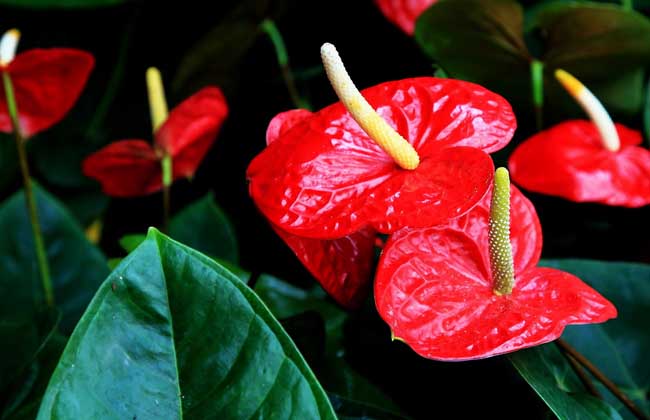
Anthurium is also known as Hua Zhu, Anthurium, Flamingo Flower, Red Crane Taro, Red Goose Palm and so on. It is a perennial evergreen herbaceous plant of the genus Anthurium in the Araceae family, native to tropical rainforest regions such as Costa Rica and Colombia. It prefers environments with good drainage, high air humidity, shade and warmth, and loose, fertile soil. Let us take a look at the growth habits of Anthurium below!
Temperature
Anthurium is relatively sensitive to temperature. The suitable growth temperature is 14-35°C, the optimal temperature is 19-25°C, and the day-night temperature difference is 3-6°C, that is, it is best to be 21-25°C during the day. If it is below about 13°C for a long time, although the plant will not die, it will be difficult to resume growth for a long time. When the temperature is higher than 35°C and the light is relatively sufficient, the leaf surface is prone to sunburn. Because the damaged leaves will not recover, this affects the overall quality of the Anthurium.
Light
Anthurium is a shade-tolerant plant and avoids direct sunlight, but do not think that Anthurium is a shade-tolerant flower that does not need light. According to observations, when light increases by 1%, its flower yield also increases by 1%, but only within the suitable light intensity range for Anthurium. The more suitable light intensity range is 10000-20000 lux, mainly determined according to different varieties and different growth conditions at different growth stages. Under any circumstances, ensure that light does not exceed 25000-30000 lux for a long time.
Humidity
The optimal relative air humidity for Anthurium is 70%-80%, and it should not be lower than 50%, because maintaining relatively high air humidity in the cultivation environment is the key to successful Anthurium cultivation.
Soil and Fertilizer
For potted Anthurium, the soil should preferably be prepared by mixing peat soil with 1/4 perlite, plus a small amount of bone meal or decomposed cake fertilizer powder, and coarse sand and other materials should be placed at the bottom of the pot to facilitate drainage. After a period of cultivation and management, the substrate of Anthurium will undergo biodegradation and salinization, thereby reducing the pH value of the substrate and increasing the EC value, thus affecting the plant root system's ability to absorb fertilizer and water. Therefore, the pH value and EC value of the substrate must be measured regularly, and the proportion of each nutrient element should be adjusted according to the measured data to promote the plant's absorption of fertilizer and water.