When Do Lotus Flowers Bloom? A Detailed Guide to the Lotus Blooming Period
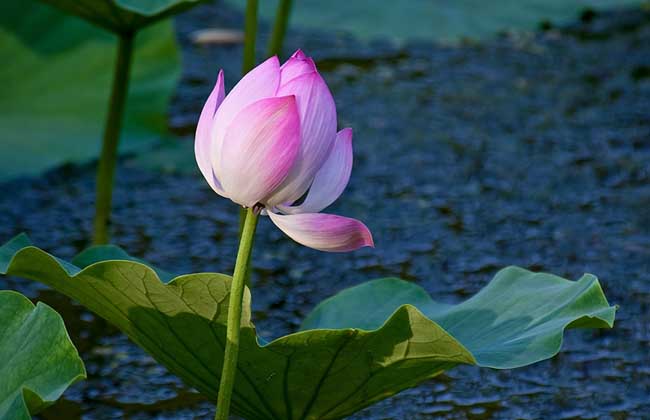
The lotus is one of China's top ten famous flowers. It is a perennial aquatic herbaceous flower of the family Nymphaeaceae and has been a prized aquatic flower in imperial gardens and private courtyards since ancient times. Its blooming period runs from late June to September. With the development of modern technology, we can also use light-control techniques to change the lotus blooming period. Let's take a look below at when lotus flowers bloom!
When Do Lotus Flowers Bloom?
Under normal circumstances, lotus flowers bloom in midsummer. Some lotus flowers are already in full bloom in early June, and the blooming period is from June to September. Flower colors vary among white, pink, deep red, light purple, yellow or bi-colored, and so on. Of course, due to climate change in recent years, the blooming period may also shift. China's eight major lotus viewing spots are Xindu Gui Lake, Hubei Hong Lake, Hangzhou West Lake, Wuhan East Lake, Yueyang Lotus Lake, Shandong Weishan Lake, Jinan Daming Lake, and Nanjing Xuanwu Lake.
The Blooming Process of Lotus Flowers
Lotus flowers begin to open at around 3:00 a.m. First, the outer petals gradually unfurl, and the inner petals at the top of the bud loosen as well. By around 5:30 a.m., the opening expands to 2.5-3.5 cm, and it does not close until around 9:00 a.m. After 15:00 in the afternoon, the bud closes completely. Blooming during the day is also affected by temperature changes. After 8:00 a.m., when the temperature rises to 21°C, a small number of flowers begin to open. As it continues to rise to 24-26°C, blooming gradually increases. When the temperature rises to the optimal blooming temperature of 28-30°C, the peak blooming of the day occurs.
Potted Lotus Flowers Do Not Bloom
1. Variety differences: Edible lotus roots and wild lotus flowers naturally produce few flowers, or even none at all. Their rhizomes spread strongly and require a large space to expand, so potted plants certainly will not produce flower buds or bloom. Seed lotus roots bought from vegetable markets or roadside stalls, or those of unknown origin, mostly belong to edible lotus root varieties. Edible lotus root rhizomes are plump, straight and strip-shaped, sweet and crisp in taste, and the plants have tall leaves with uniform leaf color and shape. Potted lotus seed rhizomes are crescent-shaped, relatively small, astringent and firm in taste, and the plants have smaller leaves and weaker growth. Different varieties also differ in leaf color and leaf shape. Potted lotus varieties differ, and their blooming periods also differ.
2. Insufficient light: The lotus is a sun-loving plant. If the planting environment has poor ventilation and insufficient light, or if the flower bud differentiation stage encounters continuous rain for more than a week, the leaves cannot provide the plant with nutrients for reproductive development through photosynthesis.
3. Pot too small: When large and medium-sized varieties are planted in smaller containers or in pots with a wide mouth and pointed bottom, the rhizomes have little space to expand. When they enter the bud stage, the rhizomes become crowded and there is no room for flower buds to grow.
4. Temperature too low: During the lotus flower bud differentiation stage, if the daytime noon temperature is below 28°C and the nighttime temperature is below 18°C, the flower buds cannot differentiate normally.
5. Improper fertilization: Soil that is too rich, fertilizing too early, or too much nitrogen fertilizer will all cause excessive vegetative growth of the plant. Vegetative growth becomes excessive while reproductive growth weakens, resulting in only leaves and no flower buds.
6. Density too high: There are two situations of excessive density. First, the spacing between pots is small, and with many pots per unit area, the leaves shade each other and ventilation is poor, which is unfavorable for flower bud formation. Second, the petioles in the pot are densely packed. If two seed lotus roots are planted in one pot, or if one seed lotus root develops well not only from the terminal bud but also from the other daughter rhizomes and lateral buds, it is equivalent to two or three seed lotus roots, resulting in high density in the pot, which is unfavorable for flower bud differentiation. The solution is to use secondary replanting to divide the pots as early as possible.
7. Improper depth: When small varieties are planted in deep bucket-shaped pots, the soil is too deep, and the leaf buds and flower buds are unable to emerge from the soil. If the mud layer is less than 16 cm deep or the pot mud is too loose, then in windy areas, the leaves and petioles of large and medium-sized varieties move, and the root system cannot stabilize the plant. The flower buds attached to the base of the petioles cannot remain undisturbed and cannot develop normally.
8. Light-transmitting container: Lotus flower bud differentiation requires a dark environment, and glass containers or white plastic pots are unfavorable for flower bud differentiation.