How to prune Monstera deliciosa? A few practical methods to teach you
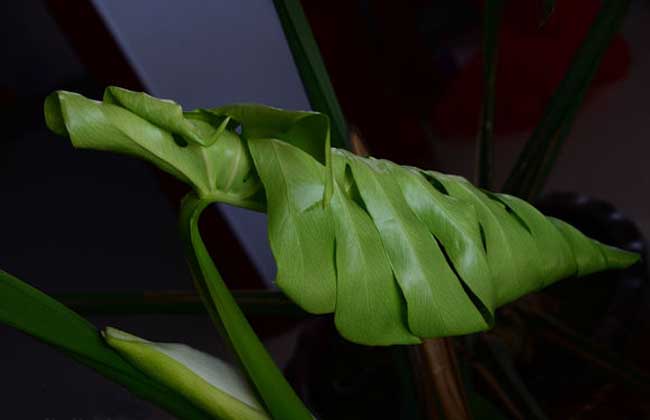
Monstera deliciosa is also known as Penglai banana, iron-wire orchid, perforated Philodendron, monstera banana, and so on. It originates from the tropical rainforests of Mexico and likes warm, humid environments. It dislikes direct sunlight and is not cold-tolerant. In northern China it is grown as an indoor potted plant, and it is a very popular foliage plant. Its leaf shape is unique and beautiful, making it suitable for placement in the home to beautify and accent the home environment. Now let us take a look at the pruning methods for Monstera deliciosa!
Pruning methods for Monstera deliciosa
When the stem nodes and leaves of Monstera deliciosa grow too densely and the branches and vines grow too fast, pay attention to pruning the whole plant, striving for a natural and beautiful look. Use a sharp blade to cut it off 2-3 cm from the base; do not use scissors, because the cut opening will cause the wound to appear crushed and water-soaked, making it hard for the wound to heal. Generally, Monstera deliciosa should not be pruned, because it has only one growth point. Unless the main stem grows to about 3 cm thick and buds form on the stem, pruning is only possible then. Even if there are new branches, the original ones are gone. If you want to grow a large pot, there is only one way: grow three to four plants in one pot, and when they grow well they will look lush and vigorous.
Propagation methods for Monstera deliciosa
1. Division propagation: Carry this out in summer and autumn. Split off an entire section of a side branch from a large Monstera deliciosa, with some aerial roots attached, and plant it directly in a wooden tub or pot. Not only is the survival rate high, but the finished look forms quickly. It is one of the most commonly used and also one of the simplest methods in Monstera deliciosa propagation today.
2. Cutting propagation: Monstera deliciosa can be propagated by stem-node cuttings in both spring and autumn, with cuttings in April-May in spring and September-October in autumn giving the best results. This is because during these periods the temperature is suitable for the cut stem nodes to heal and root, and they survive quickly. For the cuttings, choose side branches of the current year with full stem tissue and robust growth. The cuttings should be 20-25 cm long, and the leaves at the base should be cut off. Keep the small leaves at the upper end, remove the long aerial roots, and keep the short aerial roots to absorb water and help rooting. The cutting bed should use a mixed substrate of coarse sand and peat or leaf mold. After cutting, maintain 25-27°C and relatively high air humidity. Rooting begins only about 1 month after cutting. After the cuttings root, the axillary buds on the stem nodes also begin to sprout and unfold leaves. To speed up the growth of the young plants, keep the room temperature above 10°C and strengthen fertilizer and water management. In the second year after cutting, the young plants take shape and can be sold as merchandise.
3. Seed propagation: Sowing seeds is also a relatively commonly used propagation method for Monstera deliciosa, but compared with the previous two it is used less often. Monstera deliciosa blooms in summer. To increase the seed-setting rate, artificial pollination is needed. Pollinating twice, at 9-10 a.m. and 3-4 p.m., is best and gives a high pollination success rate. From pollination to seed maturity takes 15 months. During the seed development stage, pay attention to ventilation and fertilizer and water management to promote full and plump seeds. Before sowing, first soak the seeds in 40°C warm water for 10 hours, and the sowing soil should be sterilized at high temperature. Monstera deliciosa seeds are relatively large, so spot sowing can be used. After sowing, keep the room temperature at 20-25°C, cover the box opening with plastic film, and maintain humidity above 80%. Generally, they sprout 20-25 days after sowing. During the sowing process, if the room temperature is too low, it will not only affect emergence, but the seeds may even become water-soaked and rot.
Growing methods for Monstera deliciosa
1. Light: Monstera deliciosa likes a warm and humid environment. It dislikes drought and fears direct sunlight, otherwise it easily causes leaf withering. In summer, Monstera deliciosa should be placed indoors or under a shade shed, and must not be placed on a balcony with overly strong sunlight for exposure, as this can easily cause it to die. When the winter temperature drops to 6°C, Monstera deliciosa should be moved indoors to keep warm.
2. Watering: Monstera deliciosa needs sufficient water, and the potting soil must be kept moist frequently. During the summer growing period, water once in the morning and once in the evening, and also sprinkle water on the leaf surface from time to time to keep the leaves bright and the air humid. In winter, water evaporates slowly, so water once every 3-4 days; for routine watering, once a day is enough.
3. Fertilizing: Monstera deliciosa is a plant that relatively likes fertilizer, so pay attention to fertilizing it appropriately. During the growing period of Monstera deliciosa, apply a dilute cake fertilizer solution once every half month. With sufficient and appropriate fertilization, Monstera deliciosa will grow with pleasing leaf color.
4. Pests and diseases: Monstera deliciosa is very susceptible to damage by scale insects, and the stems and leaves are most easily attacked by scale insects. You can clean them with an old toothbrush and then spray with a 1000-fold dilution of 40% omethoate. Common diseases of Monstera deliciosa include leaf spot, gray spot, and stem blight, and timely prevention and control are needed.
5. Repotting: Potted Monstera deliciosa needs to be repotted once a year, and the best time for repotting is between March and April. When repotting, remove the old soil, cut off the dead roots of Monstera deliciosa, and then add decomposed organic fertilizer or phosphorus and potassium fertilizer to the pot as a base fertilizer.