A detailed guide to Monstera deliciosa propagation methods, easy enough for beginners to get started
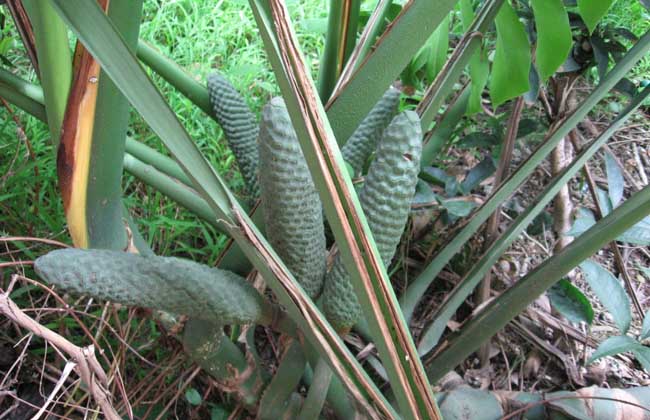
Monstera deliciosa, also known as ceriman, Mexican breadfruit, Swiss cheese plant, and split-leaf philodendron, is a plant of the genus Monstera in the Araceae family. It has a graceful plant shape, uniquely shaped leaves, and deep green, glossy foliage, giving the whole plant a fine ornamental effect. It is a famous indoor potted foliage plant and is very easy to propagate. It can be propagated by division, by cuttings, and by seed. Let us take a look below at the propagation methods for Monstera deliciosa!
Propagating Monstera deliciosa by division
Division propagation of Monstera deliciosa is carried out in summer and autumn. Cut off an entire section of a side branch from a large Monstera deliciosa, keeping part of the aerial roots, and plant it directly in a wooden tub or pot. This not only gives a high survival rate but also produces a formed plant quickly, making it one of the most widely used and also simplest methods in Monstera deliciosa propagation today.
Propagating Monstera deliciosa by cuttings
For cutting propagation of Monstera deliciosa, stem-node cuttings can be used in both spring and autumn, with cuttings taken in April-May in spring and September-October in autumn giving the best results. For the cuttings, select side branches of the current year with firm stem tissue and robust growth. The cuttings should be 20-25 cm long, and the leaves at the base should be cut off. Keep the small leaves at the upper end, cut off the long aerial roots, and keep the short aerial roots so they can absorb water and help rooting. Use a mixed substrate of coarse sand and peat or leaf mold for the cutting bed. After inserting the cuttings, maintain 25-27°C and relatively high air humidity; rooting generally begins only about 1 month after insertion. After the cuttings root, the axillary buds on the stem nodes also begin to sprout and unfold leaves. To speed up seedling growth, keep the room temperature above 10°C and strengthen fertilizer and water management. In the second year after cutting, the seedlings take shape and can be sold as commercial products. If a hanging decoration is desired, a wooden frame or iron stand container can be prepared, filled with palm fiber and placed with fertile leaf mold, and the rooted, surviving Monstera deliciosa planted in it as a hanging basket product.
Propagating Monstera deliciosa by seed
Seed propagation of Monstera deliciosa is also a relatively commonly used propagation method, but compared with the previous two it is used less often. Monstera deliciosa blooms in summer. To increase the seed-setting rate, manual pollination is needed, with pollination at 9-10 a.m. and 3-4 p.m. being best, giving a high success rate. From pollination to seed maturity takes 15 months. During the seed development stage, pay attention to ventilation and fertilizer and water management to promote full, plump seeds. Before sowing, first soak the seeds in 40°C warm water for 10 hours, and the sowing soil should be sterilized at high temperature. Monstera deliciosa seeds are relatively large, so spot sowing can be used. After sowing, keep the room temperature at 20-25°C, cover the box opening with plastic film, and maintain humidity above 80%. After sowing, germination generally occurs in 20-25 days. If the room temperature is too low during the sowing process, it will not only affect emergence but may even cause the seeds to become water-soaked and rot.