What is the flower language of the Swiss cheese plant? A full analysis of its meanings and symbolism
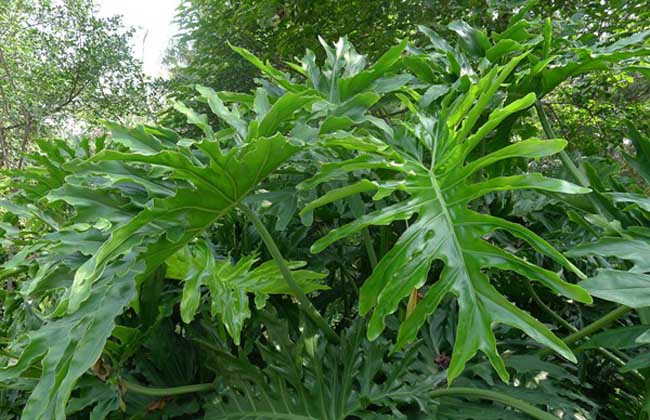
The Swiss cheese plant (Monstera deliciosa) originates from the tropical rainforests of Mexico. Its leaves are ovate, with many oblong holes and deep splits scattered between the pinnate veins in a pattern resembling a turtle shell. Its shape resembles a turtle shell pattern, and its stem has nodes like bamboo, hence the name "turtle-back bamboo" (Swiss cheese plant). It is a well-known large indoor foliage potted plant. Let us take a look at the flower language of the Swiss cheese plant below!
The flower language of the Swiss cheese plant
Health and longevity. The leaves of the Swiss cheese plant closely resemble a turtle shell, and it is also a relatively easy-to-grow indoor plant. At the same time, it has the remarkable ability to absorb carbon dioxide, which benefits human health, so its flower language is health and longevity.
Does the Swiss cheese plant bloom
The Swiss cheese plant does bloom. Its flowering period is August to September, the peduncle is 15-30 cm long, the spathe is thick and leathery, the spadix is nearly cylindrical, the stamen filaments are linear, the pollen is yellowish-white, and the pistil is yellow and top-shaped. The fruit ripens after the flowering period in a different year, is pale yellow, with blue-purple spots around the stigma, 1 cm long and 7.5 mm thick.
The uses of the Swiss cheese plant
1. Ornamental value: The Swiss cheese plant has a very graceful plant shape, peculiar leaf shape, and stays emerald green all year round, lush and vivid. Its aerial roots extend very long and can coil around, which is quite charming and gives people a special sense of beauty. It is outstanding among foliage flowers. Large Swiss cheese plants are suitable for large displays in entrance halls, living rooms and meeting rooms, while small and medium-sized plants are suitable for home placement, giving the environment an elegant atmosphere. In some places it is planted beside trees or in corners of houses and other slightly shaded spots, allowed to grow and climb freely, growing extremely luxuriantly.
2. Air purification: The Swiss cheese plant has the effect of absorbing carbon dioxide at night, and is very helpful for improving indoor air quality and increasing oxygen content. The Swiss cheese plant has the characteristic of preferentially adsorbing harmful gases such as formaldehyde, benzene and TVOC, achieving the effect of purifying indoor air. It is an ideal indoor plant.
3. Edible value: Besides beautifying and being ornamental, its flowers and fruits also have certain edible value. The spadix is fresh, tender and juicy, and is often eaten as a top-grade vegetable in the place of origin of the Swiss cheese plant, cool and refreshing. The yellow bracts outside the inflorescence are quite thick and can be eaten raw, or coated in batter and fried in oil. The berries of the Swiss cheese plant have an even better flavor and can be eaten as fruit; the taste is similar to pineapple, and they can also be made into a beverage, with an excellent taste.
4. Feng shui effect: Placing a Swiss cheese plant in the home has a certain feng shui effect, but attention should be paid to the placement location. In the north, the place of Ren and Gui water, the Swiss cheese plant is used as the Black Tortoise. Specifically, placing the Swiss cheese plant at the study door can increase official luck and add fortune and emoluments. Placing the Swiss cheese plant in an elderly person's bedroom can add fortune and longevity, benefiting the elderly.