How to Grow Air Plants? Cultivation Methods and Precautions
The air plant is the only plant on Earth that grows entirely in the air. It can thrive without soil and produce bright flowers. With many varieties and diverse forms, it is valued both for its foliage and its flowers. It has advantages such as good decorative effect and strong adaptability, and holds high ornamental value. Let's take a look below at how to grow air plants!
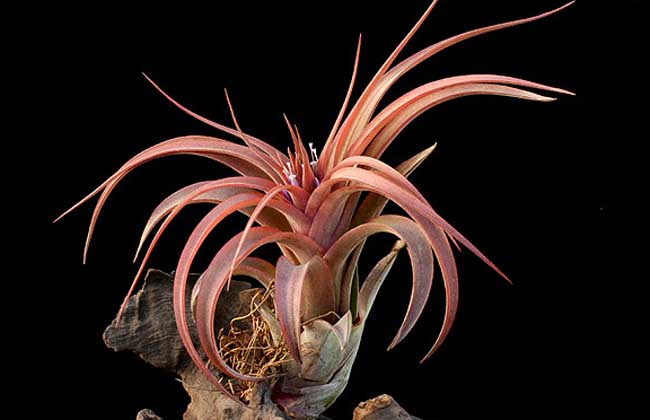
Growth Habits of Air Plants
The biggest difference between air plants and ordinary plants is that they have no root system. The water and nutrients they need are entirely absorbed through the stomata on the leaf surface. If planted in soil or water, they actually cannot survive. Both flowers and leaves are quite special. The leaves have evolved into special forms, including water-storage tissue, scale hairs on the leaves, a reduced number of leaves, and degenerated roots. They have extremely strong adaptability to adversity and can tolerate drought, light, wind, shade, heat and cold. They need no pot, no soil, and do not breed mosquitoes. They are plants that grow epiphytically on tree trunks, rock walls and even on cacti.
Propagation Methods for Air Plants
1. Seed propagation: Seed propagation requires obtaining seeds. Air plants are hand-pollinated to obtain seeds. The sowing season for the seeds is after March each year, and they can be sown from then until November. The most ideal times are spring sowing and autumn sowing. To successfully produce seedlings, the seeds must be placed in a moist but non-waterlogged environment, at a suitable temperature (above 20°C), and then given good indirect light under enclosed cultivation. Generally after 5-6 days, the seeds will be seen turning green, which means the seeds have germinated.
2. Offset propagation: Offset propagation is the method most commonly chosen by growers, because an air plant only blooms once in its lifetime. After blooming, it loses apical dominance and instead converts its nutrients into cell division, turning them into offsets. The growth of offsets is very rapid (depending on the condition of the mother plant), but in any case, it saves a great deal of time compared with sowing. Generally, offsets separated in the same year can also bloom that same year if cared for properly.
Cultivation Methods for Air Plants
1. Temperature management: The optimal temperature for air plant growth is 15°C-25°C, and the general growing temperature is 5°C-40°C. If the temperature is above 25°C, ventilation should be strengthened and relative humidity increased, so that growth does not stall due to excessive heat. In winter, air plants can tolerate low temperatures of around 5°C, and some varieties can tolerate low temperatures of 0°C, but most varieties will suffer cold damage below 5°C, and the plant will die below 0°C.
2. Appropriate watering: Air plants can be misted with a spray bottle 2-3 times a week. In dry seasons, mist once a day. When misting, simply spray until the leaf surface is completely wet, and be careful not to let water accumulate in the center of the leaves. If too much water is sprayed, the plant can be turned upside down to let the excess water drain out.
3. Light control: Varieties with grayer leaves and more numerous, thicker and harder scales need stronger light, while varieties with greener leaves and fewer, softer scales are more shade-tolerant. When grown indoors, they should be placed in a spot with bright light. Insufficient light will cause the plant to become leggy and weak.
4. Reasonable fertilizing: In an artificial cultivation environment, you can spray with Huabao or monopotassium phosphate plus urea diluted 1000 times with water, once a week. You can also soak the plant in a fertilizer solution diluted 3000-5000 times for 1-2 hours. Fertilizing can be stopped in winter and during the flowering period.
5. Disease control: Sunscald often occurs in environments with ample light. The cause is improper handling: when water is sprayed on the leaf surface and does not dry in time, the water droplets act like a convex lens and burn the leaf surface beneath them. However, it does not spread. In daily care, simply pay attention to ventilation.
Precautions for Air Plants
1. Protect the roots and stem: Air plants are best kept with their roots, which makes it convenient to attach them to bark or driftwood for growing. However, because the roots are cut when imported, air plants sold commercially generally have no roots. Before the roots grow out, pay extra attention when attaching the plant not to hinder root growth.
2. Cannot be planted in soil: Apart from a very few air plants that grow on the ground, the vast majority cannot be planted in soil. Air plants of the same variety can be grown together, placed in a hanging basket or a perforated plastic pot, and can be made into distinctive hanging-basket plants. If growing different types of air plants, it is best not to place them on the same attachment or in the same container, because their growth habits, water and light needs differ, and they cannot all grow normally.
3. Container selection: Air plants do not need any container; simply hanging them up with metal wire will do. But note that all plants of the Tillandsia genus cannot tolerate aluminum or copper, so do not grow them with copper wire or aluminum alloy containers. These metals will slowly poison the air plant to death, so be sure to pay attention.
4. Winter temperature: Strictly speaking, growing air plants in winter does not necessarily require keeping the temperature above 5°C. If the light is good during the day, even below 0°C is no problem.
5. Air circulation: Never grow them in a tank. Air plants need a very large amount of air circulation, and they will rot in a stuffy tank. If the weather is too dry, simply soak the plant in water for about an hour, then shake off the water on the leaves. Also, never put them in the sun when the leaves are wet, or the leaves will be burned. All air plants are relatively drought-tolerant, and going several days without water will absolutely not be a problem.
6. Humidity control: Most air plants do not require air humidity as high as one might imagine, and even in their place of origin, the air humidity is not high during the day when there is light, but at night, because the temperature drops and creates a temperature difference, moisture condenses on the plant to form water, which is then absorbed by the leaves. Varieties in the silver-leaf group are even more drought-tolerant than others, so please appropriately reduce watering frequency to avoid rot.
7. Strong stress resistance: Air plants have extremely strong stress resistance. When they look slightly dry, their resistance can reach its peak, while plants that look tender and soft have very low resistance and easily become diseased and rot at the slightest disturbance. Therefore, in cultivation, it is better to let the plant be slightly dry so that it can maintain a healthy state.