Does Ivy Bloom? Flowering Period and Blooming Conditions Explained
Ivy is often used in courtyards to climb rockeries and rocks, or as a vertical greening material on the shady side of buildings. It plays a pivotal role in vertical greening, not only achieving greening and beautifying effects, but also playing a role in oxygen enrichment, cooling, dust reduction, and noise reduction. Let's take a look below at whether ivy blooms!
Does ivy bloom?
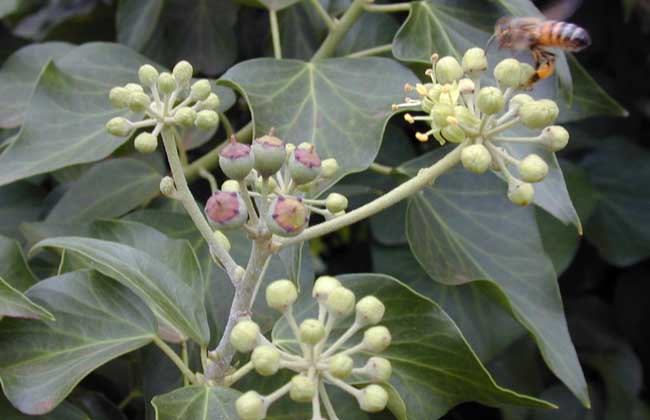
Ivy does bloom. The flowers of ivy are umbels borne singly at the top, or 2-7 arranged in racemes or corymbs forming a panicle. The flowers are relatively small, white-green or pale yellow, with a faint fragrance. The flowering time is generally in autumn, and the flowering period is relatively long. Some home-grown ivy will bloom from autumn all the way to spring.
The flower language of ivy
Bound love, loyalty, friendship, emotion. Ivy was previously considered a magical plant and symbolizes loyalty. In Greek mythology, ivy represents Dionysus, the god of wine, and carries the symbolic meaning of joy and vitality, while also symbolizing immortality and eternal youth.
How to grow ivy
1. Temperature: The optimal temperature for ivy growth is 20°C-25°C. It fears heat and is not cold-tolerant. Therefore, when growing ivy indoors, pay attention to providing ventilation and cooling in summer. In winter, the room temperature should preferably be kept above 10°C, not lower than 5°C, otherwise ivy is prone to frost damage.
2. Light: Although ivy likes light, it is also fairly shade-tolerant. When growing it, the placement position is relatively flexible. However, care should still be taken to avoid direct sunlight, otherwise it is prone to sunscald, with leaf margins and leaf tips scorching.
3. Watering: Ivy should not be watered too much normally. During the growing season, water according to the principle of watering when dry and stopping when wet. If the potting soil is too moist, it easily causes root rot. In winter, when temperatures are lower and ivy grows relatively slowly, watering should be controlled, keeping the potting soil only slightly moist. Ivy is a foliage plant. In the dry winter climate of the north, it is best to spray and wash the branches and leaves once a week with clean water close to room temperature to keep the leaves clean and emerald green.
4. Fertilizing: When growing ivy at home, appropriate fertilization can be applied. Generally, do not fertilize in summer and winter. During the peak growing season, apply a dilute cake fertilizer solution once every 2-2 weeks, and you can also spray a 0.2% potassium dihydrogen phosphate solution on the leaves, which will make the leaf color more beautiful. However, note that when fertilizing, do not apply too much nitrogen fertilizer, and do not let the fertilizer solution stain the leaves, so as to avoid causing the leaves to scorch.
5. Disease prevention: If ivy is not managed properly, it may suffer from leaf spot disease, scale insects, red spider mites, and other damage, and pesticide should be sprayed promptly for treatment.