What are the propagation methods for lavender? A step-by-step guide to easy propagation
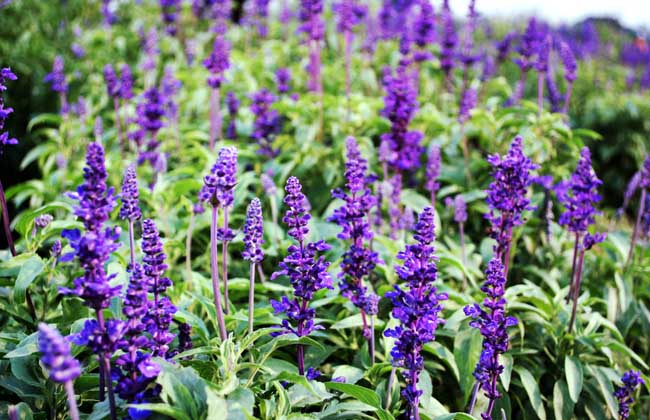
Lavender is a flower that everyone rather likes; a home decorated with lavender is romantic and full of ambiance, and it is also a flower with a very wide range of uses. I believe everyone would like to grow a few pots at home. Its main propagation methods include sowing, cuttings, layering and root division, and in production, cutting propagation is mainly used. Let's take a look below at the propagation methods for lavender!
Lavender division propagation
Lavender division propagation can be carried out in both spring and autumn. Use 3-4 year old plants, and in spring from March to April, divide the old roots of mature plants, with each division carrying bud eyes.
Lavender seed propagation
1. Seed collection: Lavender blooms in April, and the seeds can be harvested after they mature in June-July. After picking the spike-like inflorescences of lavender, spread them out indoors or in a greenhouse covered with plastic film, without piling them too thickly, and let them dry naturally in the shade. After about 10 days, once the flower stalks and outer fruit skins have lost water and become brittle, rub them, then winnow, which can separate the small nutlets from impurities. The nutlets of French lavender need further air drying, and when their moisture content drops to 12-15%, they can be collected and stored in a ventilated, cool place for later use.
2. Sowing method: Lavender is suitable for spring sowing (March-May) and autumn sowing (September-October). When sowing, it is better to use a special sowing medium, or you can prepare one with peat plus a small amount of perlite. Put the medium in a seedling tray, level it, spray a small amount of water to moisten it, and then sow. Either drilling or broadcasting is fine, sowing about 10 seeds per square decimeter. After sowing, cover with a thin layer of coconut coir or vermiculite, then spray water once more, and afterward spray water appropriately depending on whether the medium is dry or wet.
3. Management after sowing: After lavender seeds are sown, they can emerge in about a week. The seedlings have strong disease resistance. After emergence, you can spray 800-fold carbendazim once every two weeks to prevent disease. They need a certain amount of light and nutrients, otherwise they tend to grow leggy and form slender seedlings. When lavender grows to 4-6 true leaves, it can be transplanted once to encourage side branch development. Autumn-sown seedlings can be planted out in spring, and spring-sown seedlings can be planted out after 50-60 days.
Lavender cutting propagation
1. Cutting period: Lavender has strong adaptability to cutting propagation and can be propagated in both spring and autumn. Even in summer, softwood cuttings are feasible, but the requirements for conditions are stricter: if the humidity is too low, they easily wilt, and if the humidity is too high, they easily suffer stem rot. From a production perspective, cuttings are generally best taken in autumn when the soil temperature drops to 15-25°C.
2. Cutting preparation: The quality of the cuttings has a direct effect on the survival rate of cuttings. Cuttings should be taken from vigorous, healthy plants, selecting one-year-old semi-lignified branches that have not yet headed out and have short, thick internodes, cut at 8-10 cm from the tip as the cutting. The cut end of the cutting should be close to 0.5-1 cm below the stem node, and the cut should be made as smooth as possible. Remove two-thirds of the lower leaves, and do not let the phloem split.
3. Cutting method: For the cutting medium, a mixed medium of half perlite and half peat is best. Nurseries with the means can make a cutting bed in a greenhouse for cuttings; those with poorer conditions can make a cutting bed in the open field. After cutting, set up arched rods and cover with plastic film. The cutting bed is generally 1.5 m wide, and the length depends on the site. Spread the medium about 15 cm thick, and be sure to disinfect it before use. Insert the cuttings 5-8 cm deep, with a plant spacing of 3-4 cm and a row spacing of 5-6 cm. After inserting, water thoroughly immediately and cover with plastic film to retain moisture.
4. Management after cutting: With appropriate humidity after lavender cuttings are taken, raising the soil temperature can promote well-developed roots and increase the rate of successful seedling formation. Roots will form in just over 10 days after cutting. Lavender is quite sensitive to water, so slightly dry is preferable. After two months, they can be put into nutrient pots or transplanted, to promote sound root development, increase branching, and cultivate strong seedlings.