Where is lavender native to? Let us show you the main producing regions
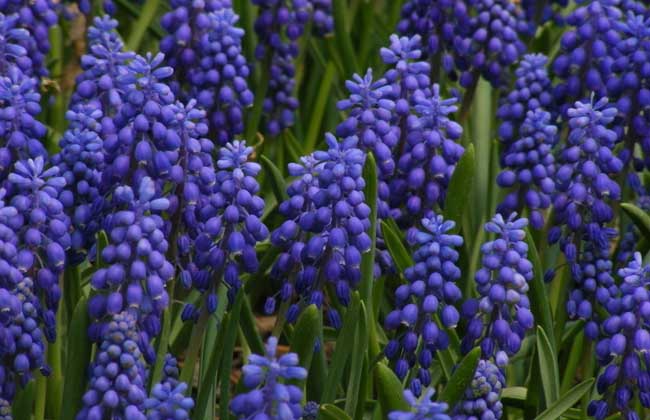
Lavender is a small shrub of the genus Lavandula in the mint family (Lamiaceae). It has many species and high ecological and ornamental value. Its leaf shapes and flower colors are elegant and refined, and its blue-purple inflorescences are long and beautiful. It is a new perennial cold-hardy flower for courtyards, suitable for mass planting or row planting along flower borders, and can also be grown in pots for viewing. It is native to the Mediterranean coast, various parts of Europe, and the islands of Oceania. Now let us take a look at the native distribution of lavender!
Lavender's native regions abroad
Lavender originally grew wild in the southern foothills of the Alps along the Mediterranean coast of France and southern Italy, as well as in Spain, North Africa, and other places. In the 13th century it was a main plant cultivated in the gardens of European medical monasteries. In the 15th century, cultivation began in the Haute-Provence region. At the end of the 16th century, cultivation began in southern France. In the 18th century, Mitcham in Surrey, Lavender Hill in south London, Provence in France, and the mountainous areas near Grasse were all famous for growing lavender and became world-famous tourist destinations. In the 19th century, countries such as the UK, Australia, the US, Hungary, Bulgaria, Russia, and Japan successively introduced and cultivated it, and it has now spread throughout the countries along the Mediterranean and Black Sea coasts.
Lavender's native regions in China
After 10 years of careful cultivation by the people of Ili, lavender has formed a scale at the foot of the Tianshan Mountains along the Ili River. It is a precious and important natural aromatic plant, with a fresh, crisp, rich, and pleasant fragrance. The Ili Kazakh Autonomous Prefecture in the hinterland of the Tianshan Mountains is the main base for lavender cultivation and processing in China and the largest spice production base in Asia.
The native environment of lavender
1. Temperature: Lavender has strong adaptability. Adult plants tolerate both low and high temperatures, and during the harvest season they can tolerate high temperatures of around 40°C. In the Huanglong area of Shaanxi, they can safely overwinter outdoors at -21°C. In the ** region, with soil mounding and snow cover, they can tolerate low temperatures of -37°C, and seedlings can tolerate low temperatures of -10°C. In the growth and development process of the following year, when the average temperature is around 8°C, sprouting begins and takes 10~15 days; when the average temperature is 12~15°C, the plant branches begin to turn green and elongate, taking 20 days; when the average temperature is 16~18°C, budding begins and takes 25~30 days; when the average temperature is 20~22°C, flowering begins; and when the average temperature is 26~32°C, it is the seed-setting period.
2. Water: Lavender prefers dry conditions and does not need much water. An annual rainfall of 600~800 mm is relatively suitable. During the green-up period and budding period, the plants grow relatively quickly and need more water; during the flowering period they need less water; during the seed-setting period the amount of water should be moderate; and during the winter dormancy period, winter irrigation or snow cover is needed. The ideal rainfall distribution throughout the year is abundant in spring, moderate in summer, and sufficient snow in winter.
3. Sunlight: Lavender is a long-day plant. During its growth and development period it requires sufficient sunlight, and throughout the year it requires more than 2000 hours of sunshine. If the plants are in a damp, shady environment, they will develop poorly and age relatively quickly.
4. Soil: Lavender has a well-developed root system and prefers deep, loose, well-aerated, fertile soil rich in silica and calcium. Acidic or strongly alkaline soil, as well as plots with heavy clay, poor drainage, or a high groundwater table, are all unsuitable for its growth.