What are the flower language and symbolism of the peace lily?
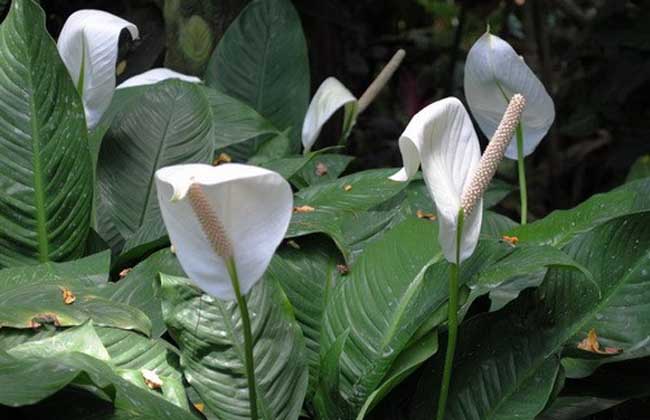
The peace lily (Spathiphyllum) is a perennial herbaceous plant of the genus Spathiphyllum in the family Araceae, native to tropical America, with emerald green leaves and pure white spathes, very fresh and elegant, and is an important ornamental flower in the world. It began to be used for potted ornamental cultivation in the early 20th century. Let's take a look below at what the flower language of the peace lily is!
What is the flower language of the peace lily?
The flower language of the peace lily iscareer success、smooth sailing, and its symbolic meanings arebeauty、noble purity、virtue、warmth、friendship、confidence、prideand so on.
What to do if the peace lily does not bloom
1. Unsuitable light: If the peace lily is kept in too dark a place for a long time, its growth weakens and it is not easy for it to bloom; while if the sunlight is too strong and direct, the leaves may turn yellow.
2. No repotting: The peace lily grows relatively quickly. Generally, after 1-2 years its plant will fill the pot, with crowded leaves, making it difficult to bloom. Therefore, it needs to be repotted in time. Usually, after repotting, placing it in semi-shade is more suitable.
3. Insufficient humidity: The peace lily requires high humidity. When the air is too dry, it is unfavorable for blooming. Each watering should be thorough to keep the potting soil moist.
4. Lack of fertilization: Not fertilizing for a long time is not conducive to the healthy growth of the plant. During the growing period from May to September, apply some granular compound fertilizer each month, so that it will both grow leaves and bloom.
5. Compacted soil: The peace lily requires loose, well-drained sandy loam rich in humus, to facilitate drainage and aeration.
How to grow the peace lily
1. Watering: The peace lily has a relatively high demand for water. The potting soil must often be kept moist, but overwatering must also be avoided. Once overwatered, a large amount of water accumulates in the pot, which easily causes root rot and the plant to wither and yellow. In addition, note that in summer and during drought, water should often be sprayed on the leaves and the ground to increase air humidity, which is beneficial to its growth.
2. Light: The peace lily is relatively shade-tolerant, so it is suitable for growing in a semi-shady environment, and direct sunlight must be avoided. According to experiments, about 60% scattered light can meet the growth needs of the peace lily, so it can be kept year-round indoors in a place with bright scattered light. If it is placed under strong light, the leaves will turn yellow, and it may even be directly sunburned.
3. Temperature: The peace lily likes high temperatures and is especially afraid of cold. Its most suitable growth temperature is 20-28°C. Once winter comes, it must be brought indoors. The lowest temperature it can tolerate is 10°C, so attention must be paid in winter. Relatively speaking, the growing conditions in the north are too poor. If the peace lily is kept at low temperatures for a long time, it will cause root rot, leaf drop or scorched yellow leaves, and in severe cases may even lead to death.
4. Potting soil: Potting soil is the foundation of cultivation. During the growth period, the peace lily should often be kept moist in the pot, but water accumulation in the pot should be avoided. Long-term water accumulation in the potting soil will cause root rot and the plant to wither and yellow. If this happens, it should be removed from the pot, then dried, and then put back in.