How to Water a Peace Lily? Detailed Guide to the Correct Watering Method
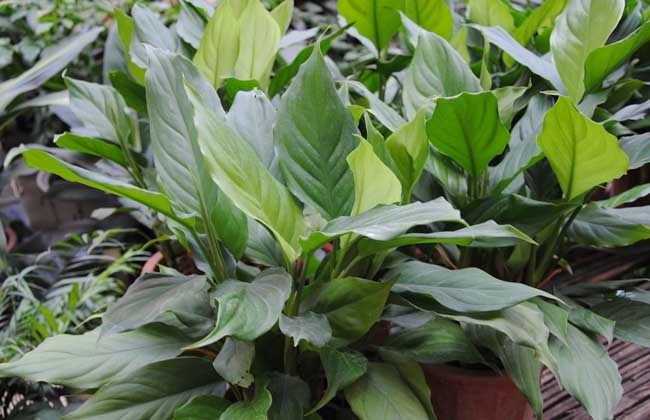
The peace lily, also known as the white sail plant or spathe flower, is a perennial evergreen herbaceous foliage plant of the genus Spathiphyllum in the Araceae family. Native to Colombia, it grows in tropical rainforests and is one of the most popular indoor foliage plants in Europe. Watering is one of the most important factors determining success or failure in growing a peace lily. Let's take a look below at how to water a peace lily!
How to Water a Peace Lily
The peace lily has a relatively high demand for water, and the potting soil must always be kept moist, but it must not become waterlogged. Once watered too much, a large amount of water accumulates in the pot, which easily causes root rot and yellowing of the plant. In addition, in summer and during droughts, water should often be sprayed on the leaves and the ground to increase air humidity, which benefits its growth. The best approach is to water the soil thoroughly once every 7-10 days, but spray the leaves daily with a spray bottle, aiming for moist leaves.
How to Propagate a Peace Lily
1. Division propagation: A robustly growing plant can be divided about once every 2 years, generally in spring when repotting or in autumn. Before new shoots emerge in early spring, take the entire plant out of the pot, remove the old potting soil, and divide the rhizome at the base of the clump into several clumps, each containing more than 3 stems and buds. Replant them in new potting soil, keeping as many roots as possible to help the new plants quickly produce new leaves and a full shape.
2. Seed propagation: After flowering, a peace lily can be hand-pollinated in a greenhouse to obtain seeds. Once the seeds mature, they can be sown immediately after harvesting. The sowing temperature should be around 25°C; if the temperature is low, the seeds easily rot, affecting germination.
Growing Conditions for a Peace Lily
1. Light: The peace lily is shade-tolerant and suitable for growing in a semi-shaded environment. Direct sunlight must be avoided. If it is placed under strong light, the leaves will turn yellow and may even be sunburned. According to experiments, about 60% diffuse light is enough to meet the growth needs of a peace lily, so it can be grown year-round indoors in a spot with bright diffuse light.
2. Temperature: The peace lily likes high temperatures and is especially afraid of cold. Its most suitable growing temperature is 20-28°C. Once winter arrives, it must be brought indoors. The lowest temperature it can tolerate is 10°C, so special attention is needed in winter. If a peace lily is kept at low temperatures for a long time, it will suffer root rot, leaf drop or scorched yellow leaves, and in severe cases may even die.
3. Watering: The peace lily has a relatively high demand for water, and the potting soil must always be kept moist, but it must not become waterlogged. Once watered too much, a large amount of water accumulates in the pot, which easily causes root rot and yellowing of the plant. In addition, in summer and during droughts, water should often be sprayed on the leaves and the ground to increase air humidity, which benefits its growth.
4. Fertilizing: Because the peace lily grows quickly and has a relatively high nutrient demand, during the peak growing season it must be given 1 application of organic liquid fertilizer every 7-10 days, or diluted compound fertilizer or decomposed cake fertilizer water. This helps the plant grow robustly and also helps it keep blooming. In northern winters, when temperatures are low, fertilizing should be stopped.
5. Soil: For potted peace lilies, the soil should be loose, well-draining and well-aerated. Heavy clay soil should be avoided; sandy loam rich in humus is ideal. Generally, equal parts leaf mold and peat soil plus about 1/4 river sand or a small amount of perlite can be used to prepare the growing medium. When planting, add a small amount of farmyard manure, bone meal or thoroughly decomposed cake residue as a base fertilizer.