Is the Peace Lily Poisonous? Learn About Its Toxicity Before Caring for It with Confidence
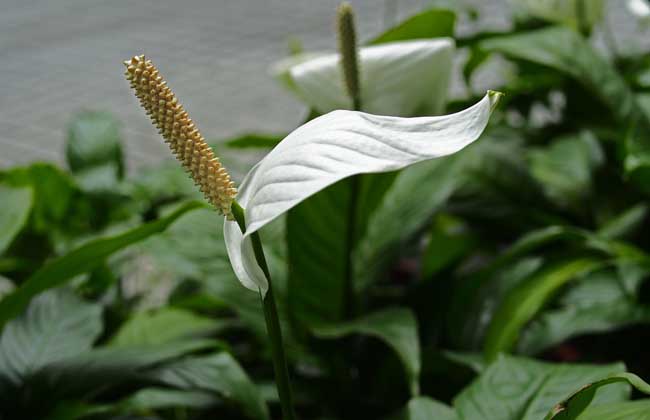
The peace lily is a perennial evergreen herbaceous foliage plant of the genus Spathiphyllum in the Araceae family, native to Colombia, where it grows in tropical rainforests. It has high ornamental value. Whether the peace lily is poisonous is a question that troubles many people. Let us take a look below at whether the peace lily is poisonous!
Is the Peace Lily Poisonous?
The peace lily is poisonous. Its surface is non-toxic; the toxin exists only in the sap. After skin contact there is a burning sensation, redness and swelling, though it will gradually heal. In daily care, as long as you do not touch its sap, there is no problem. If swallowed by mistake, the mouth will feel burning and painful, followed by swelling and blistering, the voice becomes hoarse and strained, and swallowing becomes difficult. Most symptoms lessen over time until they disappear. If you want to relieve the pain, you can choose cool liquids, painkilling pills, or foods such as licorice and flaxseed.
What Benefits Does the Peace Lily Have?
1. The peace lily can filter benzene, trichloroethylene and formaldehyde from the air, which is of great help to human health, especially for newly renovated homes.
2. The peace lily can inhibit the waste gases exhaled by the human body, prevent dryness of the nasal mucosa, and greatly reduce the likelihood of illness. Its help to people's health can be said to be direct and also very great, which is also an important reason why many people choose to grow it.
How to Grow the Peace Lily
1. Watering: The peace lily has a relatively high demand for water, and the potting soil must be kept moist at all times, but overwatering must be avoided. Once overwatered, a large amount of water accumulates in the pot, which easily causes root rot and yellowing and withering of the plant. In addition, note that in summer and during drought it is necessary to frequently spray water on the leaves and the ground to increase air humidity, as only then will it be favorable for its growth.
2. Light: The peace lily is fairly shade-tolerant, so it is suitable for growing in a semi-shaded environment. Direct sunlight must be strictly avoided. According to experiments, about 60% scattered light is enough to meet the growth needs of the peace lily, so it can be grown year-round indoors in a place with bright scattered light. If it is placed under strong light, the leaves will turn yellow and may even be directly sunburned.
3. Temperature: The peace lily likes high temperatures and is especially afraid of cold. The most suitable growth temperature is 20-28°C. Once winter comes it must be brought indoors. The lowest temperature it can withstand is 10 degrees, so attention must be paid in winter. Relatively speaking, growing conditions in the north are too poor; if the peace lily is placed at low temperatures for a long time, it will cause root rot, leaf drop or scorched yellow leaves, and in severe cases may even lead to death.
4. Potting soil: Potting soil is the foundation of cultivation. During the growth period, the peace lily should be kept with moist potting soil at all times, but water accumulation in the pot must be avoided. Long-term water accumulation in the potting soil will cause root rot and yellowing and withering of the plant. If this happens, remove the plant from the pot, then air-dry it, and put it back in.
5. Diseases and pests: Diseases and pests are a common problem for home-grown plants, and they can be avoided as long as care is proper.
Note: Because the peace lily is poisonous, it is not recommended to grow peace lilies in homes with babies. If a child swallows a peace lily by mistake, brown sugar water with ginger slices can be simmered and taken orally, or ginger slices can be held in the mouth. If the condition is relatively serious, go to the local hospital for treatment.