How to grow Magnolia denudata? A detailed explanation of cultivation methods
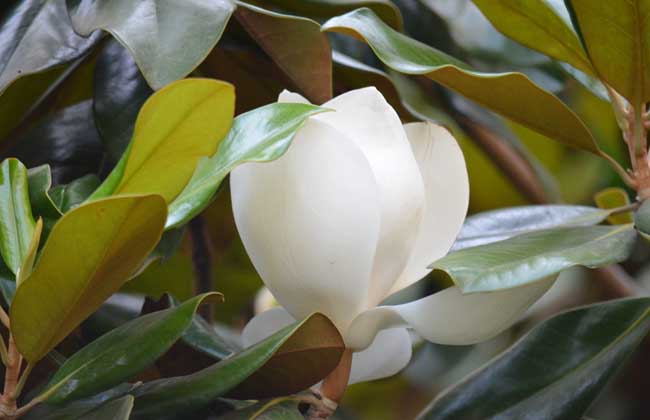
Magnolia denudata is also known as yulan magnolia, spring-welcoming flower, yulan flower, and so on. It is the white-flowered variety among magnolias, a deciduous tree of the genus Magnolia in the family Magnoliaceae, native to central China. It is now cultivated in Beijing and throughout the Yellow River basin and southward. The flowers are white, large and fragrant, opening before the leaves, with a flowering period of about 10 days, and it has very high ornamental value. Let us take a look below at the cultivation methods for Magnolia denudata!
Growth habits of Magnolia denudata
Magnolia denudata is native to Java, Indonesia, and is now widely planted in Southeast Asia. Cultivation is extremely flourishing in China's Fujian, Guangdong, Guangxi, Yunnan and other provinces and regions, and it still grows wild in places such as Lushan, Huangshan, Emeishan and Jushishan. It is suitable for growing in a warm, humid climate and in fertile, loose soil. It likes light, is not tolerant of drought, and is also not tolerant of waterlogging; the roots die after being submerged for 2-3 days. It is relatively sensitive to toxic gases such as sulfur dioxide and chlorine, and has poor resistance.
Propagation methods for Magnolia denudata
1. Seed propagation
① Seed collection: Usually in early to mid-September, when the fruit turns red and some split open to reveal red seeds, they can be harvested. After threshing, select plump, brightly colored seeds as seed stock.
② Seed treatment: Soak the seeds in warm water at 50-60°C for 10 minutes, mix in fine sand and rub to remove the waxy coating, then screen out the seeds and stratify-store them with 3 times their volume of moist sand in a pit sheltered from the wind and facing the sun, covering them with grass material to keep them warm and moist. When about 50% of the seeds have cracked open and shown white the following spring, take them out and sow. For autumn sowing, sow immediately after collection. At this time, the fresh seeds should be soaked in warm water with plant ash added for 3-5 days, rubbed to remove [the coating], watered regularly, and sown after the seeds crack open.
③ Seed sowing: The seedbed should be made into raised beds 1.2 m wide and 30 cm high, with paths 30 cm wide. On the bed, open furrows crosswise at a row spacing of 20 cm for drilling, with a sowing width of 5 cm and a furrow depth of 6 cm. After sowing, cover with 3 cm of soil and then with rice straw. Sow in early March, and complete seedlings can be achieved in mid-to-late May. Autumn-sown seeds emerge in about a little over 1 month. After emergence, promptly remove the covering, insert branches for shade, and water frequently to maintain a moist environment. Strengthen management, remove weeds and apply supplementary fertilizer, and after two years of cultivation they can be planted out.
2. Division propagation: In late winter and early spring, dig up old plants that have suckers, making sure to keep the roots, and plant them as they are dug.
3. Layering: In early spring, gently bend a small branch of the mother tree close to the ground into the soil without breaking it, cover it firmly with soil and secure it with a forked stick, so that the branch grows young roots and new shoots at the point touching the ground, and after one year it can be planted out.
4. Air layering: In late June, select young tender branches on the mother plant, cut away the bark at a branching point with a knife and pare it into a semicircular shape, then wrap it with plastic film or a bamboo tube filled with moist fertile soil, and tie it tightly with rope outside so it does not move, keeping it moist. In late April of the following year, check that new roots have formed, then remove it and plant it out.
5. Cutting propagation: In summer and autumn, select 1-2 year old young branches and cut them into 15-20 cm long cuttings, with the upper end cut flat and the lower end cut into a horseshoe shape. After moistening, treat in fact with a powder composed of 500 ppm indolebutyric acid plus talcum powder, then insert obliquely into the seedbed, leaving 2 nodes at the lower end and exposing one node above the ground. Build a shade frame, keep the soil moist, and roots will form in about 1 month.
6. Grafting propagation: Seedling plants from seed propagation need 7-8 years of cultivation before they flower, while planting grafted seedlings requires only 2-3 years to flower. Commonly used grafting methods include "bud grafting" and "cut grafting"; both cut grafting and bud grafting are the same as for general flowering shrubs.
Cultivation methods for Magnolia denudata
1. Transplant preparation: Carry out deep plowing and land preparation in autumn and winter, and make beds 1-1.5 m in the following spring. During land preparation, apply fertilizer and remove weeds to ensure vigorous growth of the seedlings after transplanting.
2. Transplanting time: The suitable time for transplanting is when the seedlings have grown 2-3 true leaves after emergence. 1-2 days before lifting the seedlings, if the weather is dry and the soil is compacted, water the transplant seedlings thoroughly once a day. When lifting the seedlings, in order not to damage the root system, if the soil is fairly compacted, use a small shovel (2-3 cm wide) inserted into the soil at a 45° angle to help loosen the soil. Then lift the seedlings upward until the root system is completely lifted out of the soil surface.
3. Timely planting out: The planting holes can be dug temporarily with a small shovel at transplanting time. Place the seedling upright, bury the root crown 1-2 cm into the soil, press the soil firm with your hands, and then water.
4. Light and temperature: It is suitable for growing in an environment with sufficient sunlight. Sufficient light can make the plant lush with branches and leaves, and produce more and more fragrant flowers. It can endure short-term low temperatures of -20°C, and can overwinter outdoors in the Zhengzhou area. It can generally also overwinter outdoors in the Beijing area, but when the temperature is below -20°C, cold-protection measures are needed. It is relatively sensitive to temperature, and higher temperatures can make the flowering time earlier.
5. Watering and fertilizing: Fertilizer can be applied 2 times a year, one is the overwintering fertilizer, and the other is the post-bloom fertilizer. Thin, well-rotted human waste is preferable; avoid concentrated fertilizer. Watering can be done as appropriate: water less on cloudy days and more in dry times. In spring, growth is vigorous and water demand is somewhat greater, so water thoroughly 2 times a month. In summer, it can be slightly more. In autumn, reduce the amount of water. In winter, generally water lightly, but if the soil is too dry, water once.
6. Shaping and pruning: Carry out after the flowers fade and before the leaf buds sprout. Generally no pruning is done, because magnolia branches have poor wound-healing ability, so no major shaping or pruning is done. It is only necessary to cut off overly dense branches, water sprouts, crossing branches, dead branches, and diseased and pest-infested branches, to cultivate a reasonable tree shape and make the form graceful. Directly applying a wound-healing and antiseptic film to cut and saw wounds can quickly form a tough, soft film that adheres closely to the wood, protect the growth of wound-healing tissue, prevent infection by rot-causing pathogens, prevent contamination by soil and rainwater, prevent freezing, and prevent the wound from drying and cracking.
7. Flowering period control: If you want yulan magnolia to bloom at New Year's Day or the Spring Festival, move potted magnolia into a low-temperature greenhouse 40-50 days in advance to gradually break dormancy, and after 25-30 days place it in a high-temperature greenhouse, maintain air humidity above 60%, and spray flower-strengthening agent. It will then bloom at the desired time, which can promote strong flower buds, plump petals, vivid flower color, rich fragrance, and a longer flowering period. How to make potted Magnolia denudata flowers large, numerous, fragrant and vividly colored, and with a long flowering period, the key is to strengthen the flowering-period management of potted Magnolia denudata.
8. Disease and pest control: The main insect pests of Magnolia denudata flowers are aphids and scale insects. During management, in addition to paying attention to controlling yellowing disease and root rot, anthracnose must also be controlled. For scale insect damage, spray with 0.3% to 0.4% vinegar solution, or remove them by hand. Aphids damage young buds and flower buds, and can be killed with sumithion, or sprayed with a 500-fold solution of washing powder, or a cotton swab dipped in washing powder solution can be used to wipe away the pests, after which the branches and leaves are sprayed and washed with clean water. If disease is found, promptly remove diseased plants and diseased leaves, and at the same time spray the leaves with a 500-fold to 800-fold aqueous solution of 50% carbendazim, or use an 800-fold to 1000-fold solution of 70% thiophanate for control.