Detailed Guide to Growing and Caring for the Lucky Bamboo (Rohdea japonica)
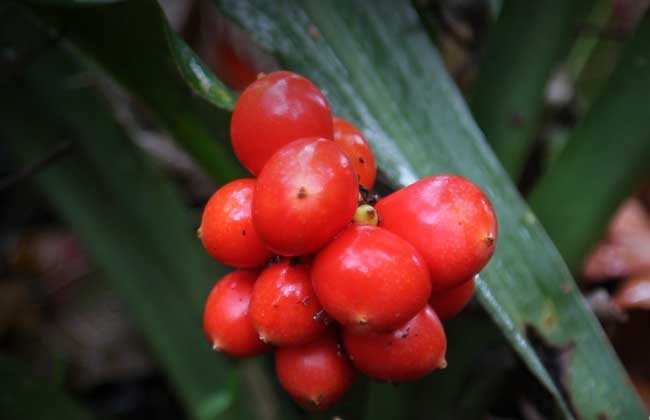
Rohdea japonica is also known as red-fruited Rohdea, Kaihouken, nine-jointed lotus, winter-evergreen, iron carrying pole, and so on. It is a perennial herbaceous plant of the genus Rohdea in the lily family. It is a traditional ornamental flower in China and Japan, symbolizing health, longevity, happiness and good fortune. Since ancient times it has been a first choice plant for courtyards and homes. Let us take a look below at how to grow Rohdea japonica and the points to note!
Propagation Methods for Rohdea japonica
1. Division propagation: carry this out in spring when repotting. Lift the plant out of the pot, cut the rhizome at the base of the stem, coat it with plant ash to prevent rot, or leave it for half a day until the cut surface dries before potting. After planting, do not water too much. For natural bulbil propagation, dig up the bulbs in August-September and plant them graded by size. After one planting, wait several years until the bulbs become crowded before dividing them again.
2. Cutting propagation: spring and summer are suitable. Select sturdy young stems 12-15 cm long as cuttings, keep the 2 leaves at the top, insert them into a sand bed, and maintain relatively high air humidity at a room temperature of 25-30°C. Roots form 20-28 days after insertion. Water propagation can also be used; the cuttings can be slightly longer, preferably 15-20 cm, inserted directly into a glass bottle filled with clean water, changing the water once every 2 days, and new roots will grow in about 15-20 days. When the roots are 3-4 cm long, pot them up.
3. Seed propagation: sowing is generally carried out between March and April. Sow in a flower pot filled with culture soil, water, then temporarily place in a shaded spot and keep moist. At 25-30°C, germination occurs in about 25 days.
How to Grow Rohdea japonica
1. Soil selection: the growing soil for Rohdea japonica can be made by mixing humus soil, leaf mold, sandy soil, furnace cinders and fertilizer together. All five soil materials should be prepared in advance, exposed to strong sunlight, then finely broken up and sieved before use.
2. Reasonable fertilizing: Rohdea japonica has thick and emerald-green leaves, so it must be fertilized once every 15 days. After normal outdoor cultivation in spring, apply a top dressing about once every 7 days. Stop top dressing before flowering. After fruiting, give a large amount of fertilizer, applying top dressing every few days to make the fruit fuller.
3. Watering management: Rohdea japonica likes moisture but fears waterlogging, so it should not be watered too much, otherwise the roots rot easily. Water once every 2-3 days. It is best to place a water tray under the flower pot so that water can seep through the small holes into the soil, keeping the potting soil moist at all times.
4. Temperature management: Rohdea japonica has strong vitality and can survive in both north and south China. A temperature of 20-30°C is best. In winter, around 7°C is enough to keep it safe.
5. Light control: Rohdea japonica likes moist soil and also likes to grow in an environment with weak light. In summer, place it in a spot without sunlight. As an ornamental flower at home, it can be placed under the balcony to avoid strong sunlight. If it is to be cultivated outdoors in summer, a shed needs to be built to shade it from sunlight; under sunlight the leaves easily turn greenish-white, and the leaf edges also easily scorch.
6. Timely pruning: Rohdea japonica should be pruned in time, completed before the Start of Summer. When pruning, check front and back, and cut off leaves that are aged, insect-damaged or cracked. In spring, cut off useless old leaves, which can concentrate nutrients, make the plant sprout new shoots and differentiate flower buds. Pruning is an important task, otherwise it is difficult for it to bloom.
Points to Note When Growing Rohdea japonica
1. Do not water too much: note that when loosening the soil, pay attention that in the early stage just after transplanting, water must not be applied too much, otherwise the roots will die from too much water. For potting, it is best to use soil rich in humus, which is suitable for cultivation. Be sure to remember that the potting soil can be changed once every 2 years.
2. Light should not be too strong: Rohdea japonica is a semi-shade plant and does not need much light, but it cannot be without light. Especially in summer, there must not be too much or too strong light. In winter, remember to regularly take it out to bask in the sun, but the temperature must not be lower than 10°C, otherwise the flowers are easily frostbitten.
3. Watch out for yellowing leaves: if the leaves of Rohdea japonica turn yellow or the leaf edges curl, it may be caused by lack of water, or it may also be caused by lack of light.
4. Timely prevention and control of diseases
① Leaf spot disease: when leaf spot disease occurs, promptly remove diseased and residual leaves. Both in the early and late stages of the disease, spray with 0.5%-1% Bordeaux mixture (or 50% carbendazim 1000-fold solution).
② Anthracnose: the main cause of anthracnose is poor ventilation. When there is damage by scale insects, it favors the occurrence of the disease. Maintenance should be strengthened and phosphorus and potassium fertilizers applied more. In the early stage of the disease, spray with 0.3%-0.5% equal-amount Bordeaux mixture (or 60% zineb 800-900-fold solution, or 70% thiophanate 1500-fold solution).
③ Brown soft scale: if few plants are affected, or the number of insects is small, generally scraping the insects off with bamboo strips or similar is enough. During the nymph hatching period, spray with 40% dimethoate emulsifiable concentrate 1000-fold solution (or 40% omethoate emulsifiable concentrate 1000-fold solution). It can also be sprayed with 5% phosmet emulsifiable concentrate 1000-fold solution to kill them.