Detailed Explanation of the Key Points of Pruning Techniques for Garden Flowering Shrubs
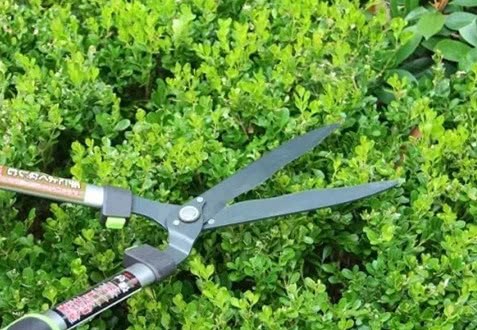
Flowering shrubs refer to shrub plants grown mainly for their flowers. They come in diverse forms and can create a colorful display, and are regarded as an important part of the garden landscape. Flowering shrubs are suitable for lakesides, streams, roadsides and park layouts, as well as for small courtyard accents and potted ornamentals, and are also often used for cut flowers and for making bonsai.
Pruning is one of the key measures for promoting the healthy growth of flowering shrubs. Scientific and reasonable pruning can not only cultivate a beautiful tree shape, but also further regulate the rational distribution of nutrients within the plant, control excessive vegetative growth, increase the amount of flowering and fruiting, and keep the branches and leaves of flowering shrubs lush with flowers blooming continuously.
Before pruning any type of flowering shrub, you should first understand its growth habits and prune at the right time and in a reasonable way according to its natural growth pattern, so that it can achieve the best ornamental effect in the garden.
1. Flowering shrubs that bloom on the current year's new shoots, such as rose of Sharon (Hibiscus syriacus), crape myrtle (Lagerstroemia indica), pearl bush (Sorbaria kirilowii) and rose (Rosa), are suitable for pruning in winter or early spring. This type of flowering shrub differentiates flower buds on the new shoots that emerge in spring of the current year, and their flowering period is in late spring or summer and autumn. Winter pruning is mainly based on heading back and thinning.
Heading back generally adopts the method of "light pruning for strong branches, heavy pruning for weak branches." For strong branches, only 1/5 to 1/4 of the total length of the branch is cut off. Removing the top tip of the branch can stimulate the majority of the semi-plump buds below it to sprout, disperse the nutrients of the branch, and make the branch produce more medium and short branches, making it easier to form flower buds. For the renewal and rejuvenation of weak trees, old trees and old weak branches, generally 2/3 to 3/4 of the total length of the branch is cut off.
Thinning means removing branches from the base. It can regulate the even distribution of branches, enlarge the space, improve ventilation and light transmission conditions, help the growth and development of branches inside the canopy and flower bud differentiation, enhance the ornamental effect of the tree, and also control excessive growth. Thinning is mainly to remove overly dense branches, senescent branches, diseased and pest-infested branches, etc., so it should be carried out during the dormant period. In northern regions, because winters are cold and springs are dry, pruning should be postponed until early spring when temperatures rise and the buds are about to sprout.
2. Flowering shrubs whose flower buds form on the previous year's branches, that is, flowering shrubs that bloom first and then leaf out in early spring or that bloom and leaf out at the same time, such as flowering almond (Prunus triloba), forsythia (Forsythia suspensa), ornamental peach (Prunus persica), winter jasmine (Jasminum nudiflorum), lilac (Syringa) and cherry blossom (Prunus serrulata), form their flower buds on the previous year's branches and open in the following spring, so pruning is generally carried out after the flowers fade, that is, from May to June. If pruned in winter, the branches bearing flower buds formed in summer and autumn will be cut off, affecting the ornamental effect of the following year.
However, if too many flowering branches are borne on one branch, not pruning will consume excessive nutrients, resulting in smaller flowers, a shorter flowering period and easy shedding. To improve the ornamental effect, overly dense short branches can be appropriately thinned, and long flowering branches can be headed back leaving about 7 sets of flower buds (with the bud at the cut being a leaf bud).
3. Flower buds borne on perennial branches, such as Chinese redbud (Cercis chinensis) and flowering quince (Chaenomeles speciosa). Although most of their flower buds are borne on biennial branches, when nutritional conditions are suitable, these old branches can also differentiate flower buds. The pruning amount for this type of flowering shrub should be as small as possible. In early spring, cut off the withered and dried parts at the tips of the branches. During the growing season, to prevent the current year's branches from growing too vigorously and affecting flower bud differentiation, pinching can be carried out to make the nutrients more concentrated.
4. Shrubs that produce multiple flushes of shoots and bloom multiple times a year, such as Chinese rose (Rosa chinensis), can have the current year's branches headed back or strong branches cut back during the dormant period, while at the same time removing crossing branches, diseased and pest-infested branches, parallel branches, weak branches and overly dense branches in the inner canopy.
In cold regions, heavy pruning can be carried out, and if necessary, soil can be mounded up for cold protection. During the growing season, pruning can be carried out multiple times. Most of the flower buds of Chinese rose differentiate at the tips of the current year's new branches. As long as new branches continue to emerge throughout the year, it can bloom continuously. Therefore, during the growing season, whenever the flowers fade, pruning should be carried out immediately, heading back at a plump bud below the spent flower. The bud at the cut can quickly sprout and produce shoots, forming flower buds and blooming. After the flowers fade, prune again, and repeat this process so that flowers keep blooming continuously.
In addition, for shrubs grown for their ornamental stems, such as kerria (Kerria japonica) and red-osier dogwood (Cornus alba), because the ornamental part is the bright young twigs (the color of old branches is often relatively dull), they are often kept for winter viewing. To make their ornamental period longer, they are often not pruned in autumn or winter, but in early spring before the buds break, so that the winter branches can fully play their ornamental role. When pruning, heavy pruning should be carried out, leaving only 15 cm to 20 cm of the aboveground part and cutting off the rest, to promote more new branches, and at the same time gradually remove old stems and carry out renewal continuously.
For flowering shrubs grown for their ornamental fruit, such as holly (Ilex) and Amur honeysuckle (Lonicera maackii), heavy pruning is not suitable. To avoid affecting the autumn fruit display, after flowering there is no need to prune, or some overly dense branches can be appropriately cut away to allow ventilation and light transmission.