Detailed Explanation of the Key Points of Photinia × fraseri Cutting Propagation Techniques
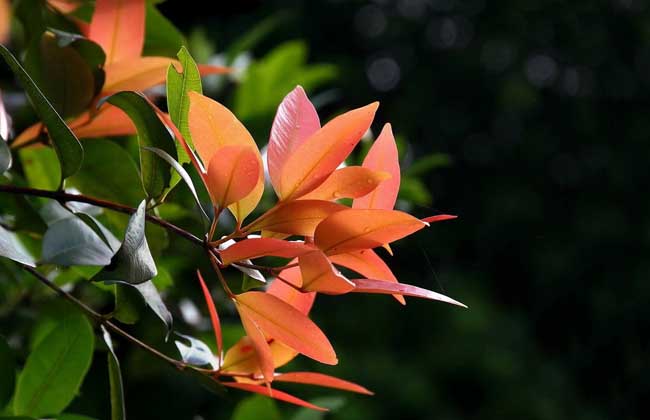
In production, Photinia × fraseri is mainly propagated by cuttings. Cutting propagation has the characteristics of low cost, simple operation and a high survival rate. It is a propagation technique that can be carried out in ordinary plastic greenhouses and is suitable for popularization and application in most nurseries. Let's take a look at the cutting propagation techniques for Photinia × fraseri below!
Cutting Preparation for Photinia × fraseri
Select open field with good drainage, fields that dry out after rain stops, a relatively low groundwater table, convenient transportation and a stable water source to build the nursery. For cutting in a single-span greenhouse, the greenhouse film must be covered, plus a shade net. After the ground inside the greenhouse is leveled, build ground-level cutting beds, with a width of about 100 cm. Install 10-12 cm high retaining boards around the perimeter, and spread a layer of fine sand at the bottom to facilitate drainage. The cutting substrate can be vermiculite plus peat, or clean yellow subsoil plus fine sand. The seedbed and substrate must be disinfected with fungicides and insecticides to prevent pests and diseases.
Cutting Methods for Photinia × fraseri
1. Cutting time: The requirements of Photinia × fraseri for cutting time vary by region. In the middle and lower reaches of the Yangtze River, spring, summer and autumn are preferable. Generally speaking, temperatures between 15-35 degrees are all acceptable, with 20-30 degrees being most suitable. Therefore, late April to late June and late August to mid-October are the golden seasons for cutting Photinia × fraseri.
2. Selection of cuttings: Select thick, stout, semi-lignified one-year-old branches as cuttings. Cut the cuttings to a length of 3-5 cm, with flat cuts at both the upper and lower ends. In the golden cutting season, because the temperature is appropriate, generally half a leaf is retained. According to experience, retaining a little less than half for large leaves and a little more than half for small leaves is more appropriate. Pay attention to keeping the cuttings moist, shading them and sprinkling water. When cutting the cuttings, it is best to use special scissors, which make smaller wounds than ordinary flat-mouth scissors. The cut end of the cutting has the phloem facing inward and the xylem slightly sunken toward the center, making it easy for the cutting to form callus tissue and take root, with a high survival rate. It is best to cut the cuttings and carry out cutting on cloudy days and before 10 a.m. and after 4 p.m.
3. Cutting method: For Photinia × fraseri cuttings treated with rooting agents, the rooting time can be advanced from 40 days to 7-15 days. Therefore, before cutting, the cuttings should first be treated for rooting. Commonly used rooting agents include finished products such as ABT and Guoguang, and biochemical raw materials such as naphthaleneacetic acid and indolebutyric acid. Before cutting, first water the seedbed thoroughly. The cuttings should not be inserted too deeply into the soil, generally 2/3 of the cutting. Use 400-700 plants per sq m. The leaves at the top of the cuttings should face the same direction so that they receive uniform light, which helps them take root and sprout early. After inserting, water thoroughly again. After the moisture on the leaves dries, spray with thiophanate-methyl or chlorothalonil at 600-800 times dilution to prevent disease. Finally, cover the entire seedbed tightly with a small arch greenhouse film.
Post-Cutting Management of Photinia × fraseri
1. Shading and topdressing: From cutting until rooting and sprouting, shading is required, maintaining a shading rate above 75%. After cutting, foliar topdressing should be carried out frequently, and it can be done together with spraying for disease prevention. From callus formation to the growth of young roots, spraying a nitrogen fertilizer solution at a concentration of 50×10-6 is sufficient. After the root system has formed in large numbers and before transplanting, the nitrogen fertilizer concentration can be increased to 100×10-6 to 150×10-6.
2. Pest and disease prevention: After cutting, pest and disease control should be strengthened. As soon as cutting is finished, spray carbendazim and thiophanate-methyl at 800 times dilution, and thereafter spray once every 5-7 days. After rain, fungicides must be sprayed promptly. During the cutting period, anthracnose is mainly likely to occur and requires periodic control. The main control agents include carbendazim-forez, mancozeb and chlorothalonil. The main pests are aphids and moth larvae, and the main control agents include imidacloprid and beta-cypermethrin.
3. Strengthen management: After 15 days, some cuttings begin to take root, and the substrate moisture content should be appropriately reduced, generally maintained at about 40%. After more than 50% of the cuttings begin to take root, ventilation can be gradually opened by uncovering the film, and shading can be reduced to about 50%. After all the cuttings have taken root and more than 50% have leafed out, gradually remove the greenhouse shade net and film, provide relatively sufficient light, and begin hardening the seedlings.
4. Seedling hardening and potting: Rooted seedlings are potted, with a medium of 80% peat + 20% perlite. Generally, lime should be added to peat to adjust the pH value while supplementing calcium. When potting seedlings, it is generally necessary to lift, plant and water as you go. Seedlings are prone to cold damage at the small seedling stage, so small seedlings are best overwintered in a greenhouse, or reduce the water supply and do not fertilize. In summer high temperatures, it is best to spend the summer in a shade shed. Water management should pay attention to drying before watering. For fertilizer management, generally when potting, mix 4 kg of controlled-release fertilizer into each cubic meter of medium, and after potting regularly apply a nitrogen water-soluble fertilizer at 700-1000 times dilution.