When Does the Calla Lily Bloom? A Detailed Guide to Its Flowering Period
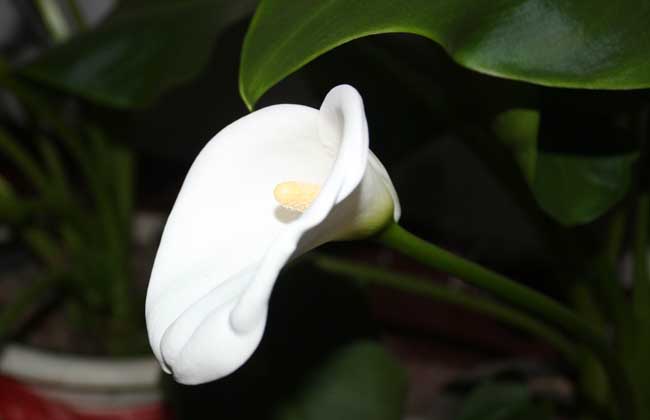
The calla lily, also known as cigu flower, water taro, wild taro, arrowhead flower, sea taro lily, flower taro and so on, is a perennial robust herbaceous plant of the genus Zantedeschia in the Araceae family. In European and American countries it is a commonly used flower for bridal bouquets. Its flowering time is generally March to April, but if the environment is suitable, it can bloom all year round. The flower colors include white, red, yellow, silver star and purple spot, among others. Let's take a look together below!
When Does the Calla Lily Bloom
In a warm, humid environment where winter is not cold and summer is not hot, the calla lily can bloom all year round, with March to April being the peak flowering period. Different varieties also have different flowering periods; for example, the yellow calla lily blooms from July to August, the red calla lily blooms in June, and the silver star calla lily blooms from July to August.
The Growth Habits of the Calla Lily
The calla lily is native to southern Africa and often grows beside rivers or in swamps. It likes a warm climate, is not cold-tolerant and not high-temperature-tolerant. Its optimum growth temperature is around 20°C; at 0°C the rhizome will freeze and die. In winter it needs sufficient sunlight, and with insufficient light it produces few flowers. It is slightly shade-tolerant. In summer, when the sunlight is too strong and scorching, appropriate shading should be provided. It likes moisture, and slight waterlogging does not much affect its growth, but it is not drought-tolerant. It prefers loose, fertile clay loam rich in humus. Its dormant period varies with the region: when cultivated in the Yangtze River basin and northern China, it should be moved into a greenhouse in winter, blooming in winter and spring, and in summer it goes dormant due to high temperature and drought; whereas in subtropical regions where winter is not cold and summer is not dry and hot, it does not go dormant all year round.
How to Make the Calla Lily Bloom All Year Round
1. Repotting and changing the soil: To keep the calla lily blooming all year round, the pot should be changed and the soil renewed twice a year, and a relatively large pot should be chosen to maintain sufficient nutritional area. The first repotting should be done in early April after the winter flowers have finished blooming, and the second after the Start of Autumn. If the rhizome has filled the entire pot, division must be carried out, and each plant should not have more than 3 leaf clusters. The potting soil needs to be loose, breathable and have a certain water-holding capacity, and sufficient base fertilizer must also be applied to ensure a lasting supply of nutrients.
2. Cool maintenance: Except during the dog days of summer, for most of spring, summer and autumn, the calla lily should be kept in a cool place for maintenance. It cannot be exposed to direct sunlight, nor kept in complete shade. Before the rainy season arrives, water should often be sprayed on the ground to increase air humidity, and the potting soil should be kept moist and must not be allowed to dry out. Every 10 to 12 days, a dilute liquid fertilizer should be applied. In mid-October it should be moved indoors, after which it can get more sunlight. Pay attention to ventilation to prevent pests and diseases.
3. Timely pruning: The leaves of the calla lily have a relatively short lifespan. After new leaves grow, the outer old leaves begin to turn yellow, and the yellow leaves should be cut off in time. After the flowers fade, the spent flowers and flower stalks should also be cut off in time; otherwise they will consume nutrients by setting seed, affecting later flowering. When watering, do not spray onto the plant cluster, to prevent the pruned areas from rotting and infecting the whole plant.
4. Maintain temperature and humidity: Care in midsummer and deep winter is the key to whether the calla lily can bloom all year round. In mid-July of midsummer, the potted plant should be moved to a place with a draught, preferably fully shaded, and water should be sprayed on the ground 2 to 3 times at noon and in the afternoon to prevent heat and lower the temperature. If the daytime maximum temperature does not exceed 30°C, it can continue to bloom. In winter, the room temperature should preferably be 16°C to 18°C, and must not be lower than 8°C. If the indoor air is dry, water should be sprayed around to increase humidity, to prevent the leaf edges from turning yellow, and at the same time light should be increased so that they bloom continuously in winter.