How to grow orchids? A detailed guide to orchid cultivation methods
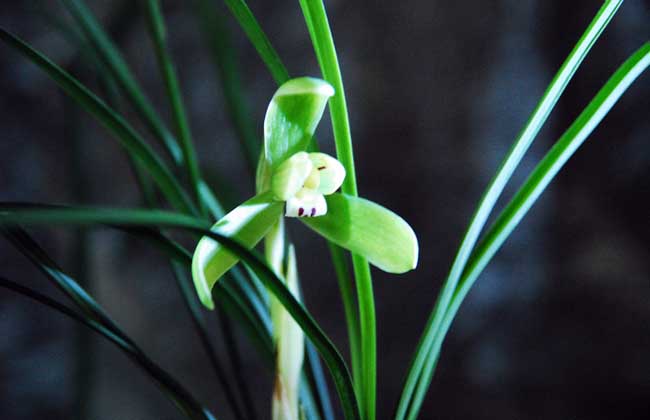
Orchids are epiphytic or terrestrial herbaceous plants and have been cultivated in China for more than a thousand years. Chinese people have always regarded orchids as a symbol of purity and elegance, and together with "plum, bamboo and chrysanthemum" they are known as the "Four Gentlemen," with very high ornamental value. Let us take a look at orchid cultivation methods below!
Orchid growth habits
1. Soil: Orchids grow on shady, well-ventilated mountain slopes where water does not accumulate, so the growing medium must be airy, loose, well-draining and slightly acidic. The most commonly used medium for outdoor cultivation is mud flower soil.
2. Temperature: The optimal growing temperature for orchids is 18-30 degrees Celsius. Below 5 degrees Celsius and above 35 degrees Celsius growth is slow. The reproductive growth period is 5-18 degrees Celsius.
3. Humidity: Orchids grow well when the relative air humidity is 60-70%. Too dry or too wet conditions easily trigger orchid diseases. Therefore, outdoor cultivation should create a gradual humidity microclimate suitable for orchid growth, and indoors a sprayer and hygrometer should be installed.
4. Light: Orchids prefer shade and fear direct sunlight, but if kept in a hidden spot year-round, they will also rarely bloom.
5. Fertilizer: During the vigorous growth period, orchids should be fertilized more; during the dormant period or weak growth period, fertilization may be omitted. If over-fertilized, it will burn the roots and leaves, causing irreparable loss.
Orchid propagation methods
1. Seed propagation: Orchid seeds are extremely fine, and the seed contains only one incompletely developed embryo, with very low germination ability. In addition, the seed coat does not easily absorb water, so sowing by conventional methods will not germinate. Therefore, orchid mycorrhizal fungi or artificial culture media are needed to supply nutrients before germination can occur.
2. Tissue culture: Tissue culture of orchids has already been successfully achieved, and this method can be used for propagation where conditions permit.
3. Division propagation
① Division timing: This can be done in both spring and autumn, generally once every three years. Any plant with robust growth and densely clustered pseudobulbs can be divided. After division, each cluster must retain at least 5 connected pseudobulbs. Before division, watering should be reduced to make the potting soil relatively dry.
② Division method: When potting after division, first cover the drainage hole at the bottom of the pot with broken tiles, then spread coarse gravel to occupy 1/5-1/4 of the pot depth, then add coarse-grained soil and a small amount of fine soil, and finally plant in sandy loam rich in humus. The planting depth should be such that the pseudobulbs are just barely buried in the soil. Leave a 2 cm rim at the edge of the pot, and spread Selaginella uncinata or fine gravel on top.
③ Post-planting care: After planting is completed, water thoroughly and place in a shady spot for 10-15 days, keeping the soil moist, then gradually reduce watering and carry out normal maintenance.
Orchid cultivation methods
1. Location: The location where orchids are placed is very important and will directly affect the growth and development of the orchids. Generally, in spring, summer and autumn they are placed outdoors (in summer, in a shaded outdoor spot), and in winter they are placed indoors. Outdoors, it is best to have open space on all sides and moist air; indoors, there should be sufficient light, preferably facing south, which is favorable for orchid growth. Orchid pots are best placed on wooden stands or tables, not on the ground.
2. Soil selection: Peat soil, black mountain soil, pine bark soil, garden soil, fern roots, moss and bark chunks can all serve as orchid growing medium. The bottom of the pot must have good drainage to increase permeability. Broken tiles can be used to cover the drainage hole, then a layer of crushed brick and stone granules is laid down to a thickness of one quarter of the pot depth, and finally the growing medium is spread on top. When planting orchids, they should be held upright and inserted into the soil, then covered with soil up to the pseudobulbs. Press the soil firm, leaving the top 2 cm unfilled with soil to facilitate watering. After planting, water thoroughly and place in a cool environment, then move to a ventilated, sunny environment after half a month. The pot surface can be covered with small gravel, which both retains moisture and enhances the ornamental appearance.
3. Watering: For orchids, eight parts dry and two parts moist is best. During the flowering period and the leaf bud sprouting period, watering should be reduced. During the plum rain season, they should be moved back indoors or a shelter should be set up to keep off the rain. In summer, water in the early morning or evening, and not too much. In autumn, the amount of watering can be appropriately increased. In dry seasons, spray every evening. When spraying, spray upward so that the mist droplets are fine and even, moistening the leaf surface and wetting the ground, thereby increasing air humidity. Sometimes it is best to spray several times a day. When watering, pour from the edge of the pot; do not pour directly over the top, and do not water at noon. Although watering can be greatly reduced in winter, it should not be omitted entirely; be careful not to let the potting soil dry out completely. At the end of winter and beginning of spring, if watering has wet the leaf sheaths along the leaves, wait until they dry in the sun before moving the plants indoors to prevent rot. In short, water when dry and stop when moist, with the principle of keeping slightly on the dry side. Rainwater and spring water are best for watering. All kinds of water should first be collected and stored in a jar so that pollutants in the water settle, the water temperature returns to normal, and the chlorine in tap water dissipates, and only then should it be used for watering.
4. Light: Although orchids prefer cool conditions, if kept in a hidden spot year-round, they will also rarely bloom. Orchid growers discovered long ago that orchids on the shady side of a mountain have long leaves but sparse flowers, while orchids on the sunny side of a mountain have short leaves but many flowers. Therefore, light must be given attention in orchid cultivation. In spring and summer, orchids are best shaded with reed blinds, or placed at an east- or south-facing ventilated window indoors. Orchids under the blinds should have their pots turned once every half month so that the orchid receives light on all sides, which is beneficial for balanced plant growth. When the weather turns cool in autumn, the potted orchids should be moved out from the shady spot and allowed to bask in the morning sun for half a day, but care should be taken that autumn is not dry. In cold weather, place them under a south window indoors to overwinter, but not too warm; it is best to add a plastic film cover to maintain appropriate humidity on the leaf surface. As for pest and disease control, if brown rust disease or southern blight occurs, treat with 0.5% lime sulfur mixture. If there are ant nests, the pot can be immersed in water to drive them away.
5. Fertilizing: Applying fertilizer should avoid high concentration. Therefore, during the growing period, horse-hoof sauce residue water or soybean cake water can be used once every half month. If potassium dihydrogen phosphate is applied in an appropriate amount, the effect is even better. Fertilizing in the hot summer season is not appropriate because the temperature is too high, water loss is fast, and the fertilizer concentration will become stronger, affecting plant growth. In addition, daily watering is needed, along with spraying water on the leaves several times, with the water slightly acidic, which is beneficial for plant growth.
6. Pruning: During orchid cultivation, the plants need to be pruned. For example, when old leaves turn yellow and wither, they need to be pruned, which not only benefits the growth of other leaves but also improves ventilation. Diseased leaves especially need to be pruned promptly to prevent contagion. In addition, the scissors also need to be disinfected to prevent infection.