How to Water Orchids? A Detailed Guide to the Correct Watering Method
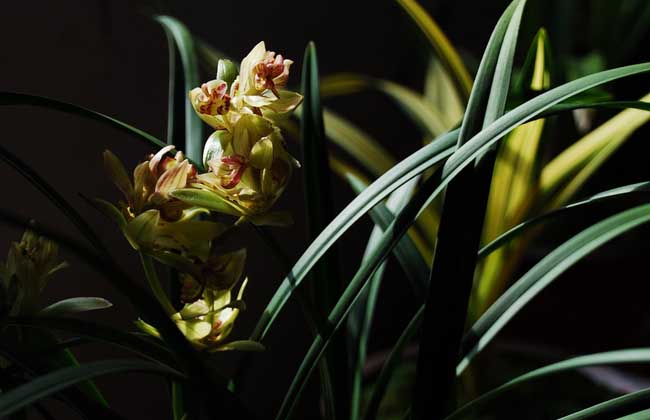
For orchids, eight parts dry and two parts moist is best. Water less during the flowering period and when new leaf buds are emerging. During the plum rain season, move them back indoors or set up a shelter to keep off the rain. In summer, water orchids in the early morning or evening, but not too much. In autumn, the amount of watering can be increased as appropriate. During dry seasons, mist every evening to increase air humidity. Let's take a look at orchid watering methods below!
When to Water Orchids
1. Judge based on the condition of the orchid leaves and the wetness of the pot surface. If the orchid leaves show mild dehydration and the potting medium on the surface has dried out completely, and after digging about 5 cm into the surface medium it is still dry, this means the medium lacks sufficient moisture and it is time to water.
2. Carefully insert a bamboo stick into an appropriate spot in the orchid pot, pull it out after about one hour, and judge how much water the potting medium contains based on how moist the stick is.
3. Pick up a pot of orchids, hold it near your ear, and tap the rim of the pot lightly with your hand. If the sound is dull, the medium still holds plenty of water; if the sound is crisp, it is time to water. However, this method requires some experience and is not easy for most people to master.
Key Points for Watering Orchids
1. Water as appropriate according to seasonal changes and the specific growth conditions of the orchids. In spring, summer, and autumn, when orchids are in their vigorous growth period, water frequently and water thoroughly; never give half-measure watering. During the high-temperature period of midsummer, also water frequently, water more, and water thoroughly; never give half-measure watering, so as to help eliminate stale air in the pot. From late autumn to early spring, when temperatures are low and the plants grow slowly, water less. In the cold winter season, when the plants basically stop growing, water less or not at all, but the potting soil must be kept moist; otherwise it will affect the smooth progress of the plant's metabolism, delay the time for young buds to emerge, and the young buds will be thin and weak.
2. Water according to the size of the orchid pot and the number of plants. If the pot is large and there are many plants, water frequently, water more, and water thoroughly; never give half-measure watering. If the pot is small and there are few plants, water frequently, water less, and water thoroughly; never give half-measure watering.
3. Water according to the potting medium. Coarse, hard media have good air permeability and drainage, but very poor water retention and fertilizer retention, so you should water frequently, water more, and water thoroughly; never give half-measure watering, and you should also fertilize frequently. Mixed hard and soft media have relatively poorer air permeability and drainage, but relatively better water retention and fertilizer retention, so the intervals between watering and fertilizing should be appropriately extended. Soft media have relatively even poorer air permeability and drainage, but better water retention and fertilizer retention, so the intervals between watering and fertilizing should be extended even more appropriately.
Orchid Watering Methods
1. Pouring: "Pouring" means using a watering can to pour water along the edge of the pot. The advantage of this method is that water will not get into the heart of the leaves. The disadvantages are that watering is slow and it is hard to water thoroughly, so you need to pour repeatedly many times to achieve a thorough watering effect.
2. Sprinkling: "Sprinkling" means using a spray bottle or shower head to sprinkle water, wetting the entire orchid-growing environment, letting water seep from the soil surface to the orchid roots and moisten the orchid pot. The advantage of this method is that the water can thoroughly water the whole orchid pot. The disadvantage is that water easily splashes into the heart of the leaves, so it must be used carefully, otherwise it will cause heart rot.
3. Soaking: "Soaking" means immersing three-quarters of the orchid pot together with the medium into water. The advantage is that the water can soak through. The disadvantages are that it easily spreads bacteria and is labor-intensive and time-consuming. Expert orchid growers often use these three methods in combination, with very ideal results.
4. Misting: "Misting" means using a sprayer to spray out fine mist that falls directly onto the orchid leaves, allowing the leaves to absorb it into the plant through their stomata.
5. Humidifying: "Humidifying" means increasing air humidity so that orchid leaves can absorb it. There are also several humidifying methods.
① Use a humidifier to create mist and increase the humidity of the space.
② Increase the water surface area by placing more water basins under the orchid stand, relying on water evaporation to increase the humidity of the space.
③ Artificially simulate rainfall to splash up water mist and increase air humidity. In addition, some also use an oxygen pump placed in a water basin to help evaporate water vapor, and so on.