How to Choose an Orchid Pot? Detailed Guide to Pot Selection Methods and Tips
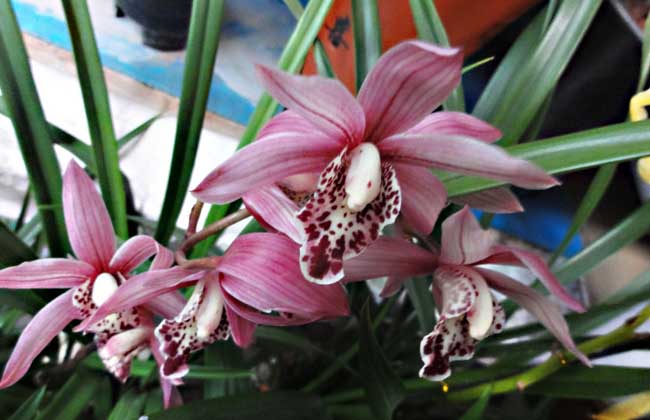
When choosing an orchid pot, you should first consider your own site and orchid stand conditions. To give orchid cultivation aesthetic and cultural appeal, it is sometimes required that the orchid pots be uniform in size, texture, and color, or uniform in size and texture while rich and varied in color and style. The main types include clay pots, plastic orchid pots, earthenware pots, purple clay (zisha) pots, porcelain pots, glazed pots, and stone pots. Let's take a look together below!
Clay and Tile Pots
Because clay and tile pots have low density and excellent water permeability, they are the first choice for growing orchids. Their characteristics are a loose texture, strong breathability, and resistance to waterlogging, making them suitable for pot cultivation of orchids. For balconies, patios, and sites where many orchids are grown in pots, this type of pot should be used because it is easy to manage. When choosing tile pots, it is best to select ones with a large bottom hole, a flat and round rim, consistent height, and thoroughly fired. At the same time, pay attention to choosing gray, slightly deeper pots with feet; clay pots with feet can enhance air circulation at the bottom opening of the pot, which is greatly beneficial to orchid growth. Although ordinary clay pots are good, they are too heavy, take up much space, and have simple, rough, and unattractive styles. Nowadays, only a few people still use clay pots to grow orchids.
Nowadays, experienced orchid growers, in order to achieve the goals of both breathability and beauty while growing orchids well, spare no expense to custom-order thin-walled, highly breathable, exquisite clay pots for growing orchids. It is said that orchids grown in this kind of orchid pot grow better than in ordinary clay pots. Of course, the price of this kind of clay pot is also extraordinary.
Plastic Pots
Plastic pots are lightweight, beautiful and elegant in appearance, light, clean, and durable, with good moisture retention, many styles, many specifications, and a wide range of choices. They use less growing medium. Their biggest feature is that they take up little space, making them suitable for orchid nurseries and balconies. At the same time, their openings are standardized, and they can be disassembled and assembled, making them convenient to transport and store, with moderate prices. The disadvantages are poor breathability, easy heating, and slow heat dissipation. To solve this problem, you can do it yourself by drilling several extra holes in the wall of the plastic pot with an electric drill. This can strengthen air circulation inside the pot, facilitate drainage and breathability, and promote orchid growth.
Earthenware Pots
With increasing ornamental requirements, cream-yellow and earth-yellow specially decorated orchid earthenware pots are often used, but this kind of pot is generally not widely chosen; it is only a matter of personal preference and decorative need.
Purple Clay Pots
The walls of purple clay pots have relatively good breathability, but poorer than clay pots. They are both suitable and attractive for growing high-grade orchids, especially suitable for exhibitions, and are a necessary pot for orchid masters. When choosing this kind of pot, those with evenly drilled holes in the pot wall, a large bottom hole, and a thin pot wall are the first choice, as they facilitate drainage and breathability. At the same time, try as much as possible to keep the opening diameter and height dimensions consistent for easy placement on orchid stands. For carved craft pots, those with hollowed-out holes in the pot wall made by carving techniques are top-grade. Modern orchid growers who choose purple clay pots for growing orchids are the most numerous.
Of course, porcelain pots, glazed pots, and stone pots can also be used for growing orchids. If they have commemorative significance, artistic quality, or cultural relic value, then of course they should not be discarded, but this kind of pot wall has relatively poor breathability, so these pots are generally not chosen for planting high-grade orchids.