What Do Carnations Mean? A Detailed Explanation of Their Floral Symbolism
Everyone knows that the second Sunday of May each year is a very heartfelt holiday——Mother's Day. On this day, attentive and filial children all buy a bouquet of carnations and personally give them to the mother who gave them life and raised them, to repay her years of nurturing care. But do you know what carnations mean? What exactly is the relationship between Mother's Day and carnations? Let's take a look together below!
What Do Carnations Mean?
Carnations carry symbolic meanings such as passion, charm, love that makes one tender and vulnerable, true affection, "Mother, I love you," warm blessings, "I love you," warmth, kindness, selfless maternal love that asks for nothing in return, tolerance, the flower of mothers, deep family affection, longing for family, pure adoration, passionate love, warm-heartedness, sorrow and regret, sighs of admiration pain, greatness, sacredness, kindness, consolation, spiritual connection, sincerity, good fortune, and longing.
The Floral Language of Carnations in Different Colors
1. White: sweet and lovely, innocent and pure, pure love, a gift that brings good luck to women, purity, pure friendship, my living love, my love endures forever, faith, elegant love, true affection, respect.
2. Pink: I will never forget you, beauty, youth, devotion, wishing Mother forever young and beautiful; being moved, brightness, maternal love, a woman's love, I love you passionately.
3. Red: my heart aches for you, admiration, worship, infatuation, maternal love, family affection, passionate love, warmth, a wounded heart, longing, belief in your love, wishing Mother health and longevity, wishing you good health.
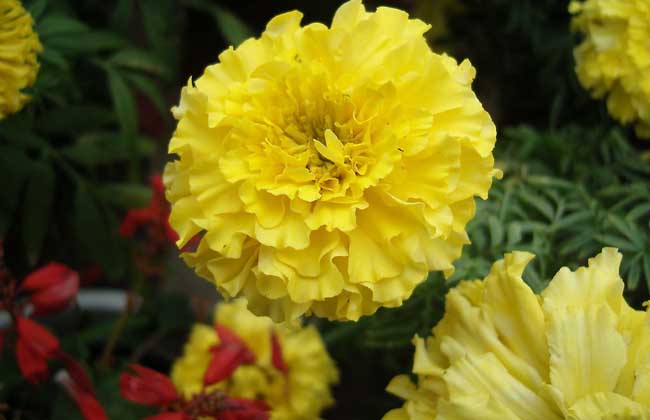
4. Yellow: you disappoint me, abandonment, disdain, lasting friendship, gratitude to Mother, rejection, disgrace, contempt, eternal thanks, deep friendship.
Mother's Day and Carnations
May 9, 1906 was an ordinary day, but for Anna Jarvis of Philadelphia, USA, it was a day of overwhelming grief, because on that day her deeply beloved mother left her forever. In the days that followed, she shed tears every day, unable to stop missing her.
In 1907, at the memorial gathering on the anniversary of her mother's death, she hoped everyone would wear white carnations to commemorate her late mother, and she proposed that the second Sunday of May each year be designated Mother's Day. So she wrote countless letters to many influential figures, putting forward this suggestion of hers.
On May 10, 1908, through her unremitting efforts, her hometown of Philadelphia organized and held the world's first "Mother's Day" celebration. Afterwards, the Presbyterian Church in Seattle, USA, took the lead in carrying out activities honoring mothers. The famous American literary giant Mark Twain personally wrote a letter to Miss Anna Jarvis, praising her for this great initiative and expressing that he too would wear a white carnation to mourn his loving mother.
On May 7, 1914, through the tireless efforts of Anna and many others, the U.S. Congress finally passed a resolution designating the second Sunday of each year as National Mother's Day, to express reverence and gratitude to all mothers, and President Wilson issued it for implementation on May 9 of the same year.
On May 14, 1914, the first National Mother's Day was held in the United States.
In May 1934, the United States also issued a Mother's Day stamp for the first time. On the stamp was a mother with both hands resting on her lap, joyfully looking at a bouquet of bright, beautiful carnations in a vase in front of her. As the stamp spread, people in many places came to associate Mother's Day with carnations. Carnations thus became the flower symbolizing maternal love and were held in people's esteem. People placed their feelings of missing and respecting their mothers onto carnations, and carnations also became an indispensable gift for giving to mothers.
We do not know exactly when Mother's Day was introduced to China, but since the 1990s, many Western holidays have gradually been introduced to China, and Mother's Day is one of them. For Chinese people, the greatness of Chinese mothers is unmatched by any ethnic group, so Mother's Day spread quickly in China and has now become one of China's important holidays.