What are the propagation methods for boxwood? A detailed explanation of common propagation techniques
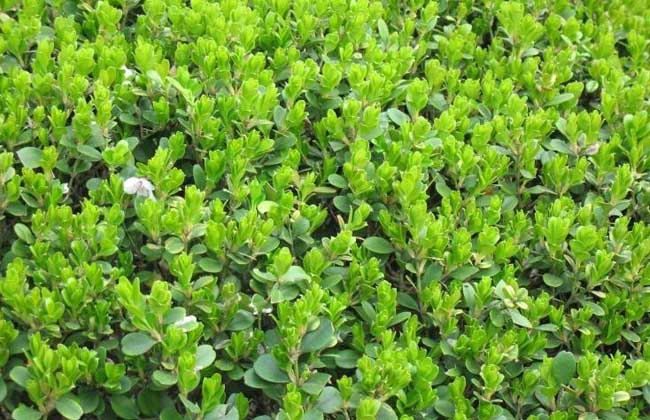
Boxwood, also known as boxwood wood, Guaizi boxwood, common box, etc., is mainly produced in Shaanxi, Gansu, Hubei, Sichuan, Guizhou, Guangxi, Guangdong, Jiangxi, Zhejiang, Anhui, Jiangsu, Shandong and other places in China. Its propagation methods mainly include seed propagation and cutting propagation. Let's take a look at the propagation methods for boxwood together below!
The growing environment of boxwood
Boxwood mostly grows in high mountains and steep cliffs, as well as mountainous and rocky places. It is shade-tolerant and prefers a warm, humid climate and loose, fertile soil. It can grow in acidic, neutral and alkaline soils. It has a well-developed root system and strong sprouting ability, is weak in cold resistance, and is resistant to pollution.
Seed propagation of boxwood
1. Seedbed: In early September, choose loose, fertile, well-drained sandy soil as the sowing site, apply base fertilizer (organic fertilizer) and mix in insecticides and fungicides such as carbendazim. After deep plowing and leveling, make the seedbed.
2. Sowing rate: The sowing rate is 50-60 grams per square meter. Mix the seeds with an appropriate amount of sand, then evenly scatter them on the seedbed, cover with fine soil 1-1.5 millimeters, and cover with a layer of straw curtain to retain moisture.
3. Post-sowing management: After sowing, the seeds only grow radicles that year and do not germinate. To prevent freezing damage, in mid-to-late November before the soil freezes, cover the straw curtain with 5-8 cm of soil. In mid-to-late March of a normal year, remove the straw curtain and covering soil, and build a plastic arched shed on the seedbed, controlling the temperature at 25-30°C. After about 20 days, the embryo buds grow out of the soil surface. After that, control the temperature inside the shed between 20-25°C, and water appropriately. When the temperature stabilizes around late April, remove the plastic arched shed. During the seedling stage, weed and loosen the soil, water in time, spray 2% potassium dihydrogen phosphate solution multiple times for foliar fertilization, and promptly prevent and control pests and diseases.
Cutting propagation of boxwood
1. Seedbed: For the cutting seedbed, choose a plot with high terrain, deep soil layer, loose soil, and good drainage and irrigation. After clearing grass roots and stones, make a high bed about 1-1.2 meters wide, and drench with 10% imidacloprid at 1000 times plus 5% mancozeb at 1500 times to eliminate underground pests and harmful pathogens. After leveling the seedbed, pat it flat with a shovel, pour on 10% decomposed dilute human urine, and then spread a layer of sifted burnt mud ash or yellow soil on the bed surface, about 5 cm thick.
2. Cuttings: Boxwood can be propagated by cuttings at any time, but using tender branches grown in the current year as cuttings in summer gives a high survival rate. Select excellent branches that are lignified or semi-lignified from the current year as cuttings. After collecting the cuttings, cut the cuttings in a cool, sheltered place, and use sharp knives or scissors. When cutting, for branches that have already grown small branches at the nodes, cut them off 0.5 cm above and below the node, then split the stem node into two halves according to the position where the small branches grow, and insert the two branches separately. For branches that have not grown small branches, 2 nodes must be retained, with the upper end cut into a flat surface 1 cm above the bud, and the lower end cut into a horse-ear shape or flat cut 0.5 cm from the bud.
3. Inserting cuttings: Insert cuttings shallowly rather than deeply. For small branches inserted separately, the flat cut surface should face downward, and the depth should be 1 cm into the soil for the mother plant. For large branches, the insertion depth is 1 cm for the next stem node into the soil. Insert the cuttings at an angle of about 45 degrees to the ground. Shallow and slanted insertion helps the cuttings take root and survive earlier. After inserting, compact the soil around the cuttings and immediately water thoroughly once so that the lower part of the cuttings fits closely with the soil. The row spacing for cuttings is generally 12-15 cm, and the plant spacing is 6-8 cm. When inserting cuttings, do not leave too many leaves on the cuttings, nor cut them all off. The lower leaves can all be cut off together with the petioles, and 2 leaves can be kept on the upper part. Then, depending on the size of the leaves, cut each leaf by 1/2 to 2/3 to reduce excessive consumption of water and nutrients.
4. Management: After boxwood cuttings are inserted, a shed should be built for shade to reduce transpiration and direct sunlight on the seedbed. When cutting in early spring or late autumn, plastic film should also be added to prevent winter damage. After cutting, water frequently to keep the seedbed soil moist, so that the surface soil of the seedbed does not appear white. Fertilization for cuttings can be done together with watering, or potassium dihydrogen phosphate plus urea can be sprayed on the leaves. Weeding must be done very carefully, and do not bump the cuttings.
5. Transplanting: Roots can develop in about one month, and after about 2 months they can be transplanted into the nursery for cultivation. In the first year, proper shade is needed in summer and autumn. From the second year onward, general management can be used. During the peak growth period, apply nitrogen fertilizer water 1-2 times a month, and stop fertilizing after autumn. Seedlings cultivated for 2-3 years can be planted in small pots, and 4-5 year old seedlings can be used for flowerbed edging or ground planting.