When Does the Silk Tree Flower Bloom? An Introduction to Its Blooming Period
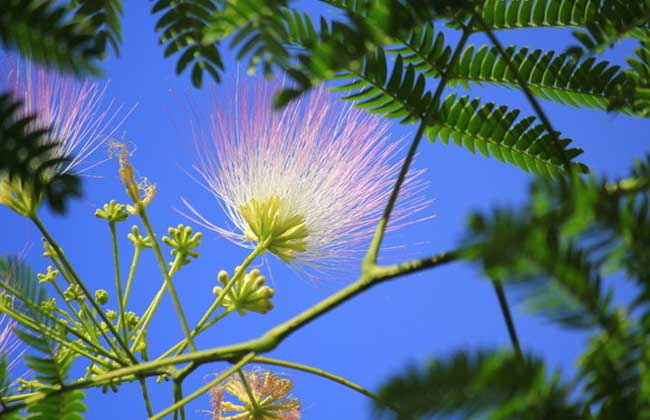
The silk tree flower, also known as the night-blooming silk tree, nocturnal silk tree, velvet flower tree, bird velvet tree, and bitter love flower, is a species of temperate, subtropical and tropical zones. It blooms from June to July and bears fruit from August to October. It is found in China from the northeast to the south and the southwestern provinces and regions. It has the effects of relieving depression and calming the mind, nourishing yin and supplementing yang, regulating qi and stimulating the appetite, and activating collaterals and relieving pain. Let us take a look below at when the silk tree flower blooms!
When Does the Silk Tree Flower Bloom
The silk tree flower generally blooms from June to July. After blooming, the main axis of its inflorescence can continue to extend upward, constantly producing bracts and flower buds, just like a monopodial branch, so it is also called a monopodial inflorescence. It is very beautiful, mostly red or pink, occasionally white, and looks like a fan, fluffy, very similar to a dandelion.
The Flower Language of the Silk Tree Flower
The leaves of the silk tree flower face each other in pairs and embrace, and at night they close together in an embrace, symbolizing that a couple will always be loving. Therefore, giving silk tree flowers to each other is most suitable between husband and wife.
According to legend, Emperor Shun died while on an inspection tour to Cangwu in the south. His consorts Ehuang and Nüying searched all along the Xiang River but never found him. The two consorts wept all day long, and when their tears ran out, they wept blood, and when their blood ran out, they died, and thus became spirits. Later, people discovered that their spirits and the spirit of Emperor Shun “became one”, turning into the silk tree. The leaves of the silk tree open by day and close by night, loving each other. Since then, people have often used the silk tree to represent steadfast and unchanging love.
The Benefits of the Silk Tree Flower
The silk tree flower is sweet and bitter in taste and neutral in nature, entering the heart and spleen meridians. It has the effects of relieving depression and calming the mind, regulating qi and stimulating the appetite, dispelling wind and brightening the eyes, and invigorating the blood and relieving pain. It is mainly used for depression and insomnia, chest tightness and poor appetite, wind-fire eye diseases, blurred vision, low back pain, and traumatic injuries.
1. To treat insomnia due to disharmony between the heart and kidney: silk tree flower, cinnamon bark, coptis, and tuber fleeceflower stem. Decoct and take.
2. To treat wind-fire eye diseases: silk tree flower with chicken liver, sheep liver or pig liver, steamed and taken.
3. To treat blurred vision: silk tree flower and Yiduoyun, soaked in liquor and taken.
4. To treat pain from blows and knocks: night-blooming silk tree flower powder, mixed with liquor and taken in an amount of two qian.
5. To treat long-unhealed pain in the waist and legs: night-blooming silk tree flower four liang, achyranthes root one liang (remove the sprouts), safflower one liang, rock salt one liang, apricot kernel half a liang (soaked in hot water, peeled, and stir-fried in bran until slightly yellow), cinnamon heart one liang. Grind the above medicines and sift into powder, mix and pound with refined honey for over a hundred times, and make into pills the size of firmiana seeds. Take thirty pills on an empty stomach each day with warm liquor, and take again before the evening meal.