How to grow Alocasia in water? Hydroponic methods for Alocasia (Araceae)
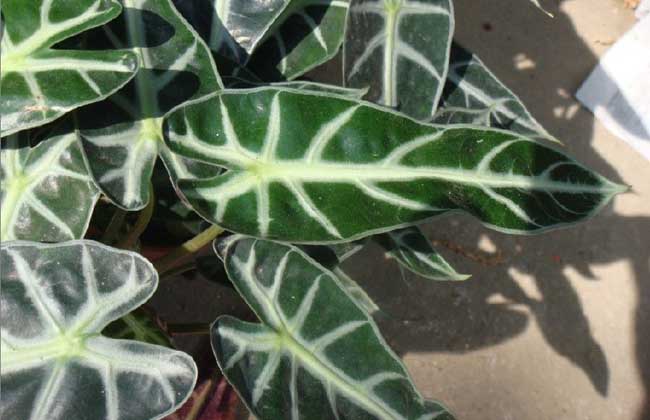
Alocasia of the Araceae family, also known as black-leaf taro, tortoise-shell Alocasia, black-leaf Alocasia, etc., is native to tropical Asia. Its underground part has fleshy tubers and readily tillers to form clumping plants. Its flowers are spadix inflorescences, and its leaves are arrow-shaped and peltate, emerging from the stem tip. It prefers a warm, humid, semi-shaded growing environment. Let's take a look below at the hydroponic methods for Alocasia of the Araceae family!
Can Alocasia of the Araceae family be grown hydroponically?
Alocasia of the Araceae family can be grown hydroponically. Plants of the Araceae family are all water-loving; not only can they be grown hydroponically, but it is quite easy, with no particular skill required. Pull it out of the soil, wash the roots clean, then immerse the root fibers in water, and within a few days water roots will grow. Just note that Alocasia likes a semi-shaded environment and cannot be exposed to direct sunlight for long periods.
Hydroponic methods for Alocasia of the Araceae family
1. Choose the Alocasia you want to grow hydroponically, then rinse its roots, and remember to rinse them clean.
2. Because the tissues of the Alocasia stems and root system are relatively loose, it has high requirements for water quality. Be careful to keep the water clear and hygienic, otherwise the stems and roots rot easily.
3. For care after growing Alocasia hydroponically, increase the frequency of water changes in summer, and require air humidity of no less than 60%. Spray water frequently to create a relatively cool and humid environment for it. In winter, to keep its leaves a deep green, generally spray warm water once a week.
4. The water level just needs to cover 2/3 of the Alocasia root system. The roots of Alocasia need to breathe oxygen, so they must not be fully submerged. Clean the inner walls of the container regularly to avoid the growth of moss.
5. The sap in the stems and leaves of Alocasia is toxic. During care and management, note that it must not be ingested; contact with the skin causes itching and redness and swelling, so rinse promptly with water, or wear plastic gloves while handling it to be safer.
6. Add nutrient solution appropriately and regularly for hydroponic Alocasia; it is now sold in flower markets. At the beginning of water culture, do not add nutrient solution before new roots have grown.
Notes on growing Alocasia of the Araceae family
1. Diseases: Common diseases of Alocasia of the Araceae family include gray mold damage. In the early stage of the disease, spray with 59% thiophanate wettable powder at 1000 times dilution. Under conditions of high temperature and high humidity, stem rot easily occurs, and it can be sprayed with 70% thiophanate-methyl wettable powder at 1000 times dilution.
2. Pests: Common pests of Alocasia of the Araceae family include aphids, which spread mosaic disease through contact; spray and kill with 40% omethoate emulsifiable concentrate at 1000 times dilution. In addition, there is damage from tobacco cutworm and cabbage caterpillar; spray and kill with 10% chudanjing emulsifiable concentrate at 3000 times dilution.
3. Toxicity: Alocasia of the Araceae family is toxic, so avoid growing it in households with children. Also pay attention during care, and be sure to prevent children and unaware people from eating it by mistake or taking it in through other channels. Once eaten by mistake, in mild cases there is vomiting and diarrhea and swelling of the tongue and throat, and in severe cases suffocation and cardiac paralysis.