What are the cultivation methods for Alocasia (Araceae)?
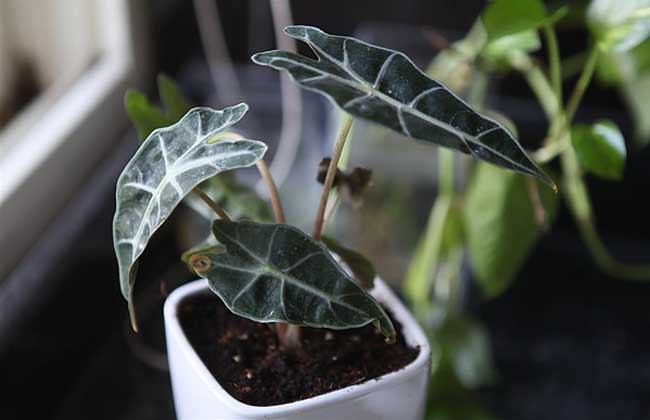
Alocasia of the Araceae family, also known as black-leaf taro, black-leaf Alocasia, etc., is native to tropical Asia and prefers a warm, humid and semi-shaded environment. It must never be exposed to strong direct sunlight. It is a foliage plant with a unique style, is fairly widely used, and has high ornamental value. Let us take a look below at the cultivation methods for Alocasia of the Araceae family and which issues need attention!
Propagation methods for Alocasia (Araceae)
1. Seed propagation method: Collect seeds after the plant has flowered and matured, then let the seeds germinate under suitable warm temperature conditions and grow into seedlings; once the seedlings have grown a little, they can be transplanted. This point can be disregarded, because although seed propagation can be used, seeds are not easy to obtain.
2. Tissue-culture seedling propagation: Use the plant's leaves and tubers, etc. as young stock; cut the leaves into small pieces for whole-group inoculation, first disinfect with sterile water, then culture the young stock in a nutrient solution until buds form and they can become seedlings for transplanting.
3. Leaf-cutting propagation: Choose a vigorously growing leaf from the plant and lay it flat in nutrient soil; after a period, the original leaf will grow new small leaf buds and roots. Take its roots and transplant them into soil for normal cultivation until a new plant grows.
4. Division propagation: Generally, in spring and summer each year when temperatures are higher, divide the plants whose underground tubers have tillered and grown densely along the separation points of the tubers, so that each part has 2-3 plants, then pot and plant them separately. When dividing, injure the roots as little as possible; after potting, place them in a shady, humid environment, keep the potting soil constantly moist, and pay attention to misting the leaf surfaces to help the new plants resume growth. Alternatively, in spring before new buds sprout, dig out the underground tubers, cut the tubers into sections and separate them, disinfect and preserve the wounds with plant ash or sulfur powder, let them dry slightly, then wrap them in sphagnum moss, or place them in loose soil with good aeration and drainage, so that they grow adventitious roots and sprout new buds. During this period, the substrate must never be too wet, lest the tubers rot.
Cultivation methods for Alocasia (Araceae)
1. Soil selection: Alocasia of the Araceae family is not demanding about soil, but fertile, loose sandy loam is preferable. Leaf mold, coarse sand and vermiculite can be mixed in a 2:1:1 ratio for use, with a small amount of plant ash and bone meal added as a base fertilizer.
2. Fertilization method: During the spring and autumn growing seasons, apply 1 application of rotted dilute liquid fertilizer or a low-nitrogen, high-phosphorus-and-potassium compound fertilizer about every 10 days. The fertilizer solution should be dilute rather than concentrated; too much easily causes fertilizer burn. The nitrogen content in compound fertilizer should not be too high, as too much easily makes the plant grow leggy. During the peak growing period, apply 1-2 applications of dilute liquid fertilizer per month according to growth conditions, and add phosphorus and potassium fertilizer to help the plant's stems stand upright and grow robustly, while also helping the underground tubers grow plump and resist cold for overwintering. Spray foliar fertilizer once every half month, and add an organic fertilizer or a compound fertilizer containing nitrogen, phosphorus and potassium once every 1-2 months; more nitrogen fertilizer can promote attractive leaf color. When fertilizing, use a fine-nozzle watering can to pour slowly along the rim of the pot; do not splash the fertilizer solution onto the leaves, otherwise the leaves are easily burned.
3. Watering method: Alocasia of the Araceae family likes moisture and hates waterlogging. Watering should follow "do not water until dry, and water thoroughly when watering." During cultivation, the soil must always be kept moist; drought will make the plant grow slowly, with dull leaf color and a lack of vitality, so it should be watered frequently. At the same time, however, be careful to prevent excess water from causing waterlogging in the pot and rotting the tubers, so the drainage function of the growing medium needs to be strengthened. To prevent waterlogging, consider placing a layer of coarse sand at the bottom of the pot as a drainage layer when potting, so that surplus water drains out as quickly as possible. During high temperatures and dryness, spray water on the surrounding environment and leaf surfaces to increase humidity, which can make it grow more vigorously. In winter, watering should be reduced.
4. Temperature requirements: Alocasia of the Araceae family likes cool conditions and is relatively cold-tolerant. Spring and autumn are the main growing seasons, while summer and winter are mainly its dormancy periods. During high summer temperatures, the plant is prone to rotting because of stuffiness and humidity, so it should be shaded appropriately, ventilation conditions improved, cooling measures taken, and the potting soil kept moderately dry. In winter, when the temperature is above 15°C during the day and above 5°C at night, it can still continue to grow and be maintained normally. At lower temperatures, if watering is controlled, it can also tolerate a low temperature of 2°C. Below 20°C it enters a dormant state. The overwintering temperature is generally above 15°C. Below 10°C the leaves suffer cold damage and even wither, so in winter it should be grown indoors.
5. Light requirements: Full sunlight is preferable, and it is best to keep it outdoors in sunlight for cultivation. During the growing period, ample sunlight is even more necessary. If sufficient sunlight can be ensured, the plant form is compact, the leaves are thick and plump, and the leaf color is beautiful. Although it can also grow normally in semi-shade, its ornamental value is greatly affected, and many varieties tend to show loose, insufficiently compact plant forms. In summer, avoid scorching sunlight and provide appropriate shading. It is strongly shade-tolerant and suitable for growing under shaded diffused light; direct sunlight should be avoided. Generally, in summer and autumn it should be shaded, otherwise the leaf surfaces become rough and the leaf color grayish-white, and sometimes burn spots appear. In winter, however, more sunlight is better.
6. Four-season management
① Spring management: Repot when the spring temperature stabilizes above 15°C. When repotting during winter dormancy, first take the dormant tuber out of the pot, cut off the rotten root system on the dormant tuber, and plant it in a pot. The planting depth is about 2 cm of soil covering it. Water appropriately (do not water too much; moist and slightly dry is the standard). After the leaves emerge from the soil, water thoroughly. For plants that do not go dormant in winter, part of the old leaves can be cut off when repotting.
② Summer management: Alocasia of the Araceae family likes a high-temperature, high-humidity environment. Summer is its peak growing season. The potting soil should be kept moist. When placed indoors, pay attention to supplementing the indoor air humidity and fertilize adequately. It is not suitable for placement in air-conditioned rooms.
③ Autumn management: After the autumn temperature turns cool, it can gradually be moved to a place with morning and evening light for cultivation, keeping the potting soil moist, and misting its surroundings and leaves several times a day, and stop fertilizing. As the temperature drops, the water supply should gradually be reduced so that the potting soil becomes on the dry side. After the temperature drops below 15°C, the aboveground parts gradually wilt and enter dormancy. If the indoor temperature in autumn and winter can be kept above 18°C, the plant can grow slowly and not go dormant.
④ Winter management: Alocasia of the Araceae family is not tolerant of low temperatures. When the winter temperature is relatively low, the tuber goes dormant. The potted plant should be placed indoors above 10°C to overwinter. The potting soil should preferably remain dry but not parched; when the potting soil humidity is relatively high, the tuber easily rots. If the indoor temperature remains above 18°C, it does not go dormant and still has ornamental value; it should be placed on a windowsill with morning and evening light, keeping the potting soil moist, and frequently misting around its leaves to increase air humidity. Especially when air conditioning is used indoors, even more attention should be paid to supplementing air humidity.
Precautions for Alocasia (Araceae)
1. The plant has relatively high fertilizer requirements. During the growing season, fertilize once every 10-15 days. It is better to alternate organic fertilizer or a three-element compound fertilizer. During the growing season, more nitrogen should also be applied to promote attractive leaf color.
2. The suitable growth temperature for the plant is 20°C-26°C; below 20°C it enters a dormant state. If the temperature is too low, it easily causes the plant to die. In spring and summer, growth is vigorous and air humidity is required to be high; if water can be sprinkled on the ground or the leaf surfaces misted, growth is even better. In tropical regions it can overwinter naturally. In subtropical and temperate regions, because winter temperatures are relatively low, it should be placed in a greenhouse to keep warm and overwinter. In winter, attention should be paid to controlling the amount of water; it is enough to merely keep the leaves from becoming soft and drooping.
3. The plant is mostly cultivated in spring. The potting soil should be well-drained leaf mold or sandy loam rich in organic matter. Repotting is best done in late winter and early spring.
4. The plant is easily attacked by aphids. A 1000-1500 times dilution of 40% dimethoate or 50% malathion emulsifiable concentrate can be used, or a 1500 times dilution of 80% dichlorvos emulsifiable concentrate can be sprayed to kill them.
5. The plant grows well in a warm, humid and semi-shaded environment. In summer and autumn it should be placed in a shady spot, such as under reed curtains or tree shade; direct sunlight should be avoided. The plant's growth has relatively high air humidity requirements. Humid climate conditions are conducive to plant growth and glossy leaves. If the environment is too dry, it easily causes the leaf edges to scorch, affecting the plant's appearance. The suitable relative air humidity is 60%-80%. At 15°C, growth stops and it enters dormancy.
6. During the growing period from May to October, the plant can be fertilized once every 15 days; a dilute fertilizer solution is relatively safe. In winter, keep light sufficient and ventilation good, strictly control watering, and keep the potting soil slightly dry. When cultivating indoors in winter, prevent high-temperature stuffiness or poor ventilation to guard against pests and diseases. Stop fertilizing in winter.
Note: The whole plant of Alocasia of the Araceae family is toxic, with the stem being the most toxic. Skin contact with the sap causes itching; contact of the eyes with the sap leads to blindness; accidental ingestion of the stem or leaves causes itching and swelling of the tongue and throat, salivation, burning pain in the stomach and intestines, nausea, vomiting, diarrhea, sweating, and convulsions; in severe cases, suffocation and death from cardiac paralysis. For ordinary household cultivation, what needs attention is the toxicity of Alocasia of the Araceae family. Try to avoid growing it in households with children, and also pay attention during care. Be sure to prevent children and uninformed people from accidentally eating it or taking it in through other channels.