What are the reasons for drooping leaves in Sempervivum of the Crassulaceae family
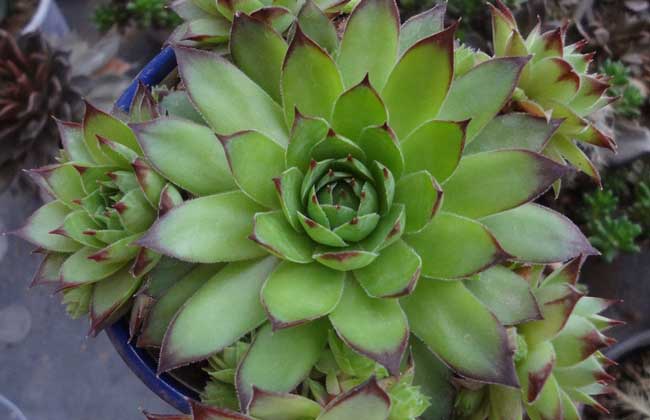
Sempervivum of the Crassulaceae family, also known as the Buddha's seat lotus, is a succulent plant of the Crassulaceae family that likes a sunny and cool environment. Many flower enthusiasts always encounter drooping leaves during cultivation, and the problem is mostly one or several of the following. Let's take a look below at what the reasons are for drooping leaves in Sempervivum of the Crassulaceae family!
Growth habits of Sempervivum of the Crassulaceae family
Sempervivum of the Crassulaceae family is an alpine-type succulent plant that likes a sunny, cool and dry environment and is suitable for acidic, neutral and alkaline soils. Apart from appropriate shading during high summer temperatures to avoid scorching sun exposure, it needs full sunlight in all other seasons, with watering restricted in winter, and it can withstand low temperatures of -20°C. The plant is in a dormant state during high summer temperatures and cold winters, and the main growing seasons are the cooler spring and autumn. It requires sufficient sunlight; if the light is insufficient, the plant shape will become loose and not compact, affecting its appearance and ornamental value, while plants grown in sufficient light have thick, plump leaves, a compact shape and bright leaf color, looking very beautiful.
Reasons for drooping leaves in Sempervivum of the Crassulaceae family
1. High humidity and low temperature make the tuber extremely prone to rotting or it has already rotted.
2. If the indoor temperature is below 15°C, the growth of Sempervivum stalls and it enters a dormant state, and the above-ground leaves begin to gradually wither; at this time the amount of watering must be reduced as much as possible.
3. Overwatering causes waterlogging, the roots cannot breathe, leading to drooping leaves or even death; misting is best, as it ensures humidity while not causing water to accumulate in the pot.
4. Insufficient light causes the plant shape to become loose and drooping, not compact; while plants grown in sufficient light have thick, plump leaves, a compact shape and bright leaf color.
5. Or it may be caused by poor root growth due to transplanting, making it unable to absorb water, and so on.
Cultivation methods for Sempervivum of the Crassulaceae family
1. Soil: The potting soil should be loose and fertile with good drainage and air permeability. You can use half leaf mold or peat soil and half coarse sand or vermiculite, mixed with a small amount of bone meal and other calcium materials, and use after mixing evenly. Since the soil is moist, newly planted plants do not need too much water; keep it in a semi-dry state to help the root system recover.
2. Temperature: It likes a warm, humid and semi-shaded growing environment. The optimum growing temperature is 20-30°C, and the overwintering temperature is 15°C. If the nighttime temperature in winter is not lower than 5°C and the daytime temperature is above 15°C, the plant can continue to grow, and you can water normally and fertilize appropriately; if watering is controlled to make the plant dormant, it can also withstand low temperatures of 0°C. Sempervivum is not heat-tolerant. After May, the plant's growth gradually stops and it enters the summer dormant period. At home, it can be placed under a corridor or on the inner side of a balcony and other places without direct sunlight, with good ventilation and out of the rain, and watering should be controlled and fertilizing stopped, to avoid plant rot caused by stuffiness, humidity and waterlogging in the soil.
3. Light: The plant is in a dormant state during high summer temperatures and cold winters. The main growing seasons are the cooler spring and autumn. During the growing period it requires sufficient sunlight; if the light is insufficient, the plant shape will become loose and not compact, affecting its ornamental value, while plants grown in sufficient light have thick, plump leaves, a compact shape and bright leaf color.
4. Watering: Master the principle of “do not water until dry, and water thoroughly when you do”, avoiding long-term waterlogging to prevent root rot, but do not let it become too dry either, otherwise although the plant will not die, it will grow slowly, with dull leaf color and a lack of vitality. During the high-temperature period in summer, the leaves evaporate a lot of water and need more water; if short of water, the leaves are very prone to wilting, so you must often mist the leaf surface while keeping the environment humid, but you must avoid water accumulating in the pot, otherwise it will cause root rot.
5. Fertilizing: Apply a decomposed, dilute liquid fertilizer or a low-nitrogen, high-phosphorus-and-potassium compound fertilizer about once every 20 days. When fertilizing, do not splash the fertilizer water onto the leaves. Fertilizing is generally done on a sunny morning or evening, and a thorough watering should be given that evening or the next morning to dilute the residual fertilizer liquid in the soil. In winter, place it in a sunny spot indoors; if the nighttime minimum temperature is around 10°C and there is a certain day-night temperature difference, you can water appropriately and fertilize as needed to keep the plant growing. If such a high temperature cannot be maintained, watering should be controlled, the potting soil kept dry, and fertilizing stopped to make the plant dormant; it can also withstand low temperatures of 5°C, and some varieties can even withstand low temperatures of 0°C.
6. Propagation: Sempervivum can be propagated in the growing season by cutting off the small buds sprouting from the base (small rosette-shaped leaf discs) and inserting them in sandy soil for cuttings. After insertion, keep them slightly moist; they will root in 2-3 weeks, and some small leaf discs already have roots underneath and can be potted directly. Leaf cuttings, although they can occasionally survive, have a very low success rate, so they are rarely used. If seeds can be collected, sowing can also be used for propagation; under conditions of around 20°C, they germinate in 10-15 days. Although the seedlings grow slowly, a large number of seedlings can be obtained at one time.
7. Repotting: Repot once every 1 to 2 years in spring or autumn. During repotting, prune the root system, cutting off dead roots or overly long old roots. The potting soil should be loose and fertile with good drainage and air permeability. You can use half leaf mold or peat soil and half coarse sand or vermiculite, mixed with a small amount of bone meal and other calcium materials, and use after mixing evenly. Since the soil is moist, newly planted plants do not need too much water; keep it in a semi-dry state to help the root system recover.