What to Do When Alocasia (Araceae) Leaves Turn Yellow and Droop
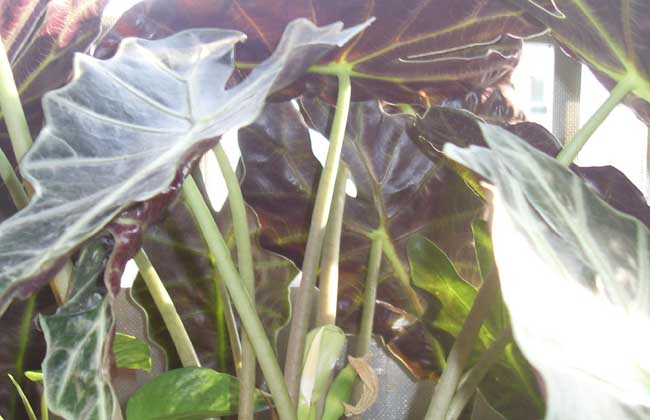
Alocasia, also known as black-leaf taro or black-leaf Alocasia, is a perennial herbaceous foliage plant of the genus Alocasia in the Araceae family. It prefers a warm, humid, semi-shaded growing environment. During cultivation, yellowing and drooping leaves often occur. What causes this, and what should be done about it? Let's take a look together below!
Growing Habits of Alocasia (Araceae)
Alocasia prefers semi-shade and must never be exposed to strong direct sunlight. It likes a warm, humid environment, with an optimum growing temperature of 25-30°C. In winter, the temperature should not drop below 15°C. From March to September, the suitable temperature is 22-27°C, and from September to March of the following year, it is 16-22°C. When the temperature falls below 15°C, growth stops and the plant enters a dormant state. It is tolerant of waterlogging, and during the growing season the potting soil should be kept moist, with air humidity of 70%-80%, which favors leaf growth and development. When the potting soil is dry, the leaves become soft and droop, but they quickly recover after watering, so it also has a certain resistance to drought.
Alocasia (Araceae) Leaves Turning Yellow and Drooping
1. Improper watering: Incomplete watering, too little watering, or too much watering can all cause yellowing and drooping leaves in Alocasia. This is especially true during the high-temperature period in summer, when leaf water evaporation is high and water demand is greater. A lack of water can easily cause the leaves to wilt, so the foliage should be misted frequently while keeping the environment humid, but waterlogging in the pot must be avoided, otherwise it will cause root rot.
2. Lack of nutrients: Yellowing and drooping leaves in Alocasia may also be caused by a lack of nutrients. It can be rescued by promptly supplementing with well-rotted dilute fertilizer, compound fertilizer, and similar fertilizers, but the amount must be small, 2-5 granules.
3. Lighting problems: After winter, being in a hurry to move the plant outdoors and placing it in a warm, sunny spot can leave it temporarily unable to adapt to the sudden change in climate. Alternatively, long-term weak light can also cause yellowing and drooping leaves in Alocasia. It should be moved to a bright spot in time, but avoid prolonged direct sunlight.
4. Other causes: Keeping Alocasia in a poorly ventilated environment for a long time, not misting and cleaning the leaves for a long period so that dust accumulates and hinders photosynthesis, and other such reasons can also cause yellowing and drooping leaves.
Care Methods for Alocasia (Araceae)
1. Temperature: Alocasia prefers a warm, humid, semi-shaded growing environment. The optimum growing temperature is 20-30°C, and the overwintering temperature is 15°C.
2. Propagation: Alocasia is commonly propagated by division. Generally, in spring and summer each year when temperatures are higher, divide the plant along the separation points of the underground tubers where the tillers are growing densely, so that each part has 2-3 shoots, and then pot them separately. When dividing, try to damage the roots as little as possible. After potting, place the plants in a shaded, humid environment, keep the potting soil consistently moist, and pay attention to misting the leaves to help the new plants resume growth. Alternatively, in spring before new buds sprout, dig out the underground tubers, cut them into sections, disinfect and preserve the wounds with plant ash or sulfur powder, let them dry slightly, then wrap them in sphagnum moss or place them in loose, well-aerated and well-draining soil to allow them to grow adventitious roots and sprout new shoots. During this period, the substrate must never be too wet, lest the tubers rot. This plant can also be propagated by seed, but seeds are not easy to obtain.
3. Soil: For potted Alocasia, use loose, well-drained and well-aerated soil rich in humus. Generally, a mixture of equal parts leaf mold, garden soil, and river sand can be used as the substrate.
4. Watering: April to September is usually its period of vigorous growth. At this time, the soil should be moist and the air humidity relatively high, and sufficient water should be provided. This is especially true during the high-temperature period in summer, when leaf water evaporation is high and water demand is greater. A lack of water can easily cause the leaves to wilt, so the foliage should be misted frequently while keeping the environment humid, but waterlogging in the pot must be avoided, otherwise it will cause root rot. In autumn, when the temperature falls below 15°C, Alocasia's growth stops and it enters a dormant state, and the aboveground leaves begin to gradually wither. At this time, watering should be reduced as much as possible, and the plant should be placed in a warm, windless, dry place, keeping the potting soil appropriately dry (only slightly moist) to help it overwinter safely. If humidity is high and the temperature is low, the tubers are very prone to rotting.
5. Light: Alocasia prefers semi-shade and must never be exposed to strong direct sunlight. In a semi-shaded environment, the leaves are fresh and tender with a glossy sheen, the veins are clear, and the leaf color is dark green. If the light is too strong, the leaf color easily becomes dull, eventually leading to sunscald, with rough leaf surfaces, grayish-white leaf color, blurred veins, and sometimes scorched spots on the leaves. However, light that is too weak also easily causes leggy growth, with the plant growing thin and tending to lodge. During the period of vigorous growth, apply a dilute liquid fertilizer 1-2 times a month according to the plant's growth, and add extra phosphorus and potassium fertilizer, to help the stems stand upright and grow robustly, and at the same time to help the underground tubers grow plump and resist cold for overwintering.
Note: The entire Alocasia plant is toxic, with the stems being the most toxic. Skin contact with the sap causes itching, and contact of the eyes with the sap can lead to blindness. Accidental ingestion of the stem or leaves causes itching and swelling of the tongue and throat, drooling, burning pain in the stomach and intestines, nausea, vomiting, diarrhea, sweating, and convulsions; in severe cases, suffocation and death from cardiac paralysis. For ordinary home cultivation, what needs attention is the toxicity of Alocasia. Try to avoid growing it in households with children, and also be careful during care, making sure to prevent children and uninformed people from accidentally ingesting it or taking it in through other routes.