Detailed Explanation of Agarwood's Producing Areas and Formation Process
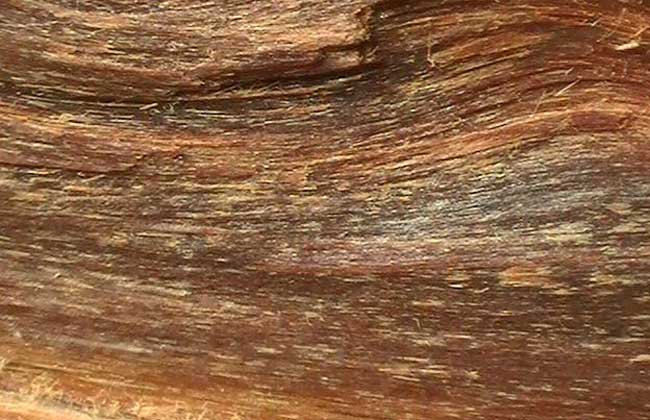
Agarwood is the resinous wood of Aquilaria sinensis, a plant in the Thymelaeaceae family. It is distributed in Guangdong, Hainan, Guangxi, Fujian and other places, and has the effects of promoting qi circulation and relieving pain, warming the middle and stopping vomiting, and helping the kidneys grasp qi and calm wheezing. It is often used for chest and abdominal distension, stuffiness and pain, stomach cold vomiting and hiccups, and kidney deficiency with counterflow of qi and urgent wheezing and other conditions. Let's take a look at agarwood's producing areas and formation process below!
Agarwood's Producing Areas
The main producing areas of agarwood are Guangdong, Hainan, Guangxi, Fujian and other places. It prefers to grow in low-altitude mountainous areas, hills, and sparse forests in sunny places beside roads.
Agarwood's Variety Classification
1. Ripe knot: After the tree dies, the roots and trunk fall to the ground or sink into the soil. Exposed to wind and rain, over months and years, they slowly decompose and shrink, and finally leave behind a condensed substance composed mainly of oily components. As recorded in the Compendium of Materia Medica, "For old accumulated wood, after many years its outer bark has all rotted away, while the heartwood and branch nodes remain intact; the hard, black, water-sinking one is agarwood."
2. Living knot: The fragrant knot formed while the tree is still alive. After external forces such as chopping with knives or axes or gnawing by snakes, insects, or animals cause relatively deep wounds, the fragrant tree secretes resin for self-protection, thereby forming agarwood near the wound.
3. Shedding: Fragrance formed after branches and trunks have decayed and fallen off.
4. Insect leak: Fragrance formed due to damage to the tree by tree insects, bacteria, and the like.
Agarwood's Formation Process
Agarwood wood is actually a modified product of the tree sap of plants from four specific families and genera: Burseraceae, Lauraceae, Thymelaeaceae, and Euphorbiaceae. For the fragrance-forming effect to occur, the following conditions must be present.
1. The correct tree species: It must be a plant from one of the four specific families and genera: Burseraceae, Lauraceae, Thymelaeaceae, and Euphorbiaceae.
2. Injury is a necessary condition for fragrance formation: In nature, injury to the tree body is a low-probability event. The main causes of injury include insect damage, climbing and collisions by animals, mudslides, wind and rain, and so on. Once an agarwood tree is injured by external force, the agarwood tree, as a living organism, will immediately produce a stress response and secrete a large amount of sap.
3. Fungal invasion is the key link in fragrance formation: During the process of the tree body recovering from injury, if conditions such as temperature and humidity in the surrounding environment are suitable, and if suitable fungi happen to be present around the wound, the fungal community will invade the tree body through the epidermal wound of the agarwood tree and rapidly use the nutritional factors in the sap as a culture medium for a complex biological reaction process. Under anaerobic conditions, the fungi produce many metabolites, and these metabolites contain large amounts of new aromatic substances that the agarwood tree originally did not have, and these aromatic substances are the source of agarwood's fragrance. At this time, coagulation factors within the agarwood tree are produced in large amounts and gradually coagulate the sap in some vessels within the infected area, thereby resisting further invasion by fungi. At this point, although the agarwood tree already has aromatic substances, their amount is extremely small and they are not yet formed, so it cannot yet become agarwood.
4. Continuation and spread of infection: Fungal infection and metabolism do not remain only at the wound site, but further invade along the tree body's nutrient channels. This is what we usually call the infection spread process. When various conditions are met, within the agarwood tree, the fungi continuously expand the infection, continuously interact with various factors in the tree body, continuously produce aromatic substances, and are continuously coagulated by the tree's coagulation factors in the vessels. This process of infection, reaction, production of aromatic substances, coagulation, and further spread of infection repeats cyclically. This cycle is called the continuous infection stage. This stage is the guarantee of continuous fragrance formation and ultimately the formation of block agarwood.
5. Formation of fragrance: Within the agarwood tree body, the newly generated aromatic substances, the fungal bodies themselves, other non-aromatic fungal metabolites, fungal death residues, agarwood tree tissue residues, and some substances in the sap are condensed and solidified together with the tree's wood fibers under the action of the agarwood tree's coagulation factors. At this time, the agarwood tree species develops a kind of condensed organic compound, which is agarwood. And this process of "tree body injury, fungal infection, infection spread, tree body resistance to infection, fungal metabolism, production of aromatic substances, coagulation, and formation of a mixture together with wood fibers" is the fragrance-forming process of agarwood.