What to Do If Your Kalanchoe Won't Bloom? Cause Analysis and Solutions
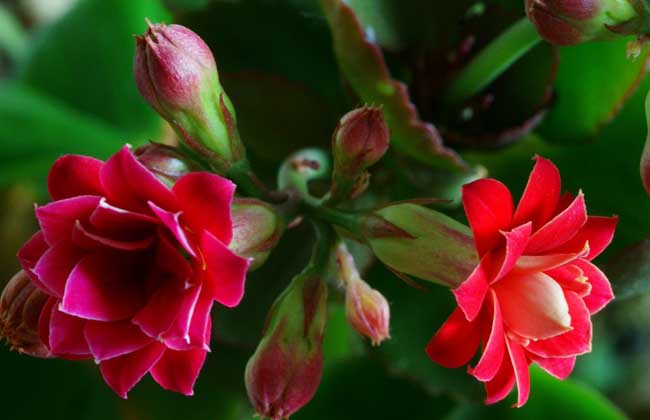
Kalanchoe (Kalanchoe blossfeldiana) gets its name from its exceptionally long overall flowering period and is known for being easy to grow. As more varieties have become available, it has grown increasingly popular. However, many people's kalanchoes fail to bloom. Below, let's look at the reasons why kalanchoe won't bloom and how to make it produce more flowers!
How Many Times a Year Does Kalanchoe Bloom?
Kalanchoe prefers a warm, slightly humid environment with plenty of sunlight. It is not cold-tolerant. The optimal growing temperature is 15-25°C. In summer, when high temperatures exceed 30°C, growth is hindered. In winter, indoor temperatures need to be 12-15°C. Below 5°C, the leaves turn red and flowering is delayed. During the winter-spring blooming period, if the room temperature exceeds 24°C, flowering will be inhibited. If the temperature is around 15°C, kalanchoe will bloom continuously.
Kalanchoe is drought-tolerant and not demanding about soil, though fertile sandy loam is best. Kalanchoe is a short-day plant and is quite sensitive to photoperiod. For well-growing plants, providing short-day treatment (8-9 hours of light per day) for 3-4 weeks will induce flower buds and blooming. Therefore, the flowering period of kalanchoe is from December to May of the following year. As long as it is well cared for, it will produce a steady stream of beautiful flowers during this time.
Reasons Why Kalanchoe Won't Bloom
1. Light: Kalanchoe prefers an environment with ample sunlight. At midday in midsummer, avoid intense direct sun exposure; at other times, it can be placed in a sunny spot. It needs at least 4 hours of direct light per day to grow vigorously. To ensure even flower distribution on the plant, frequently rotate the direction of the pot so the plant receives balanced light. On balcony settings, rotate the pot 180 degrees every half month. It can grow in semi-shade, but the stems will be thin, the leaves narrow, and the flowers few and pale, far less lush than in a sunny location. If it is too shady, it will not only drop leaves and fail to bloom, but even a plant that has already bloomed will fade in color and then drop its flowers and wither if placed in shade.
2. Nutrients: Kalanchoe is a heavy feeder. Because its flowering period is long, you need to break the rule of not fertilizing during blooming. Apply a dilute nitrogen-phosphorus-potassium fertilizer or a 0.2% monopotassium phosphate solution once a month so that later flowers don't become smaller and paler due to nutrient deficiency. From when kalanchoe is brought indoors at Frost's Descent (around late October) until October of the following year is exactly the period of late flower bud differentiation and peak blooming, so its demand for fertilizer is very high. Before flowering, apply a fish-based fertilizer rich in phosphorus and potassium once a week to promote flower bud differentiation. During the flowering period, mainly apply fast-acting monopotassium phosphate at a concentration of 2%, once every 10 days.
How to Make Kalanchoe Bloom More
1. The pot should not be too large: Some growers mistakenly believe that the larger the pot, the better the plant grows and the more abundantly it blooms. So they plant small cuttings in a disproportionately large pot, add plenty of base fertilizer, and think it's "done in one step" - all they need to do is wait for blooms. This approach often yields poor results. The reason is simple: a large pot means more space, the roots grow and spread freely, and they wastefully consume a large amount of nutrients. This results in sparse, narrow leaves, fewer flowers, and smaller blooms.
2. The plant should not be too tall: After the summer dormancy, autumn is the period of vigorous growth for kalanchoe. Before the Start of Autumn (around early August), carry out heavy pruning to keep the plant low and sturdy and promote branch development. Combined with fertilizing, this ensures good growth. With more branches, there will be more flower heads later.
3. Fertilizer should not be too concentrated: While ample fertilizer and water are certainly the foundation for abundant flowers and lush leaves, many growers - partly to save effort and partly overestimating kalanchoe's tolerance - apply a large amount of concentrated fertilizer all at once, with counterproductive results. The kalanchoe either develops a large number of yellow leaves or becomes listless due to excessively high soil solution concentration. Kalanchoe is a plant with moderate fertilizer needs; the golden rule is to apply dilute fertilizer frequently. Top-dressing should mainly be done during the bud stage and flowering period. You can dilute bone meal and monopotassium phosphate into a liquid fertilizer. Bone meal (80 g/bag) and monopotassium phosphate (30 g/bag) bought from the flower market - generally use about one-quarter or one-fifth of each, dilute separately in a 1.25 L beverage bottle to make liquid fertilizer. Spray monopotassium phosphate on both the front and back of the leaves, and at the same time water with bone meal and monopotassium phosphate combined, and you will get the effect of flower buds covering the branches.