How to Grow Kalanchoe manginii (Chandelier Kalanchoe)? A Detailed Guide to Its Cultivation Methods
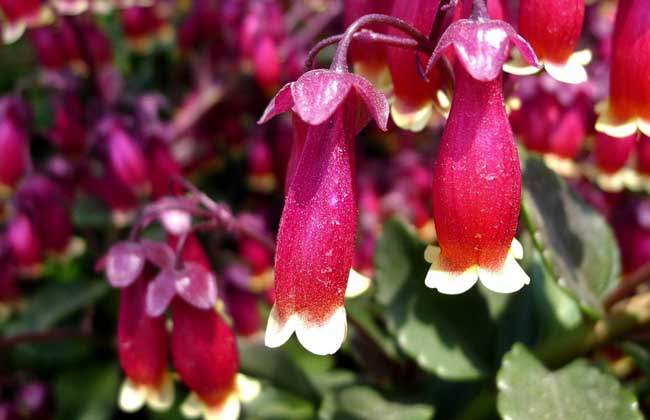
Kalanchoe manginii is a perennial herbaceous plant of the genus Kalanchoe in the Crassulaceae family, also known as red lantern kalanchoe and trailing bellflower begonia. Its stems are woody and much branched, with soft new branches that often droop. Its leaves are opposite, long ovate, and slightly fleshy. Its flowers are red, tubular, with 4 slightly separated petals at the tip. Because its appearance closely resembles a small lantern, it is named chandelier kalanchoe. Now let us take a look at how to grow Kalanchoe manginii!
The Benefits of Growing Kalanchoe manginii
1. Purifying the air: Kalanchoe manginii is a CAM plant. Its stomata close during the day and open only at night to release oxygen while absorbing carbon dioxide, giving it an excellent air-purifying effect. Especially at night, it can make the air in an enclosed room fresh.
2. Beautifying the home: Kalanchoe manginii has a compact plant shape, crystal-clear translucent leaves, and dense, brilliantly colored flowers, making it an excellent ornamental plant. Its flowering period coincides with Christmas, New Year's Day, and Spring Festival, making it very suitable for decorating windowsills, desks, and tabletops. When used in flower troughs, display windows, and halls, its overall ornamental effect is excellent. It is an ideal potted flower for winter and can beautify the home.
3. Feng shui value: Kalanchoe manginii has the word "longevity" in its name, so giving it to relatives and friends during festivals symbolizes great fortune and long life. It is very suitable and likable. Adding a pot of Kalanchoe manginii to your home during the New Year and other occasions can complement an auspicious omen of blessings and longevity, bringing good meaning and good feng shui.
Propagation Methods for Kalanchoe manginii
1. Stem cutting: After the flowers fade, apply a liquid fertilizer mainly containing nitrogen once to promote rejuvenation. In May and June, cut 4 cm to 6 cm long stem sections with 5 to 7 leaves. After the cut surface has dried, insert them directly into a small pot filled with plain soil, with three plants per pot arranged in a triangular shape. Place in a semi-shaded spot. Rooting and new leaf growth after half a month indicate that they have survived. Pinch the tips 1 to 2 times to encourage more branching and flowering. High temperatures in July make cuttings unsuitable. Cuttings can also be taken from mid-to-late August to early September, and they can bloom the following spring, but they will not bloom as abundantly as those taken in May and June.
2. Leaf cutting: Cut healthy, plump leaves from the petiole. After the cut surface has dried slightly, insert them obliquely or lay them flat on a sand bed and maintain moisture. After about 10 to 15 days, roots can grow from the base of the leaf and new plants will grow.
3. Division propagation: After old plants have passed the summer, repot and change the soil from late August to early September, otherwise growth will decline. At the same time, use a sharp knife to divide larger clumps into several sections and plant them separately. After they survive, the tips should also be pinched 1 to 2 times to encourage more branching and flowering.
Cultivation Methods for Kalanchoe manginii
1. Soil: Although Kalanchoe manginii is not very particular about soil, it is prone to root rot in heavy clay soil, while it grows best in loose, fertile, slightly acidic sandy loam. For home pot cultivation, it is best to mix leaf mold and vegetable garden topsoil in equal amounts, then add 5% to 8% sand as the growing medium. When planting, add a little bone meal or nitrogen-phosphorus-potassium compound fertilizer as a base fertilizer.
2. Watering: Kalanchoe manginii is a succulent plant with a high water content in its body. It is relatively drought-tolerant and afraid of waterlogging, and it grows well under the dry air conditions of high-rise buildings. Do not water too much. Water once every 2-3 days, and keep the potting soil on the moist but slightly dry side. If the potting soil is too wet, root rot is easily caused. Water according to the principle of “water when dry, water thoroughly when watering.” In winter, watering should be reduced and fertilization stopped. In spring and autumn, after the potting soil dries, water thoroughly about every 3 days, and keeping it slightly moist is usually enough. In summer, water less, preferably once every 5 to 7 days. For kalanchoe placed outdoors, avoid rain during the rainy season, as too much water can easily cause root rot, leaf drop, and even death.
3. Light: Kalanchoe manginii is not strict about light requirements and can grow well under full sun, half sun, and scattered light conditions. Kalanchoe manginii prefers a sunny environment. Except for slight shading at noon in midsummer, it should be placed in a sunny spot at other times. It needs at least 4 hours of direct light per day to grow robustly. On building balconies, the flowerpot should be rotated 180 degrees every half month so that it receives even light, avoiding an uneven crown and reduced ornamental value. Although it can also grow in semi-shade, its stems will be thin, leaves will be thin, flowers will be few, and colors will be pale, far less luxuriant than in a sunny spot. If it is too shady, it will not only easily lose leaves and fail to bloom, but even flowering plants placed in shade will have duller flower colors and then the flowers will drop and wither.
4. Temperature: The most suitable growing temperature for Kalanchoe manginii is 15°C to 25°C. Above 30°C, growth slows and it enters a semi-dormant state, which means kalanchoe basically does not grow in summer. Below 10°C, growth stops. Below 8°C, the leaves turn red and the flowering period is delayed. Below 0°C, it is easily frozen to death. In winter's intense heat, pay attention to ventilation and shading to prevent direct strong sunlight. In winter, move it into a greenhouse or place it in a sunny outdoor spot, keep the temperature above 10°C, and the lowest temperature must not be below 5°C. When the temperature is low, the leaves easily turn red. Therefore, to grow kalanchoe well, you must create a small environment that is warm in winter and cool in summer. At noon in midsummer, avoid strong light and exposure, and place it in a semi-shaded spot with ample scattered light, such as under a large tree, under the eaves, or on a north-facing balcony. Pay special attention to ventilation and cooling. You can sprinkle water on the nearby ground, but not on the plant itself. After the Start of Autumn, from late August to early September, it can gradually receive sunlight. From October onward, it should receive more sunlight to promote the transition from vegetative growth to reproductive growth. When the minimum temperature drops to about 10°C, move it indoors and place it in front of a south-facing or west-facing windowsill so that it receives more sunlight. Keep it at 10°C at night and 15°C to 18°C during the day, and it can bloom in December.
5. Fertilization: Kalanchoe manginii likes fertilizer. Half a month after young seedlings are potted and planted, or half a month after old plants are divided, apply 2 to 3 times a liquid fertilizer mainly containing nitrogen to promote stem and leaf growth. After flowering, apply a liquid fertilizer mainly containing nitrogen once to promote rejuvenation. At other times, except for stopping fertilization in summer, only nitrogen-phosphorus-potassium compound fertilizer should be applied. When fertilizing, do not get fertilizer on the leaves, otherwise the leaves will easily rot. If the leaf surface is accidentally soiled, rinse it off with water. Kalanchoe has a long flowering period, so the rule of not fertilizing during the flowering period should be broken. Apply a dilute nitrogen-phosphorus-potassium fertilizer or 0.2% potassium dihydrogen phosphate solution once a month so that later flowers do not become smaller and paler due to lack of fertilizer.
6. Support: When Kalanchoe manginii plants grow tall, bamboo poles should be set up for support. For ground planting, a flower net needs to be installed to prevent branches from breaking.
7. Pest and disease control: The main hazards are powdery mildew and leaf blight, which can be sprayed with 65% zineb wettable powder at 600 times dilution. Pests include scale insects and aphids, which harm leaves and tender shoots, and can be controlled by spraying with 40% dimethoate emulsifiable concentrate at 1000 times dilution. Whether grown in the ground or in pots, the soil must be disinfected before planting tubers to prevent soil-borne diseases.
8. Harvesting and storage: When Kalanchoe manginii is used as a cut flower, it should be harvested when the lowest 3 flowers on the stem have fully opened and turned golden yellow. After the stems dry and yellow, dig up the tubers and store them in a cold room at 3 to 5°C. After the dug tubers are washed clean, disinfect them with agents such as carbendazim or chlorothalonil to reduce the occurrence of diseases.