Methods and Key Technical Points for Grafting Camellia onto Oil Tea Trees
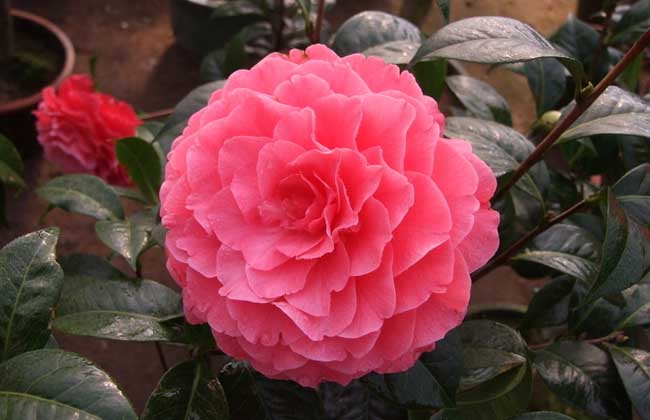
There are many methods for grafting camellia onto oil tea trees as rootstock. Currently, the most widely used are the cut-rootstock bark-peeling graft and the uncut-rootstock sub-bark branch graft. When using the cut-rootstock bark-peeling graft, a portion of the original canopy's nutrient branches must be retained. Depending on the size of the rootstock, 24 scions should be grafted symmetrically on each rootstock. Let's take a look below!
Camellia Uncut-Rootstock Sub-Bark Branch Grafting
1. Scion preparation: Cut the scion into short sections 23 cm long, each with one leaf and one bud, with both ends shaped like a horse ear. Then make a flat cut on the opposite side of the petiole, cutting slightly into the xylem. Cut off one-third or one-half of the leaf blade.
2. Rootstock preparation: At a point 50-80 cm above the ground on the trunk, wash the grafting area with clean water. Then use the tip of a knife to carve an “n” or “H” shape, cutting deep to the xylem. The length should match the scion, and the width should be determined by the thickness of the scion. Tear the bark open from top to bottom.
3. Inserting the scion and wrapping: Insert the prepared scion into the bark groove of the rootstock. Cover the scion with the bark strip of the rootstock, and wrap with elastic plastic film tape.
Camellia Cut-Rootstock Bark-Peeling Grafting
1. Cutting the rootstock: For each tree, select 24 main branches with appropriate branching angles, straight and smooth trunks, and no pest or disease damage. Saw them off at 50-80 cm above the ground. Keep 2-3 as nutrient branches, and remove all remaining branches.
2. Washing the rootstock: Wipe the graft interface and the bark 5-7 cm below the interface with clean water.
3. Trimming the rootstock: Use a grafting knife to smooth the saw cut, with the cut surface higher on the inside and lower on the outside.
4. Scion preparation: On the opposite or side of the bud, make a flat cut reaching slightly into the xylem, with a cut surface 1.52 cm long. On the opposite side, make a short slanted cut at a 30° angle, shaped like a horse ear. Generally, each scion has one leaf and one bud, with one-third or one-half of the leaf blade cut off.
5. Cutting the rootstock: Depending on the size and length of the scion, use a grafting knife to make two straight cuts on the rootstock, cutting only to the surface of the xylem. Then pry the bark open.
6. Insertion: Face the long cut surface of the scion toward the xylem of the rootstock cut, align the straight edges, and expose a small amount of white. Use the bark strip of the rootstock to wrap and seal the short cut surface of the scion.
7. Wrapping: Use plastic film tape with a certain degree of elasticity to wrap the interface from bottom to top. Be careful to prevent the scion from shifting.
8. Moisture retention and shading: Put a suitably sized plastic bag over the rootstock to retain moisture. Use bamboo sheath or waste kraft paper tied in an east-west direction over the moisture-retaining bag for shade.
Methods for Grafting Camellia onto Oil Tea Trees
1. Grafting time: The grafting time is best between June and July. At this time, the new shoot leaves of the camellia scion have already unfolded, and the temperature is relatively high, so the grafting wound heals quickly and the survival rate is high.
2. Grafting method: Use the cut grafting method within the branch grafting techniques. Because the grafting position is relatively high, we often call it “top grafting for head replacement.”
① Rootstock treatment: There are two methods for rootstock treatment. First, graft between June and July. On the oil tea tree, select 3 to 5 evenly distributed main branches with a diameter of 2 to 5 cm as grafting branches. After sawing off the grafting branches with a hand saw, use a sharp grafting knife to remove the roughness and smooth the saw cut before grafting. Thicker branches can have several scions grafted around the perimeter. Second, in the previous winter, select 3 to 5 evenly distributed main branches on the oil tea tree and cut them back to stimulate adventitious branches. Then select and retain 3 to 5 adventitious branches on each branch and care for them carefully. Graft between June and July after the adventitious branches have become semi-lignified. This is also called green branch grafting or softwood grafting.
② Scion selection: From the mother tree of the selected ornamental camellia variety, select one-year-old branches from the upper outer canopy that are robust, free of pests and diseases, and have plump buds as scions.
③ Grafting tools and auxiliary materials: Prepare packing rope, plastic film strips, white plastic cover bags, a cut grafting knife, pruning shears, a hand saw, etc.
3. Cut grafting operation method
① Cut the scion into small sections 5 to 6 cm long, each ensuring 2 to 3 lateral buds. To reduce evaporation, cut off half of the leaf. Make a long slanted cut about 2 to 3 cm long at 1 cm below the lower bud of the scion. On the opposite side of the long surface, make a short cut within 1 cm in length. Smooth the cut end of the rootstock. At a smooth spot on the edge of the xylem on the rootstock cross-section, cut straight down with one cut. The length and width of the rootstock cut should correspond to the long surface of the scion. Then insert the long slanted surface of the scion into the rootstock, align the cambium on one side, and wrap the bark of the rootstock cut around the outside of the scion. If the rootstock is thick, several scions can be grafted around the perimeter, and then tied together after grafting. Use plastic film strips about 1 cm wide (with a certain degree of elasticity) for tying. When tying, the film strips must be pulled tight.
② After tying the rootstock, cover it with a white transparent plastic cover bag, and tie the opening of the cover bag with packing rope. This can help retain moisture. In places with too strong sunlight, the grafted plants should be shaded for care. During the care period, the sprouts on the rootstock should be removed at any time to reduce nutrient consumption.
③ When top grafting oil tea trees for head replacement, we can graft camellia varieties with similar flowering periods onto one oil tea tree, producing a “shi yang jin” camellia tree with two flowers on one tree or multiple flowers on one tree, thereby improving the ornamental value of the camellia.
4. Post-grafting management: Within 1 month after grafting, pay attention to protecting the moisture-retaining bag, preventing damage from humans and livestock and preventing pests from biting through the moisture-retaining bag. When new shoots touch the moisture-retaining bag, the moisture-retaining bag can be removed (preferably in the evening or on cloudy and rainy days). Continue to keep the shading material in place, seal the cut with wax, remove sprouts in time, and when new shoots are found to be growing excessively, remove the terminal bud. Set up supports in time to prevent wind breakage and damage to new shoots by pests and diseases.