What are the pest and disease control techniques for red spider lily?
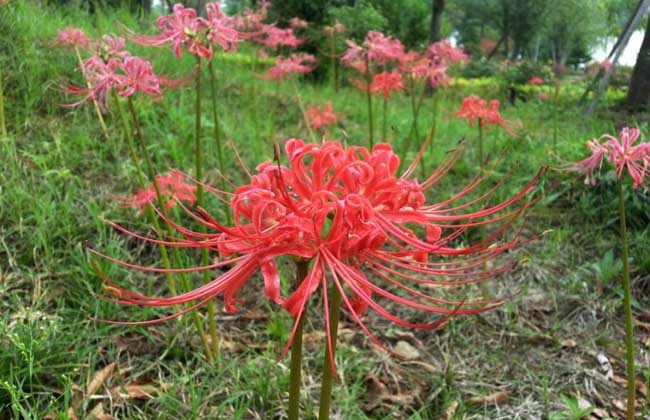
Red spider lily, also known as red flower lycoris, is a type of lycoris. In winter its leaves are dark green, and in late summer and early autumn the leaves fall and the flowers bloom bright and vivid, very beautiful, so many people want to grow a pot of red spider lily. Now let the editor talk to everyone about pest and disease control techniques for red spider lily!
Bacterial soft rot
[Damage characteristics] Bacterial soft rot is a plant disease mainly caused by bacteria of the genus Erwinia. It can cause the tissues or organs of plants to rot. The pathogens are all weak parasites, mainly harming the succulent and thick organs of the red spider lily, such as tuberous roots, tubers, fruits, stem bases, etc.
[Control methods] Before planting the bulbs, soak them in 0.3% copper sulfate solution for 30 minutes, wash them with water, and plant after drying. Spray 50% carbendazim wettable powder 500 times dilution every half month for control. In the early stage of the disease, spray with 50% benlate 2500 times dilution.
Tobacco cutworm
[Damage characteristics] The tobacco cutworm mainly harms leaves, flower buds, and fruits as larvae, gnawing on leaf mesophyll and boring into flower scapes and seeds, generally causing damage from late spring to November.
[Control methods] It can be controlled with 5% fipronil suspension concentrate 2500 times dilution or wanling 1000 times dilution.
Lycoris noctuid
[Damage characteristics] In plants invaded by lycoris noctuid larvae, the leaves are usually hollowed out, and the larvae can directly bore into and feed on the inside of the bulbs. The damaged areas usually leave a large amount of green or brown frass. Always pay attention to the undersides of leaves to see whether there are neatly arranged eggs, and remove them immediately if found.
[Control methods] For control, winter or early spring plowing can be combined to dig out overwintering pupae and reduce the insect population base; when they occur, spray with chlorpyrifos 1500 times dilution or phoxim emulsifiable concentrate 800 times dilution, choosing to spray in the morning or evening when the larvae come out to move (feed), and the control effect is relatively good.
Thrips
[Damage characteristics] Thrips are red all over and mainly stay where the bulbs sprout leaves, sucking nutrients and causing leaves to lose green color, especially more are found after the fruits mature.
[Control methods] It can be controlled by alternating sprays of 25% imidacloprid 3000 times dilution and 70% confidor 6000-10000 times dilution.
White grubs
[Damage characteristics] White grubs are the general name for the larvae of the superfamily Scarabaeoidea of the order Coleoptera. The larvae live in the soil throughout their lives and like to eat newly sown seeds, roots, tuberous roots, tubers, and seedlings, etc., causing missing plants and broken rows. They are a type of pest with a wide distribution and severe damage.
[Control methods] After discovery, drugs such as phoxim or trichlorfon should be used promptly for spraying control.