How to Grow White Orchid Tree (Michelia alba) and Daily Care Tips
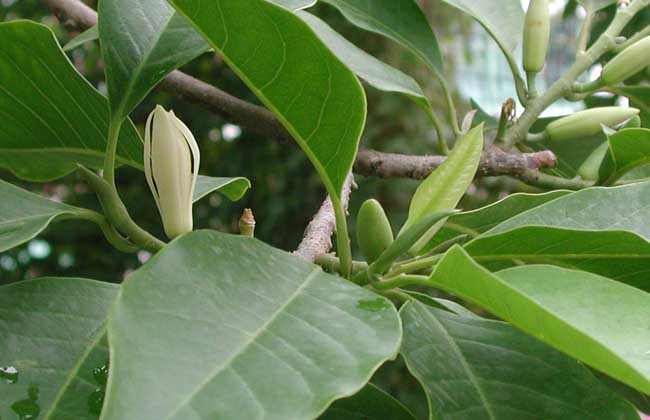
The white orchid tree (Michelia alba) has an upright, branching form and an elegant, natural bearing. In southern China it can be grown outdoors in courtyards and is a backbone tree species in southern gardens. Grown in pots, it can be placed in courtyards, halls, and meeting rooms, while small to medium-sized plants can be displayed in living rooms and studies. It has high cultivation value. Let's take a look below at how to grow the white orchid tree!
Growth Habits of the White Orchid Tree
1. Habits: The white orchid tree likes light but fears high temperatures and is not cold-tolerant; it suits slightly acidic soil. It prefers warmth and humidity, is not tolerant of drought or waterlogging, and is relatively sensitive to toxic gases such as sulfur dioxide and chlorine, with poor resistance.
2. Propagation: Propagation methods for the white orchid tree include grafting, layering, sowing, and cuttings. The more commonly used methods are grafting and layering, while sowing and cuttings are used less often. However, for home cultivation, grafting and layering are sufficient.
How to Grow the White Orchid Tree
1. Soil: The white orchid tree prefers acidic soil, with a soil pH requirement of 5.5-6.3. It is best to use fertile, loose, well-drained potting soil. You can mix 5 parts pine needle leaf mold, 2 parts coarse chaff ash, 2 parts coarse sand, and 1 part rotted manure. Avoid fine sandy soil or heavy clay soil with poor aeration.
2. Sunlight: The white orchid tree is a sun-loving flowering plant and needs ample sunlight. During the growing period, it should be cared for in a sunny spot with long daylight hours and strong light, especially during the flowering period. It needs no less than 6 hours of light per day. If kept in a shaded place, it will only grow leaves without blooming, or bloom very little, with thin, elongated branches, pale leaf color, thin leaves, and no gloss, which is unfavorable for growth. However, in summer, avoid direct sunlight; provide shade from 9 a.m. to 4 p.m., and at the same time spray water on the leaves and ground to increase air humidity.
3. Temperature: The white orchid tree likes warmth and fears cold, so special care must be taken to help it overwinter safely. Generally, move it indoors in late October and place it in a sunny spot. Keep the room temperature at around 10°C; it must not go below 5°C.
4. Watering: The white orchid tree has fleshy roots. If the potting soil is too wet, the leaves will turn yellow and drop, and the roots may even rot and kill the plant; if too dry, the leaf tips will wither and the leaves will curl. It is a flowering plant that fears both waterlogging and drought. During the flowering period, if the petals open too widely, it indicates insufficient water; when moisture is appropriate, the buds remain in a half-open state. When the surface of the potting soil looks dry and the soil is hard and cracked, water immediately. The water temperature and soil temperature must be consistent; do not suddenly water with cold or hot water. In spring and autumn, watering once a day is generally sufficient. In summer, when it is hot, evaporation is high, and growth is vigorous, watering frequency and amount can be appropriately increased. When moved indoors for winter, watering should be reduced.
5. Fertilizing: The white orchid tree has a long flowering period and likes fertilizer. Insufficient fertilizer results in fewer flowers, and improper timing of fertilization can lead to excessive vegetative growth of branches and leaves and poor blooming. Before new buds sprout in February to March, apply rotted cake fertilizer as a base fertilizer. During the flowering period, apply diluted human waste, or a liquid fertilizer made from fermented and rotted bean cake, tea seed cake, and fish bones, mixed with 9 parts water, applying once every 3-4 days. Stop fertilizing half a month before moving indoors for winter.
6. Pruning: During the growth of the white orchid tree, the plant should be shaped and pruned by cutting off diseased, dead, and leggy branches, and removing some lower leaves, in order to suppress plant vigor and promote more flower bud formation and blooming.
7. Pests and Diseases: The main pests and diseases of the white orchid tree include chlorosis, anthracnose, red spider mites, and scale insects. For anthracnose, use a 50% carbendazim wettable powder 500x solution, or a 50% thiophanate wettable powder 500x solution, spraying once every 5-10 days for control. If red spider mites or scale insects are found, they can be scraped off with a bamboo strip. For red spider mites, spray a 20% tetradifon 1000x solution, or a 50% trithion 1000x solution for control.
Precautions for the White Orchid Tree
1. Soil Requirements: Use fertile, loose, well-drained potting soil. You can mix 5 parts pine needle leaf mold, 2 parts coarse chaff ash, 2 parts coarse sand, and 1 part rotted manure. Avoid fine sandy soil or heavy clay soil with poor aeration. For potting, use a breathable clay pot (unglazed pot); avoid glazed pots, porcelain pots, purple clay pots, etc. It is best to use a relatively deep cylindrical flower pot, place a hollow flower pot underneath, and elevate it with bricks to prevent poor drainage. Line the bottom of the pot with about 5 cm of cinders and crushed stone.
2. Appropriate Moisture: The white orchid tree has fleshy roots. If the potting soil is too wet, the leaves will turn yellow and drop, and the roots may even rot and kill the plant; if too dry, the leaf tips will wither and the leaves will curl. It is a flowering plant that fears both waterlogging and drought. During the flowering period, if the petals open too widely, it indicates insufficient water; when moisture is appropriate, the buds remain in a half-open state. When the surface of the potting soil looks dry and the soil is hard and cracked, water immediately. The water temperature and soil temperature must be consistent; do not suddenly water with cold or hot water. Watering must be thorough; frequently watering only halfway can cause shallow roots. In spring and autumn, the white orchid tree should not be watered too much. In midsummer, water daily and it must be done in the evening. In late autumn, begin reducing the amount of watering. In winter, water once every 10 days. During rainy seasons, move it to a place sheltered from rain.
3. Likes Acid, Fears Alkali: The white orchid tree prefers acidic soil, with a soil pH requirement of 5.5-6.3. In northern regions, the white orchid tree is difficult to grow because most of the water and soil there tend to be alkaline, which dissolves the protoplasm of the white orchid tree's cells, causing delayed development and poor growth. Frequently watering with fermented rice-washing water gives better results.
4. Do Not Apply Concentrated Fertilizer: The white orchid tree likes phosphorus and potassium fertilizers, but avoid excessively high concentrations, otherwise reverse osmosis will occur, causing "physiological drought" in the plant, with mild cases wilting and severe cases burning to death. The fertilizing principle for the white orchid tree is: "apply diluted, apply often, apply in the evening." Practice has shown that using diluted human waste or bean cake water, mixed with crushed fish scraps, rotten shrimp, chicken innards, etc., after being rotted, at a fertilizer-to-water ratio of 1:9, applied once every 3-5 days, and mixed with calcium sulfate at the time of application, gives better results and can make the white orchid tree's fragrance stronger.