A Complete Guide to Violet Cultivation Methods and Care Tips
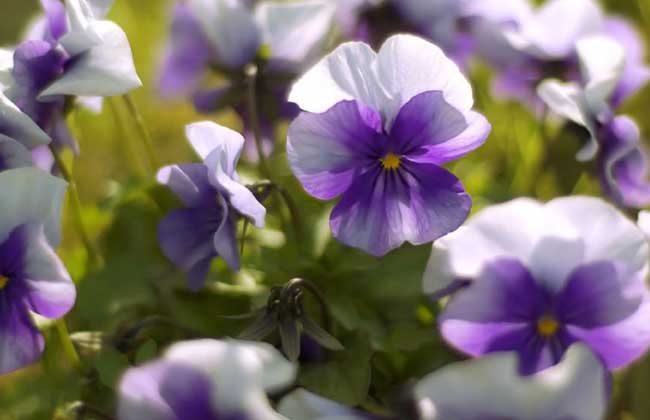
Violets originate from the Mediterranean coast, and are currently widely cultivated in southern China. They are biennial or perennial herbaceous flowers, generally sown in autumn of the first year and blooming in spring of the following year. They are commonly found in major Chinese cities and can be planted in gardens or greenhouses for ornamental purposes. Let's take a look at the cultivation methods for violets below!
Ecological Habits of Violets
Violets prefer a cool climate and dislike dry heat. They favor a well-ventilated environment. In winter, they prefer a mild climate but can also tolerate brief low temperatures of -5°C. The suitable temperature for flower bud differentiation is 15°C. They are not demanding about soil, but grow better in well-drained, neutral to slightly alkaline soil. Acidic soil should be avoided.
Violets are cold-hardy but not shade-tolerant, and fear waterlogging. They are suited to locations that are elevated, receive sunlight, and have good ventilation and drainage. They must not be exposed to muggy heat. During moldy rainy weather, when it is hot and ventilation is poor, they are prone to pest and disease damage. They require fertile, moist, and deep loam soil.
Violets prefer ample sunlight but are also somewhat tolerant of partial shade. Fertilization should not be excessive, otherwise it is unfavorable for flowering. If light and ventilation are insufficient, they are prone to pests and diseases.
Propagation Methods for Violets
There are quite a few methods that can be used for propagating violets, among which sowing and leaf cuttings are the more commonly used methods. In addition, there are also various propagation techniques such as division and tissue culture. For home cultivation, it is recommended to use methods like leaf cuttings, which are relatively simple to perform.
1. Seed propagation: Violets are mostly propagated by seed sowing. The sowing time is generally from mid-August to early October. Note that the sowing time should not be too late, otherwise it will affect the plant's growth, overwintering, and the quantity and quality of flowering. It can also be adjusted according to the desired flowering time. If sown in a greenhouse in February, they bloom in May; if sown in March, they bloom in June, and so on. However, if sown in July, you will have to wait until February to March of the following year for them to bloom in the greenhouse. Seeds should not be too dense, otherwise the seedlings are prone to damping-off disease.
2. Leaf cutting propagation: Leaf cutting is the most commonly used method for propagating violets, generally carried out in spring and autumn. Select healthy leaves from the plant that are free from pest and disease infection. If it is a variegated variety, choose leaves with less variegation and more green. Use a sharp knife to cut off a leaf with a thick middle section and a petiole of about 3 cm. Let it dry slightly and insert it vertically into a medium mixed with peat and perlite. After leaf cutting, water thoroughly, then keep moist and provide appropriate shade. Usually at a temperature of around 23°C, roots will develop in 15 to 20 days. After that, reduce misting. After 8 to 10 weeks, small plantlets will form. Large leaves can produce more than 10 small seedlings. Select strong seedlings for transplanting. From leaf cutting to flowering generally takes 5 to 6 months.
3. Water cutting propagation: Violets can also be propagated by water cutting. Cut a leaf diagonally from the violet and insert the petiole into clean water. Note that the bottom needs to remain suspended. Add and change water as needed. After about 1 month, roots will form and a seedling will develop. During the leaf cutting process, treating the petiole with a 25 mg/L hormone solution for 24 hours is beneficial for rooting.
Violet Cultivation Methods
1. Soil: Violets are not demanding about soil, but grow better in well-drained, neutral to slightly alkaline soil. Acidic soil should be avoided. The potting soil can be a mix of 2 parts humus soil, 2 parts garden soil, and 1 part river sand.
2. Watering: Generally, when the soil surface appears dry and whitish, water immediately. Water when dry, and let dry between waterings.
3. Sunlight: Violets prefer ample sunlight but are also somewhat tolerant of partial shade. If light and ventilation are insufficient, they are prone to pests and diseases.
4. Temperature: Violets prefer a warm winter, cool summer, and a well-ventilated environment. In winter, they can tolerate brief low temperatures of -5°C. They dislike dry heat. The suitable temperature for flower bud differentiation is 15°C.
5. Fertilization: During the growing season, fertilize violets once every 10 days. Nitrogen fertilizer should not be excessive; phosphorus and potassium fertilizers should be applied. Stop fertilizing during the flowering period and in winter.
6. Pruning: After flowering, the spent flowers of violets should be cut off, so that new branches can sprout and bloom again. The flowering period begins in mid-April, with a second bloom in June to July.
7. Pests and diseases: Regarding pest and disease control for violets, the editor will provide a more informative explanation in the article "Violet Pest and Disease Control Techniques." The editor will not repeat it here. Friends who want to learn more, please go there to read.