Detailed Explanation of Violet Pest and Disease Control Techniques and Methods
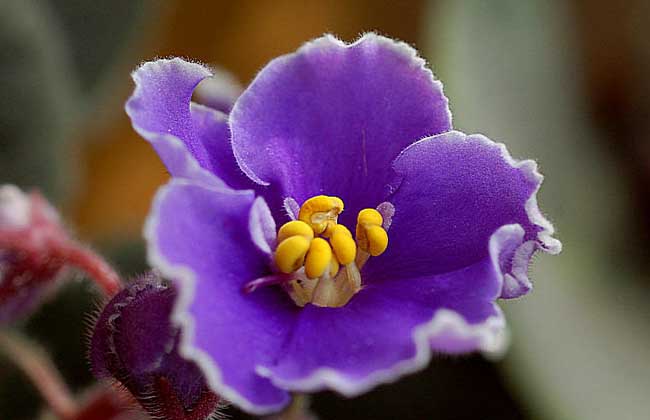
Violets (stock) originate from southern Europe and the Mediterranean coast. They are often introduced in major cities in southern China, and in the north they are planted in garden flower beds or greenhouses for ornamental purposes. During cultivation and planting, they are often harmed by pests and diseases. The main diseases include violet Fusarium wilt, violet Verticillium wilt, violet white rust, and violet mosaic virus disease. Let's take a look together below!
Downy Mildew
[Disease characteristics] Violet downy mildew was found in Shanghai Zhongshan Park. It causes leaves to wilt and droop, and even the whole plant to die. On the surface of affected leaves, light green spots appear, which later turn yellow, with no obvious edges, and become angular due to restriction by leaf veins. On the corresponding underside of the leaves, a white layer of downy growth forms. Tender shoots and all parts of the flowers can also be infected, causing stunting or deformities in the plant. The pathogen overwinters as oospores in the soil and in diseased plant residue. It begins to germinate the following spring and causes primary infection. Dense sowing and poor drainage make severe disease more likely.
[Control methods] Avoid prolonged continuous cropping and promptly remove diseased plants. The new fungicide ethyl sulfite a3, trial-produced by Shanghai Pesticide Factory, can be used at a concentration of 2-3 grams of pesticide per liter of water.
Fusarium Wilt
[Disease characteristics] Fusarium wilt is caused by Fusarium oxysporum. The main symptoms are stunted plant growth and wilting. On the leaves of young plants, obvious vein markings appear, and on larger plants it causes symptoms such as leaf drooping.
[Control methods] Seeds can be soaked in warm water at 50-55°C for 10 minutes, which can kill the pathogens carried by the seeds. The soil used for planting violets should be disinfected before reuse. A 1000-fold potassium permanganate solution can be used as the chemical treatment. If severely infected plants are found, they should be immediately pulled up and burned to prevent transmission to other healthy plants.
Verticillium Wilt
[Disease characteristics] The symptoms are yellowing and wilting of the lower leaves of the plant. Diseased plants are severely stunted, and the vascular bundle tissue rapidly discolors.
[Control methods] Same as violet Fusarium wilt.
Violet White Rust
[Disease characteristics] Caused by white rust. After violet plants are infected, the diseased parts turn yellow and later turn brown. Chain-like colorless spores are produced beneath the leaf epidermis.
[Control methods] Violet white rust is also very damaging on other cruciferous plants. If violets are placed together with other cruciferous plants, they will infect each other, so cruciferous weeds should be eradicated and the plants should be isolated from other cruciferous plants. Before disease occurs in violet plants, spray 3-4 degrees Baumé lime sulfur mixture for prevention. During the growing season, according to the disease situation, spray 65% zineb wettable powder at 500-600 times dilution, or rust sodium at 250-300 times dilution for control.
Mosaic Virus Disease
[Disease characteristics] Mosaic virus disease is caused by turnip mosaic virus, also known as cabbage virus No. 1. It is transmitted by 40-50 species of aphids, mainly green peach aphids and cabbage aphids, and can also be transmitted through sap. This virus can harm many cruciferous plants and other non-cruciferous plants. Therefore, it should be isolated from these plants.
Page break symbol [Control methods] Isolate from other virus-source plants and promptly eliminate aphids. For chemical control, plant-based insecticides such as 1.2% nicotine anabasine at 2000-4000 times dilution, or systemic agents such as 10% imidacloprid at 2000 times dilution can be sprayed for control.
Violet Phytophthora Blight
[Disease characteristics] Diseased violet leaves show large round spots, soft rot when moist, and bluish-white when dry, tending to split late. Stems show water-soaked, dark green lesions; the diseased area is generally constricted, but the vascular bundles do not discolor, and the leaves above the affected area wilt. If several parts of the stem are affected, the whole plant quickly wilts and dries up. When seedlings are infected, the growing point often appears dark green and water-soaked, and after soft rot the plant dies with a dry-tip appearance.
[Control methods] In addition to selecting disease-resistant varieties and using crop rotation cultivation management, chemical treatment for this disease emphasizes timeliness. Once central diseased plants are found, immediately apply chemicals.
Leaf Spot Disease
[Disease characteristics] Leaf spot disease is caused by continuous cropping, dense planting, poor ventilation, and excessively high humidity.
[Control methods] Remove diseased plant residues to reduce sources of infection, select disease-resistant varieties, appropriately increase application of phosphorus and potassium fertilizers to improve plant disease resistance, implement crop rotation, irrigate along the soil surface, avoid spraying water on the plants, and spray 1% Bordeaux mixture or 25% carbendazim wettable powder at 300-600 times dilution, or 50% thiophanate-methyl at 1000 times dilution, or 80% mancozeb at 400-600 times dilution.
Damping-Off
[Disease characteristics] Damping-off is mainly spread through soil and fertilizer. It is likely to occur under conditions of excessive humidity, excessively high soil temperature, dense sowing, and weak seedling growth.
[Control methods] Promptly pull out diseased plants, disinfect the soil, and appropriately control watering before seedlings emerge. In the early stage of disease, drench with 50% amobam aqueous solution at 300-400 times dilution or 70% thiophanate-methyl wettable powder at 1000 times dilution.
Rot Disease
[Disease characteristics] Rot disease is mainly caused by high humidity, insufficient light, and poor ventilation.
[Control methods] Appropriately control moisture and provide light and ventilation.
Pest Control
[Damage characteristics] The main pest is aphids, which gather on leaves, tender buds, and flower buds, piercing plant tissues with their piercing-sucking mouthparts to suck sap, causing yellow or black spots on the damaged parts. Affected leaves shrivel and fall off, and flower buds shrink or grow deformed. In severe cases, the plant may die. Aphids can secrete honeydew, leading to bacterial growth and inducing diseases such as sooty mold.
[Control methods] Eliminate them by clearing nearby weeds, and spray 40% dimethoate or omethoate at 1000-1500 times dilution, or fenvalerate at 2000-3000 times dilution, or 80% dichlorvos at 1000 times dilution.