What are the propagation methods for African violets?
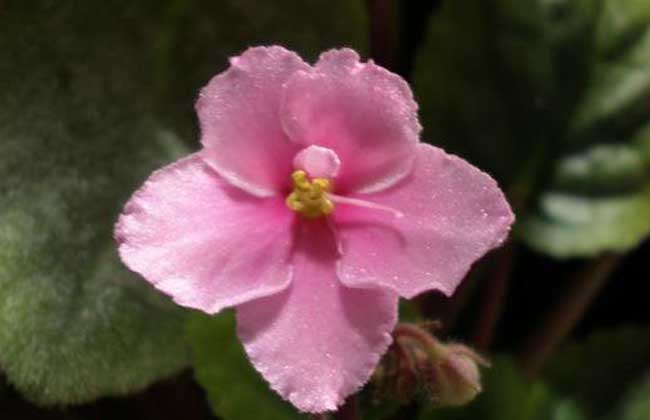
The African violet (Saintpaulia) is a flowering plant we like very much, and it is also a flower relatively often used to decorate and beautify the environment. The plant is small and compact, the flowers are bright and lovely, and the decorative effect is good. Growing it is also fairly simple. Below, let us take a look together at the propagation methods for African violets!
Leaf cutting propagation method
African violets commonly use cutting propagation, mainly leaf cuttings. After flowering, select healthy, plump leaves, cut them off leaving a 2 cm long petiole, let them dry slightly, insert them into a sand bed, and maintain relatively high air humidity. The room temperature should be 18-24°C. Roots form 3 weeks after insertion, and in 2-3 months young plants will be produced, which are then moved into 6 cm pots. During the cutting process, treating with vitamin B is beneficial for seedling growth after the African violet roots. Treating the petiole with 25 mg/liter of kinetin for 24 hours is favorable for the formation of adventitious buds. From cutting to flowering takes 4-6 months.
Stem cutting propagation method
Stem cutting propagation is also a propagation method chosen for African violets, mainly in spring after the flowers fade. Combined with repotting and changing the soil, the underground tubers are divided and planted. Seedlings form quickly, but the plant shape is not attractive enough, and because the plant has not been renewed, growth is not vigorous enough.
Tissue culture propagation method
The propagation method that is relatively popular for African violets now is tissue culture propagation, using leaves, petioles, and epidermal tissue as explants. Use MS medium plus 1 mg/liter 6-benzylaminopurine and 1 mg/liter naphthaleneacetic acid. Adventitious buds grow 4 weeks after inoculation, and after 3 months the rooted plantlets can be planted. The plantlets are transplanted into a substrate of half leaf mold and half peat moss soil, with a survival rate of 100%. At present, the United States, the Netherlands, Israel and other countries all have African violet test-tube plantlet production. However, this method produces relatively many plantlets and is not very suitable for home growing.
Seed sowing propagation method
African violet seed propagation can be carried out in spring and autumn. For greenhouse cultivation, autumn sowing in September-October is best, with a high germination rate, and the seedlings grow robustly, flowering in the following spring with large plants and many flowers. Sowing in February results in flowering in August, but the growth vigor is slightly poorer and there are fewer flowers. African violet seeds are tiny, so the sowing soil should be fine. After sowing, do not cover with soil; simply press flat. The suitable germination temperature is 18-24°C. They germinate 15-20 days after sowing, and the seedlings are transplanted in 2-3 months. During the seedling stage, note that the potting soil should not be too wet. Generally, from sowing to flowering takes 6-8 months.