In which regions are the places of origin of tulips distributed?
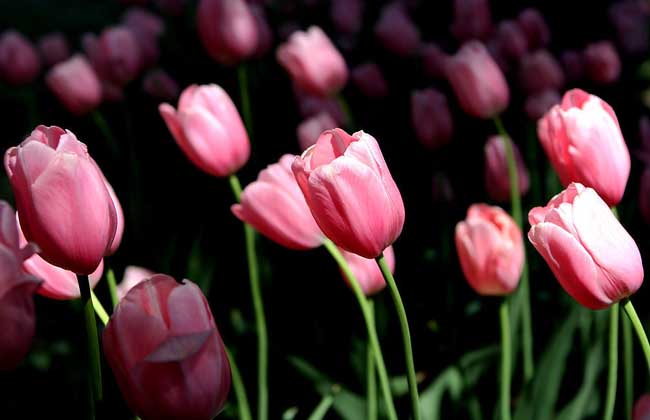
Tulips are also called foreign lotus, grass musk, tulip fragrance, Dutch flower, etc. They are herbaceous plants of the genus Tulipa in the lily family, and are the national flowers of Turkey, Kazakhstan, and the Netherlands. They originated in the ancient Western Regions of China and the ** area of Xizang (Tibet), and later spread through the Silk Road to Central Asia, and then from Central Asia into Europe and all parts of the world. Let us now take a look at the places of origin and distribution of tulips!
The places of origin and distribution of tulips
The places of origin of tulips are the high mountain regions of ** China, Xizang (Tibet), Iran, and Turkey. As early as more than 1,300 years ago, the great Tang Dynasty poet Li Bai of China left the line “Lanling fine wine tulips, jade bowls filled with amber light” as clear evidence. Later they spread through the Silk Road to Central Asia, and then from Central Asia into Europe and all parts of the world. At present they are planted all over the world, and are the national flowers of the Netherlands, New Zealand, Iran, Turkey, Turkmenistan, and other countries. They are called the queen of flowers of the world and have become a symbol representing fashion and internationalization.
The production environment of tulips
Tulips are influenced by the Mediterranean climate, forming the characteristic that tulips adapt to wet and cold winters and dry and hot summers. They have the traits of summer dormancy, rooting in autumn and winter and sprouting new buds but not emerging from the soil, and needing low winter temperatures before beginning extended growth around early February of the following year (at temperatures above 5°C) to form stems and leaves, and flowering in March to April. The suitable temperature for growth and flowering is 15-20°C. Flower bud differentiation is carried out during the storage period when the stems and leaves turn yellow, the bulbs are dug out from pots and placed in a cool, shaded outdoor place to pass the summer, and the suitable differentiation temperature is 20-25°C, with the maximum not exceeding 28°C.
Tulips are long-day flowers, and by nature prefer sunny, wind-sheltered conditions, a warm and humid winter, and a cool and dry summer climate. They can grow normally above 8°C, and generally can withstand low temperatures of -14°C. Their cold resistance is very strong. In severe cold regions, if covered by thick snow, the bulbs can overwinter in the open field, but they fear intense summer heat. If summer comes early and midsummer is very hot, it is difficult for the bulbs to pass the summer after dormancy. They require slightly acidic sandy loam rich in humus, loose and fertile, and well drained, and avoid alkaline soil and continuous cropping.
The plant culture of tulips
1. Common tulips: universal love, consideration, elegance, wealth, capability, intelligence, kindness.
2. Purple tulips: endless love, most beloved.
3. White tulips: pure and noble romance.
4. Pink tulips: eternal love.
5. Red tulips: confession of love, joy, passionate love.
6. Yellow tulips: cheerfulness.
7. Black tulips: mystery, nobility, unique leadership power, crown of honor.
8. Bicolor tulips: beautiful you, happy reunion.
9. Feather tulips: lingering affection.