How to Propagate Marigolds? A Detailed Guide to Common Propagation Methods
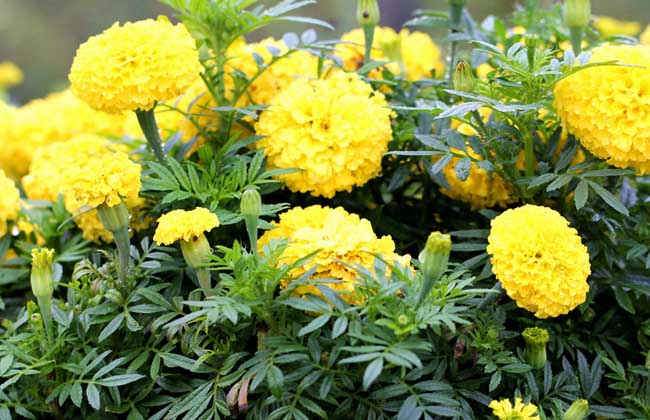
The marigold, which carries an auspicious meaning, has long been regarded as the flower of respect for the elderly. Native to Mexico, it is not demanding about soil and does best in fertile, well-drained sandy loam. It prefers a warm, humid environment with plenty of sunlight. It is mainly propagated from seed, but can also be propagated by cuttings. Let's take a look together below!
Seed Propagation of Marigolds
1. Spring sowing: Sow in an open-field seedbed from late March to early April. Since the seeds are photoblastic, cover with soil and water after sowing. The optimum temperature for seed germination is 20-25°C. Seedlings emerge about 1 week after sowing, with a germination rate of about 50%. When the seedlings reach 5 cm in height, transplant them once, and when they have grown 7-8 true leaves, plant them out in their final position.
2. Summer sowing: To control plant height, sowing in summer is also possible. Seedlings from summer sowing can bloom 60 days after emergence.
Cutting Propagation of Marigolds
Marigolds can be propagated by cuttings in summer, as they root easily and grow into plants quickly. Cut 8-12 cm young shoots from the mother plant as cuttings, remove the lower leaves, and insert them into potting soil, with 3 cuttings per pot. After inserting, water thoroughly and provide slight shade; they will root after 2 weeks. Then gradually move them into sunlight for routine care, and they can bloom after about 1 month.
Growing Conditions for Marigolds
1. Temperature: The suitable growing temperature for marigolds is 15-25°C, and the suitable temperature during the flowering period is 18-20°C. The relative air humidity of the growing environment should be 60-70%, and the winter temperature should not be lower than 5°C. In summer, when temperatures exceed 30°C, the plants grow leggy, the stems and leaves become loose, and they bloom less. Below 10°C, growth slows down.
2. Light: Marigolds are light-loving plants, and ample sunlight is very beneficial to their growth, making the plants short and sturdy with vivid flower colors. With insufficient sunlight, the stems and leaves become soft and slender, and the flowers are few and small.
3. Soil: Marigolds are not demanding about soil and do best in fertile, well-drained sandy loam.