The Complete Explanation of the Meaning and Story Behind "Dying Beneath the Peony, Even as a Ghost One Is Romantic"
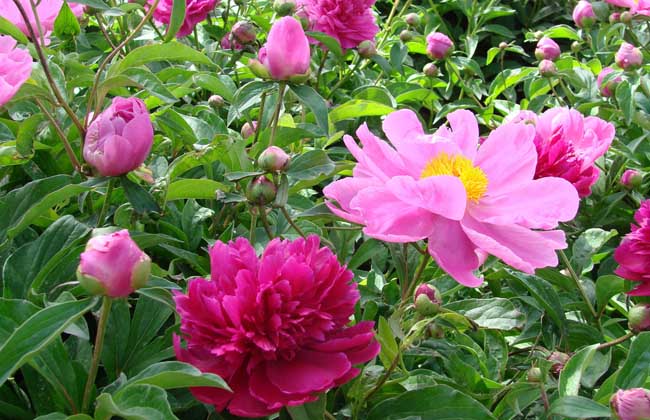
The source of "Dying beneath the peony, even as a ghost one is romantic" is Tang Xianzu's "The Peony Pavilion." The story describes Du Liniang dreaming of a scholar holding a willow branch who asks her to write a poem, and who then carries her in his arms to the banks of the Peony Pavilion, where they share the joy of lovemaking. Over time this gradually evolved into the saying we know today. Let us take a look at this story together below!
Meaning
The original meaning of "Dying beneath the peony, even as a ghost one is romantic" should be: "To die beneath the peony, even in death, is an elegant and refined thing." Later it was often quoted by shameless, idle people when teasing women, or used to cheekily express feelings to a woman. The peony -- by extension, a woman (a beauty) -- so the meaning is: for a beauty, one is willing to die!
Poetry
"Drunk with Xi Shi"
-- Yuan dynasty - Zhu Lian Xiu
I review my old romances, and lately I have gradually noticed my slender waist growing thin. Thinking of the countless kinds of love back then, now they have instead become a bout of anguish. It has made my willow-leaf brows knit and my autumn-wave eyes stream, tears dripping onto my spring-gown sleeves, like peach blossoms in rain soaked through with rouge. Green fat and red thin, this is just the season of sorrow.
The breeze is soft, the curtain hangs on the jade hook. I fear the paired swallows, the couples of orioles, in pairs keeping company together. Where is the fickle one in his Qin tower? I have gained old illness added to new illness, new sorrow embraced with old sorrow. Mountains of clouds fill my eyes; I am ashamed to climb the evening makeup tower.
Flowers hold a smile, willows bear shame. Where in the dance hall can parting sorrow be tied? If I wish to send a letter, on whom can I rely to write it? I blot out all my longing with one stroke, and seeing the desolate fragrant grass adds thousands upon thousands of sorrows. Enough, enough, my heart breaks at the very end of the Xiang River.
When will this loneliness end? I long for word from the edge of the sky. The yellow bird on the branch adds to one's illness, and the fading willows of Wei City add to one's sorrow. The whole spring river before my eyes is all tears, and still cannot wash away so much sorrow. If only he would return, and we could walk and rest together, then even dying beneath the peony, even as a ghost one is romantic. A night of east wind pierces through with light cold, announcing that peach blossoms drift away with the water; do not learn from the Lord of Spring who never turns his head.
Allusion
During the Southern Song dynasty, the prefect of Nan'an, Du Bao, had only one daughter, named Liniang, sixteen years old and not yet betrothed.
In order to make his daughter a model of a well-read and well-mannered lady, Du Bao hired for her an old scholar already sixty years old, Chen Zuiliang. Because Chen taught "The Book of Songs - Guan Ju," it stirred Liniang's feelings of love.
The maid Chunxiang, who accompanied her in study, happened to discover the garden behind the Du residence and led Liniang secretly to stroll in the garden. Liniang, long confined to her boudoir, was moved by the fine spring scenery and felt a desire to go out and enjoy the spring.
After Liniang returned to her room, she suddenly had a dream. She dreamed of a scholar holding a willow branch who asked her to write a poem, and who then carried her in his arms to the banks of the Peony Pavilion, where they shared the joy of lovemaking.
After Liniang woke up, she was listless and drowsy. The next day she went to the garden again, searching for the dream. In her disappointment, her longing turned into illness, and her figure grew thinner day by day.
One day, looking in the mirror, she saw how thin she had suddenly become, and quickly called Chunxiang to bring paints and plain silk. She painted her own spring portrait and inscribed a poem on it. She also told Chunxiang about the dream, and had Chunxiang take the painting to a mounting craftsman to be mounted.
When Du Bao and his wife heard their daughter was seriously ill, they quickly called Chen Zuiliang to use medicine, and had Daoist nun Shi come to chant scriptures, but none of it was effective.
On the night of the Mid-Autumn Festival, Liniang passed away. Before dying, she instructed Chunxiang to place her spring portrait in a red sandalwood box and hide it beneath the Taihu rock in the garden, and instructed her mother to bury her beneath the plum tree beside the Peony Pavilion in the garden.
At this time, the bandit king Li Quan, who had surrendered to the Jin state, led troops to besiege Huai and Yang. The court promoted Du Bao to Huai-Yang pacification commissioner, and he set out at once.
Du Bao had no choice but to hastily bury his daughter, and built a Plum Blossom Nunnery to enshrine Liniang's spirit tablet, and entrusted Daoist nun Shi and Chen Zuiliang to look after it.
Du Bao then took his wife and Chunxiang to Huai'an. Because the military situation was urgent, halfway there Du Bao had his wife and Chunxiang take a boat back to Lin'an.
The scholar Liu Mengmei of Guangzhou Prefecture, originally named Liu Chunqing, changed his name to Liu Mengmei only because one day he dreamed that in a garden a woman stood beneath a plum tree, saying she had a marriage fate with him.
Liu Mengmei went to Lin'an for the examination, and on the way received help from the imperial envoy Miao Shunbin. When he reached Nan'an, Liu fell ill and lodged at the Plum Blossom Nunnery.
When Liu was gradually recovering, he happened to stroll in the garden, and right by the Taihu rock he picked up the box containing Liniang's spring portrait. Returning to his study, he hung the spring portrait by his bedside and burned incense and prayed to it every night.
Liniang stayed in the underworld for three years. When the King of Hell was assigning ghosts, he checked and found that Liniang's earthly lifespan was not yet exhausted, and ordered her to return home on her own.
Liniang's ghost wandered to the Plum Blossom Nunnery, and happened to meet Liu Sheng just as he was bowing and praying before her true likeness. Liniang was deeply moved, and made love with Liu Sheng, claiming to be the daughter of the western neighbor.
Their nightly laughter and talk disturbed Daoist nun Shi.
One night, as the two were talking and laughing, they were broken up by the sudden arrival of Daoist nun Shi. The next night, Liniang had no choice but to tell Liu Sheng the truth, and begged Liu Sheng to dig up the grave and open the coffin within three days. Liu Sheng had no choice but to tell the truth to Daoist nun Shi and beg for her help.
The next day, they dug up the grave and opened the coffin, restoring Liniang's soul to life. The Daoist nun, fearing that Liu Sheng and Du Liniang's affair would be discovered, hired a boat that night, and the three of them went together to Lin'an.
Chen Zuiliang discovered that Liniang's grave had been robbed, and hurried to Yangzhou to tell the pacification commissioner Du. Before Chen Zuiliang reached Huai'an he was captured by the rebel army. Li Quan, hearing that Chen Zuiliang was the family tutor of the Du household, and also learning that Du Bao still had a wife and Chunxiang, followed his wife's plan, falsely claiming he had killed Madam Du and Chunxiang, and then released Chen Zuiliang.
When Chen reached Huai'an and met Du Bao, he reported to Du Bao the matters of the young lady's grave being robbed and the old madam and Chunxiang being killed. Du Bao was grief-stricken upon hearing this.
Afterward Du Bao endured his grief and wrote two letters, having Chen Zuiliang deliver them to Li Quan and Li's wife, offering official posts and promising money, and won over Li Quan, and the siege of Huai'an was lifted.
Liniang and the others arrived in Lin'an and settled by the Qiantang River. By the time Liu Sheng learned of the examination, the examination time had already passed. Thanks to the chief examiner being Miao Shunbin, he was able to take a supplementary examination.
At this time, because of the military affairs in Huai and Yang, the court postponed the posting of results. Liniang told Liu Sheng to go first to Yangzhou to visit her parents. Not long after Liu Sheng left, the old madam and Chunxiang, who had come to Lin'an, happened to meet Liniang and Daoist nun Shi while looking for lodging because it was late.
When Liu Sheng arrived in Yangzhou, he heard that Du was in Huai'an, so he went to Huai'an to see Du Bao. Du Bao thought his daughter was already dead, so how could there be a son-in-law, and on the charge of Liu Sheng impersonating, had him seized and sent under escort to Lin'an to await trial.
Du Bao returned to Lin'an, and because of military merit was promoted to prime minister, and Chen Zuiliang was promoted to Yellow Gate memorial official.
At this time, the results were posted, and Liu passed as the top scholar, but he could not be found anywhere. It turned out Liu was being hung up and beaten by Du Bao, because Liniang's spring portrait had been found on Liu, and Du Bao believed Liu to be a grave robber.
At this time, when Miao Shunbin heard of it, he rushed to the Du residence and saved Liu Sheng. Miao told Du Bao that Liu Sheng had already passed the examination as top scholar.
Just as Du was angry, Chen Zuiliang arrived, saying that the young lady had indeed come back to life, and that Liu Sheng was the son-in-law.
Du thought this was a matter of ghosts and demons, and requested the emperor to eliminate this matter. Chen told the emperor about this matter, and the emperor wanted the prime minister, the young lady, Liu Sheng, and the old madam all to come and testify.
In the Golden Throne Hall, everyone arrived together. The emperor used a mirror to check whether there was a shadow, and determined that Liniang was indeed a living person.
Du Bao insisted that Liniang and the old madam were both transformed from ghosts, but afterward, by the emperor's ruling, they were made to recognize each other as father and daughter, and as husband and wife.
Liniang also persuaded Liu Sheng to acknowledge her father Du Bao, and the whole family was reunited.