How to Grow Peonies? A Complete Guide to Cultivation Methods
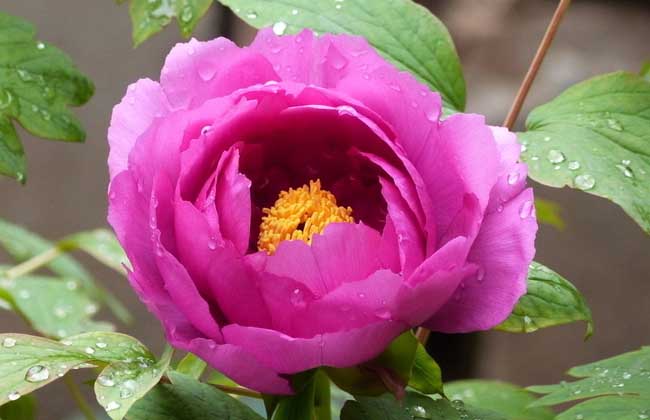
The peony is also known as the "King of Flowers" and the "Flower of Wealth and Honor." Since the Tang Dynasty it has been revered as national beauty and heavenly fragrance, symbolizing completeness, wealth, auspiciousness and prosperity. Many people today like to grow a peony in their garden, but how do you grow a peony? This is also a question that troubles flower lovers. So let us take a detailed look at how to grow peonies!
The Growing Environment of Peonies
Peonies like to grow in environments with plenty of sunlight, so place them in a spot with ample light, good ventilation and sun exposure. In spring and autumn they can be placed outdoors; in summer, during the hot and rainy season, move them to a shaded environment to avoid exposure to scorching sun and damage from heavy rain. In winter, peonies can be placed indoors in a sunny spot to prevent excessively low temperatures from affecting their growth.
Fertilizing Methods for Peonies
During the growing period of the peony, it must have enough nutrients to grow quickly, so it should be fertilized regularly. Normally, during its growing period it should be fertilized once or twice a week; it is best to use fertilizer diluted with water, as this helps it better absorb the nutrients. During the flowering period, fertilizer water can be applied once a day, while after the flowers fade, the frequency and amount of fertilizing should be reduced. Winter is the dormant period for peonies and no fertilizing is needed.
Watering Methods for Peonies
Peonies are drought-tolerant and afraid of waterlogging, so when growing them you must not water too much; keeping the soil moist is ideal. If watered too much, the branches and leaves tend to grow excessively, and if the soil stays too wet for a long time or there is standing water, it will cause the peony's roots to rot. Therefore, in summer and autumn, the soil moisture of peonies must be controlled even more. Usually in summer, water only in the early morning or at night, while in autumn it is enough to keep the soil from becoming too dry.
Four-Season Care for Peonies
1. Spring management: When the spring temperature stabilizes at 10°C, repot, repotting once a year. When removing the plant from the pot, handle it gently to prevent knocking the bulb off the rootstock. After removal, remove dead roots and broken roots, let it dry for 3~5 days, then plant it, and after planting place it in a semi-shaded spot to grow. Do not water for the time being; only mist 2~3 times a day or place it in a spot with higher humidity. After half a month, a small amount of water can be given; after 1 month, once new roots have grown, gradually increase the water supply.
2. Summer management: When the summer temperature is hot, the peony should be placed in a spot with morning and evening light to grow, maintaining a sufficient water supply, but watering should alternate between dry and wet. At the same time, mist around it several times a day and strengthen ventilation to lower the temperature. After the temperature turns cool at the end of summer, it should be moved to a spot with ample light to grow.
3. Autumn management: In autumn, the peony should be placed in a spot with ample light but no rain to grow, and it is best to water when the soil looks dry. After the weather gradually turns cooler, the amount of watering can be gradually reduced, keeping the potting soil on the dry side, until dormancy. When the outdoor temperature drops to around 10°C, it should promptly be moved into a closed balcony or room with light to grow.
4. Winter management: Peonies are not cold-tolerant; in winter the indoor temperature should be kept above 8°C, and ideally kept at around 0°C. Potted plants should be placed on a windowsill or balcony with ample light to grow, and attention should be paid to controlling water, keeping the potting soil on the dry side; the lower the temperature, the drier the potting soil should be.