What are the cultivation methods for Agave americana 'Marginata'?
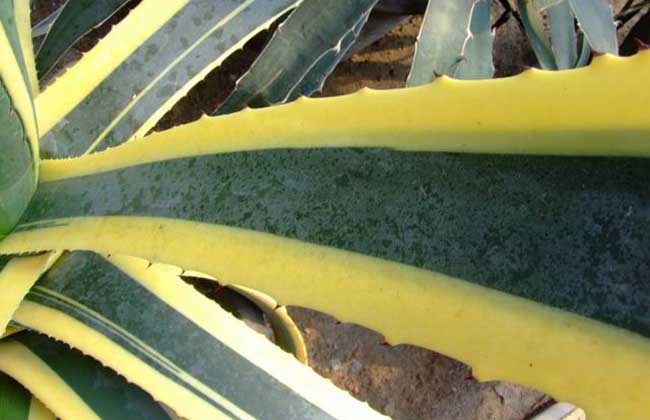
Agave americana 'Marginata', also known as golden-edged lotus, agave, and golden-edged false pineapple, is a perennial evergreen herb of the Agave genus in the Asparagaceae family. It is native to the desert regions of the Americas. Because its leaves are firm and attractive and it stays green all year round, it is often grown as an ornamental plant. Let us take a look below at the cultivation methods for Agave americana 'Marginata'!
Cultivation conditions for Agave americana 'Marginata'
Agave americana 'Marginata' prefers sunny conditions and fertile, slightly acidic soil rich in organic matter. It is relatively tolerant of drought and poor soil, dislikes waterlogging, and is relatively tolerant of cold. The optimal growing temperature is 22-30°C. For potted plants, a mixed soil of leaf mold plus coarse sand is commonly used, and fertilizer is applied once a month during the growing season.
Cultivation methods for Agave americana 'Marginata'
1. Propagation: Agave americana 'Marginata' is commonly propagated by division and sowing.
① Division: Carry this out in early spring in April when repotting. Lift out the mother plant and peel off the suckers beside the mother plant to plant separately.
② Sowing: Seeds can only be set through cross-pollination. After collecting seeds, sow them in April-May. They germinate in about 2 weeks. Seedlings grow slowly, but after becoming established they grow rapidly. Only old plants of 10 years or more can flower and set seed.
2. Cultivation: For potted Agave americana 'Marginata', a mixed soil of leaf mold plus coarse sand is commonly used. Fertilize once a month during the growing season. In summer, increase watering to keep the leaves emerald green and tender. When exposed to strong sunlight, provide slight shading. After autumn begins, agave grows slowly, so watering should be controlled, the soil should be kept dry, fertilization should be stopped, and soil should be earthed up appropriately. If grown as a potted ornamental, promptly remove side suckers to keep the plant's form attractive.
3. Management: Except in tropical and subtropical regions, potted Agave americana 'Marginata' in other regions should be placed in a low-temperature greenhouse for protection over winter, then moved outdoors after Qingming the following year. For variegated cultivars, appropriate shading is needed in summer. During the growing season, Agave americana 'Marginata' should have its potting soil kept moist. When watering, do not splash water on the leaves to prevent brown spot disease. As new leaves grow, promptly trim away the yellowed and withered old leaves at the lower part.
4. Pests and diseases: Agave americana 'Marginata' commonly suffers from leaf spot, anthracnose, and gray mold, which can be sprayed with a 1000-fold dilution of 50% tebuconazole? No. 50% Tuzet wettable powder at 1000 times. If there is damage from scale insects, spray with a 1000-fold dilution of 80% dichlorvos emulsifiable concentrate to kill them.
Hydroponic methods for Agave americana 'Marginata'
1. Agave can be grown hydroponically in a heated environment all year round. For hydroponics, all its roots need to be removed, disinfected with a disinfectant solution, and then soaked in a rooting solution for a certain period of time.
2. During hydroponics, note that cabbage caterpillars may eat its leaves and heart, causing it to lose commercial and ornamental value. If insects are found, they can be caught manually, or insecticide can be used to kill them.
3. For hydroponics where the roots are viewed, it should often be taken to a place with good sunlight. Do not leave it in a dark place for a long time, as the leaves can easily turn white and become thin, thereby losing ornamental value.
4. In winter, pay attention to keeping it warm. During the day, place it by a window in a sunny spot. At night, in an indoor space without heating, the glass bottle needs to be placed in plastic or a cardboard box.
5. If the leaves turn yellow or droop downward and look listless, it may be cold damage. At this time, it needs some warmth-preserving measures. Then place it in a place away from doors and windows.
6. Remember not to place it in a place facing north. When changing the water in winter, water at 12°C to 18°C can be used. Agave has strong resistance, and as long as attention is paid to management, it can safely pass the winter.