Where is the origin and distribution of Agave? An overview of the main producing regions
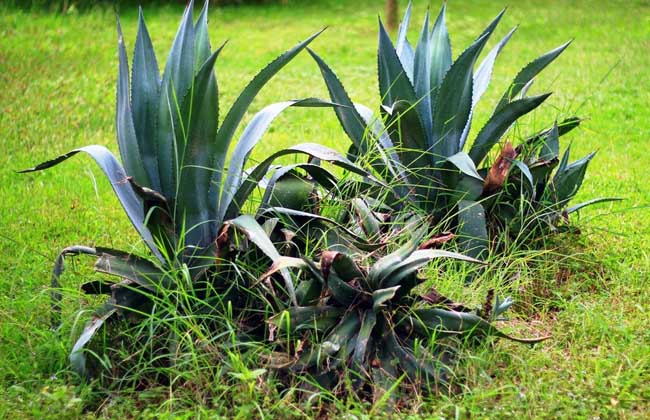
Agave, also known as dragon tongue palm, sisal hemp, etc., is a perennial evergreen large herbaceous plant of the genus Agave in the family Agavaceae. Its place of origin is the tropical regions of the Americas. It is now often introduced and cultivated in the provinces and regions of South China and Southwest China, and is a common ornamental garden plant. Let us now take a look at the origin and distribution of Agave!
The origin and distribution of Agave
Agave originated in tropical America. It is often introduced and cultivated in the provinces and regions of South China and Southwest China. In Yunnan it has been naturalized for many years, and in the dry-hot valley areas of the Red River, Nujiang River, Jinsha River, and even in Kunming, it can flower and set seed normally.
The habitat environment of Agave
Agave likes plenty of sunlight, is slightly cold-tolerant, and is not shade-tolerant. It likes a cool, dry environment. The optimum growth temperature is 15-25°C, and it grows best at a night temperature of 10-16°C. It can be cultivated in the open ground at temperatures above 5°C. Adult Agave plants suffer only slight frost damage to the leaves at a low temperature of minus 5°C. At minus 13°C the aboveground part freezes and rots, but the underground stem does not die, and the following year it can sprout and grow leaves and grow normally. A cool, dry winter is most favorable for its growth. It has strong drought tolerance and is not strict about soil requirements. A loose, fertile, moist sandy soil with good drainage is suitable.
Typical varieties of Agave
1. Queen Victoria Agave: Queen Victoria Agave, also known as Agave victoriae-reginae, Sasano-yuki, Yashan Jixue, etc., is a perennial succulent herb. The plant has no stem, and the succulent leaves are arranged in a rosette. The plant spread can reach 40 cm, and a large plant can have more than 100 leaves. The leaves are triangular-ovoid, 10-15 cm long and about 5 cm wide, with a slender tip, a flat ventral surface, and a rounded dorsal surface slightly keeled. The leaves are green with irregular white lines. Both the leaf margins and the keel protrusions on the back of the leaf have white horny material, and the leaf tips have hard black spines 0.3-0.5 cm long. The plant grows for about 30 years before it can bloom. The loose spike inflorescence is up to 4 m tall, and the small flowers are pale green, about 5 cm long. After flowering it sets seed, and the plant then withers and dies.
2. Golden-edged Agave: Golden-edged Agave is a perennial evergreen herb with a short, slightly woody stem. The leaves are mostly clustered, oblong, and of varying sizes. The small ones are 145-25 cm long and 5-7 cm wide, while the large ones can be up to 1 m long. They are thick, smooth, and green, with yellow-white bands bordering the edges and purple-brown spiny teeth. The flower stem has many transverse stripes. The flowers are yellow-green, succulent, with 6 stamens, anthers inserted in a T shape, a 3-loculed ovary, and a subulate style. The capsule is oblong and loculicidal, with many flat, black seeds. The flowering period is summer. It is mostly cultivated in gardens and is distributed in Southwest and South China.