Where are chrysanthemums distributed? Introduction to the main producing areas
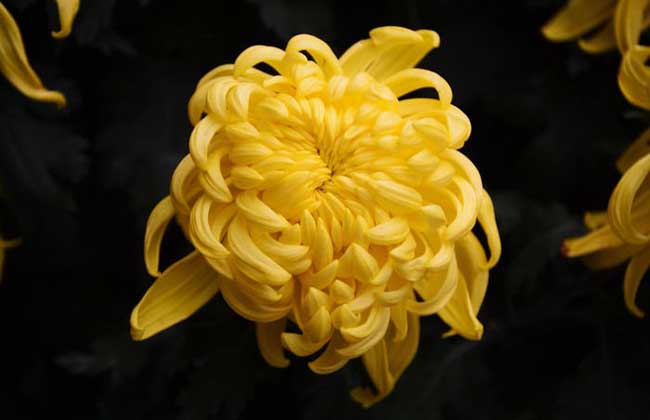
The place of origin of the chrysanthemum is China. China has a history of more than 3,000 years of cultivating chrysanthemums. It is a perennial herbaceous plant of the genus Chrysanthemum in the Asteraceae family, widely distributed in towns and rural areas across China, and is now cultivated throughout the world. It is one of the Four Gentlemen among flowers (plum blossom, orchid, bamboo, chrysanthemum). Let us take a look at the distribution of chrysanthemum origins below!
The distribution of chrysanthemum origins
Chrysanthemums are found in towns and rural areas throughout China, especially flourishing in Beijing, Nanjing, Shanghai, Hangzhou, Qingdao, Tianjin, Kaifeng, Wuhan, Chengdu, Changsha, Xiangtan, Xi'an, Shenyang, Guangzhou, and Xiaolan Town in Zhongshan City.
Around the 8th century, ornamental chrysanthemums were introduced from China to Japan, where they were revered as the motif of the Japanese national emblem. In the late 17th century, Dutch merchants introduced Chinese chrysanthemums to Europe; in the 18th century they were introduced to France; and in the mid-19th century they were introduced to North America. Thereafter, Chinese chrysanthemums spread throughout the world.
The growing environment of chrysanthemum origins
1. Chrysanthemums are highly adaptable. They prefer cool conditions and are relatively cold-tolerant. The suitable growing temperature is 18-21 degrees, the maximum growing temperature is 32 degrees, the minimum is 10 degrees, and the underground rhizomes generally tolerate low temperatures to a limit of minus 10 degrees.
2. Chrysanthemums prefer loose, fertile, well-drained sandy loam soil. They can grow from slightly acidic to neutral soil, and continuous cropping should be avoided.
3. Chrysanthemums are short-day flowers and have a certain resistance to toxic gases such as sulfur dioxide and chlorine.
The original varieties of chrysanthemum
1. Wild chrysanthemum: Wild chrysanthemum is a perennial herb, 0.25-1 m tall, with long or short underground stolons. The stems and branches are sparsely hairy, with slightly more or more hairs on the upper parts and inflorescence branches. The basal leaves and lower leaves fall off during the flowering period. The middle stem leaves are ovate, long-ovate, or elliptic-ovate, pinnately parted, shallowly lobed, or indistinctly lobed with shallow serrations on the margins. The petiole base has no auricle or has divided leaf auricles. Both surfaces are the same color or nearly the same color, light green. The capitula are 1.5-2.5 cm in diameter, mostly arranged at the tops of stems and branches in loose corymbose-paniculate inflorescences, or a few arranged at the stem top in corymbose inflorescences. The involucral bracts are about 5 layers; the outer layer is ovate or ovate-triangular, the middle layer is ovate, and the inner layer is long-elliptic, 11 mm long. All bract margins are white or brown broadly membranous, with obtuse or rounded tips. The ligulate flowers are yellow, with entire tips or 2-3 teeth. The achenes are 1.5-1.8 mm long. The flowering period is June-November.
2. Sweet chrysanthemum: Sweet chrysanthemum is a perennial herb, 0.3-1.5 m tall, with underground stolons. The stems are erect, mostly branching from the middle upward, or only the upper part has corymbose inflorescence branches. The basal and lower leaves fall off during the flowering period. The middle stem leaves are ovate, broadly ovate, or elliptic-ovate. They are bipinnately parted. All leaves are the same color or nearly the same color on both surfaces. The petiole base has divided leaf auricles or no auricles. The capitula are usually numerous at the tops of stems and branches, arranged in loose or slightly dense compound corymbose inflorescences. The involucre is dish-shaped, with about 5 layers of involucral bracts. The middle and inner layers are ovate, long-elliptic to oblanceolate, and all bract tips are rounded, with white or light brown membranous margins. The ligulate flowers are yellow, and the ligules are elliptic, with entire tips or 2-3 indistinct tooth-like lobes. The achenes are 1.2-1.5 mm long. The flowering and fruiting period is May-November.
3. Small red chrysanthemum: Small red chrysanthemum is a perennial herb, 15-60 cm tall, with underground creeping rhizomes. The stems are erect or curved at the base, branching from the base or middle, but usually only with corymbose inflorescence branches at the stem top. The middle stem leaves are reniform, semicircular, nearly round, or broadly ovate, usually 3-5 palmately or palmate-pinnately shallowly lobed or parted, and all lobe margins are obtuse-toothed, sharp-toothed, or awn-like sharp-toothed. The basal leaves and lower stem leaves are the same shape as the middle stem leaves, but smaller; the capitula are few (about 3) to numerous (about 12), arranged at the tops of stems and branches in loose corymbose inflorescences, rarely solitary at the stem top. The involucre is dish-shaped; the involucral bracts are 4-5 layers. All bract margins are white or brown membranous. The ligulate flowers are white, pink, or purple, and the ligules are long with 2-3 tooth-like lobes at the tip. The achenes are 2 mm long, obliquely truncate at the top, narrowed below, with 4-6 veined ribs. The flowering and fruiting period is July-October.