Where are rhododendrons distributed? Introduction to the main producing areas
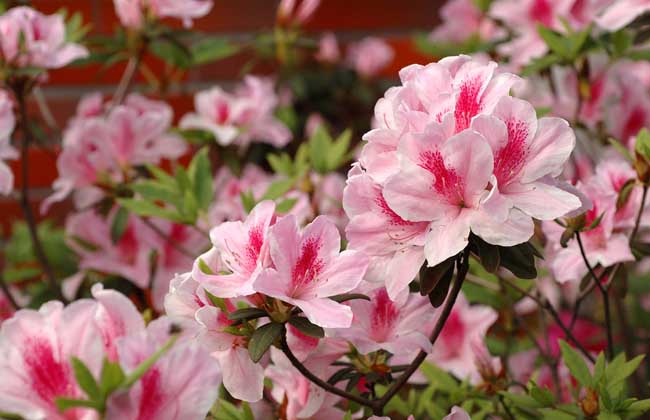
Rhododendron, also known as yingshanhong and pomegranate flower, is an evergreen or semi-evergreen shrub. It is a typical indicator plant of acidic soil in central-south and southwest China, and because its corolla is bright red, it is a famous flowering plant with high ornamental value and is cultivated in parks all over the world. Let us now take a look at the distribution and growing environment of rhododendrons!
The distribution of rhododendrons
Rhododendrons come from Jiangsu, Anhui, Zhejiang, Jiangxi, Fujian, Taiwan, China, Hubei, Hunan, Guangdong, Guangxi, Sichuan, Guizhou and Yunnan in China. In China, Jiangxi, Anhui and Guizhou use the rhododendron as their provincial flower, and as many as seven or eight cities, including Changsha, Wuxi, Jiujiang, Zhenjiang, Dali, Jiaxing and Ganzhou, have designated it as their city flower. In May 1985, the rhododendron was rated sixth among China's top ten famous flowers.
The growing environment of rhododendrons
1. Rhododendrons grow in sparse mountain shrubland or under pine forests at an altitude of 500-1200 m. They like acidic soil and grow poorly, or even not at all, in calcareous soil. Therefore, soil scientists often use the rhododendron as an indicator crop of acidic soil.
2. Rhododendrons like a cool, moist, well-ventilated, semi-shaded environment. They fear both intense heat and severe cold. The optimum growing temperature is 12°C to 25°C. When the summer temperature exceeds 35°C, the new shoots and new leaves grow slowly and the plant enters a semi-dormant state.
3. In summer, protect them from the sun and provide shade; in winter, pay attention to keeping them warm and protecting them from the cold. Avoid direct exposure to blazing sun; they are suitable for growing under scattered light of low intensity. If the light is too strong, the tender leaves are easily scorched and the edges of both new and old leaves become burnt; in severe cases, the plant may die.
4. When rhododendrons are grown in the open ground in winter, measures must be taken to protect them from the cold so that they can overwinter safely. Among ornamental rhododendrons, the West Rhododendron has the weakest cold resistance, and when the temperature drops below 0°C, frost damage easily occurs.
The main varieties of rhododendrons
There are more than 900 species of Rhododendron in the world. Over the past century or so, nearly 10,000 horticultural varieties have appeared worldwide. Starting in the 1920s-1930s, China began introducing rhododendrons from countries such as Japan, Europe and the United States for cultivation, and a small number of new varieties were also bred through hybridization. Rhododendrons are divided into the "five major" strain groups, namely the Spring Rhododendron strain, the Summer Rhododendron strain, the West Rhododendron strain, the East Rhododendron strain, and the Alpine Rhododendron strain.
1. Spring Rhododendron: The Spring Rhododendron originated in China, and is also distributed in the Malay Peninsula and the high mountains of southern Asia. The mountainous areas of Sichuan, Yunnan and Guizhou in China are extremely rich in evergreen rhododendron species, while deciduous rhododendrons are distributed from the Northeast to South China. Natural communities are distributed in high mountains and grow on shady slopes; they are semi-shade plants. They like to grow in cool climates, high air humidity and acidic soil, and also tolerate poor soil, but do not tolerate waterlogging.
2. Summer Rhododendron: In spring it first grows branches and leaves, and it blooms in early May-June, hence the name Summer Rhododendron. Its main parents are said to be Rhododendron indicum and Rhododendron quinquefolium.
3. East Rhododendron: The East Rhododendron is a variety of Japan's Rhododendron obtusum and its many hybrid descendants. It was introduced from Japan and is called East Rhododendron to correspond with the West Rhododendron. The East Rhododendron blooms in spring, and in some places it is included among the Spring Rhododendrons.
4. West Rhododendron: Because of its gorgeous flowers, the West Rhododendron is a very popular type, especially the Belgian Rhododendron. Since it is a horticultural cultivar hybridized in Europe and the United States, it is called the Western Rhododendron, also known as the West Rhododendron. After Japan introduced it in 1892, the names of West Rhododendron varieties were translated into Japanese, so those introduced into China from Japan still use the Japanese translated names. At the same time, China has also used the West Rhododendron for further hybridization and bred a number of new varieties. Therefore, there are about 200-300 West Rhododendron varieties in China.
5. Alpine Rhododendron: The Alpine Rhododendron is an evergreen shrub or small tree of the family Ericaceae that grows in high mountains. The plant height is 1-3 m, the branches are stout, and the leaves are clustered at the top of the branches, thickly leathery, 6-12 cm long and 2-5 cm wide. It blooms in April-May. The flower types are mainly double-layered and double-petaled, with a few single-petaled ones as well, and the flowering period is about 1 month. Flower colors include white, pink, light red, peach red and yellow. It generally grows in mountain wilds at an altitude of 600-800 m and has strong adaptability. After artificial domestication and cultivation, it is expected to become an evergreen ornamental plant for garden green spaces.